Overview
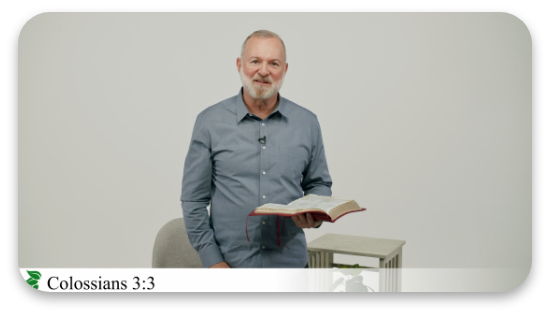
Rev. Rico Magnelli presents “Hope Conference #8: Love His Appearing,” beginning with second Timothy, chapter four, please. The teaching draws from Philippians 1, Luke 22, 2 Corinthians 4, 2 Timothy 4 and applies these truths to faith, spiritual growth, and daily Christian living.
Transcript
Understanding Love His Appearing
Second Timothy, chapter four, please. What does it mean to love his appearing? In this tremendous revelation by the apostle Paul, he's nearing the end of his life. And Paul looks back and by revelation capsulizes his journey as a Christian believer into three categories, which can be identified, can be claimed, and lived by any believer. And we'll look at those in Second Timothy, chapter four, verse six. For I am now ready to be offered, and the time of my departure is at a hand.
This is a great man at the end of his life, and this ready to be offered really captures his heart. Because it literally means to be poured out, like you pour out a glass of water. But this is referring to a drink offering, a drink offering, where they pour out wine. And the drink offering represented the pouring forth, eventually, of the blood of Christ. Poured it out. And once it's poured out, it's done. And he's saying the pouring out of my life in identification with Jesus Christ is just about done. Because his departure is at hand. That's what Paul wrote.
And this word departure is the Greek word, analysis. Analysis. And where we get the word analysis from? In the English. And it's a metaphor here. It means to loose the moorings to set sail, like a ship that's moored is unloosed so it can set sail. The mind picture is interesting. One translation has it this way. The time for me to weigh anchor is imminent. He knew it. And how wonderful that he didn't just throw in the towel, that he still believed God to receive this revelation. Years have nothing to do with God working in you.
People that think that they're old, that's a bunch of baloney. That's right. Because God will work in you. It says in Philippians 1, 6, he who has begun a good work in you will perform it until when? The day of Jesus Christ. All the way up to your last breath, or if you're alive at the time, he will work in you. So this whole idea where we kind of fade away into the sunset's a bunch of baloney. So right, it's not what the word says. It's up to you what you want to do. That's right.
Here Paul is believing and seeing God work in him. And how wonderful it is that we have it now, 2,000 years later, that we can read about it. In light of this, he writes in verse 7, I have fought a good fight. I have finished my course. I have kept the faith. Henceforth there's laid up for me a crown of righteousness, which the Lord, the righteous judge, shall give me at that day. Again, a reference to a day.
It's all over the word that the return of Christ is going to happen in one day, not to me only, but to all them also that love his appearing. So this is not just for the apostle Paul. It's for you and me as well. What a day that's going to be. I think sometimes it's hard to appreciate the amount of power that it takes to transform every Christian believer for the last 1,000 years, 2,000 years at one time and keep it all straight. Everybody gets the right body. And there's no confusion.
The amount of power that takes to do that will be unleashed. And the heavens declare, or the word declares, that the whole creation groaneth and travaileth until the manifestation of the sons of God. That will echo through the halls of eternity. The sons of God have now been fully matured. That's right. That is going to happen. What a day. But let's look at these three things here. I have fought a good fight. The word fought is a Greek word, agonizomai. Many of us are very familiar with it. It means to contend with an adversary.
There is going to be an opponent that is going to do everything he can to alter your course, to distract you from understanding this truth, because this is part of the mystery of the one body. This culminates the body of Christ. This is part of it, the return of Christ. And this word fought is in its Greek grammatical construction what we call a perfect tense verb. And what that means is that action was taken in the past that still is effective in the present, meaning it still has an impact.
Action that was taken prior to the present still is impacting the present. That's what it means. It's completed or it's impacting in the present. And that's a tremendous truth, because Paul continued to fight as God worked in him the good fight. And the word fight is the word agon. And it means a place of assembly where the games were celebrated. Again, there's an athletic theme that's weaved in and out of here that helps us understand. It's the place of the contest. And the place of the contest is here on Earth. That's right. So this fight implies an adversary, an opponent.
The Biblical Foundation
And we need not and should not be ignorant of that truth. As soon as you walk out of these doors, as soon as you go back home, as you get back on your flights, that opponent will be there. That's why we have to build the strength of the word in our hearts. Paul fought against his true adversary for what really matters in life. That's right. He didn't struggle, and he didn't put effort into fruitless endeavors. A waste of time. He did not do that. He fought a good fight. He fought the ideal competition. We fight for what we value.
You don't value the gum underneath your shoe, right? What do you do with it? You don't take it and then put it into a trophy case and look, look at the gum that I stepped on. You don't value it. So why do you fight for things that have no value? You've got to change your value system, and the hope will change your value system. Because the hope develops within us a higher value system. That's the higher ground I just sang about. It's a higher value system. And that value system can be answered in one question.
What's going to make it into eternity? What are you taking with you? Am I going to take this watch? No. Am I going to take my car? Am I going to take my bank account? Am I going to take anything I can see? No. So let's put it in the proper value system. I will take the love. I will take that. So will you. Anything you do in love is going to make it. Anything. It doesn't matter. You can clean a toilet. See what the world has degraded the truth of the word. God doesn't care. I clean toilets. Sure.
I fix them, too, if you do it in love. That's what's going to make it. And the adversary is going to try to talk you out of that. That's right. He wants you to do a different value system. Look at Luke 22. Luke 22, please. Luke 22. Let's see how Jesus Christ helped place the proper value on things when He was working with Peter. Luke 22. In Luke 22, verse 31, And the Lord said unto Simon, said, Simon, Simon, behold, Satan hath what? Desired you, to have you, that he may sift you as wheat. Satan has desired you.
And the desired word, the word desired actually means demanded. But what's interesting here, it's in the middle voice in the Greek. That means that Satan is acting upon himself. He's demanding you of himself. He's aiming at you. That's what it means. He set you as a goal. If we are a goal to be reached by Satan, which is the adversary working through the systems of the world, we don't want to be part of that. Because the devil is actively and permanently opposed to God and His word. Therefore, anyone that stands for God and His word becomes a target.
There it is right there. And what he wants to do is he wants to sift you as wheat, not as chaff. Wheat is the profitable part of the grain. It's the grain part. The chaff is what gets burned. It's what's the excess that is not needed, has no value to it. He's not saying that he wants to sift you as chaff. He wants to sift you as wheat. That means he wants your talent. He wants your heart. He wants your loyalty. He wants your words. He wants your thoughts.
And that's the whole systems of the world are designed to extract that from you and me. He's got people that don't want the word, so that's no problem. But he's put the target on those that have the wheat that he wants. Your time, your heart, that's what he wants. All the good stuff from you, that's what he wants. But I have prayed for thee that thy faith or believing fail not. Now watch this. And when thou art converted, talking about the new birth, the good work that God would begin in Peter, do what? Strengthen my brethren. See, that's the answer.
As we receive our own wholeness, as we receive the answers and truth, go help somebody. And then there's greater rewards and fulfillment in your life as a result. And we have an answer of truth to give to people. So we want to fight the good fight. Look at 2 Corinthians 4. To fight the good fight is part of loving his appearing. To fight the good fight. Why waste your time in a fight that produces no spiritual fruit? It's a waste of time.
And I tell you, you learn the wisdom of the word to navigate the fights that are not worth it. You're not going to change the world. Neither am I. That's not going to work. But you can reach one person, starting with yourself. You can reach one person. How valuable is that person? Look at how many times Jesus Christ says an amazing truth to one person. Just read through the Gospels. Make a catalog of it. It'll blow your mind how many things he says to one person. Amazing. 2 Corinthians chapter 4. We've heard this verse several times.
Examples and Spiritual Lessons
In verse 17, it says, for our light affliction, which is but for a moment, worketh for us a far more exceeding and eternal way to glory. While we look not at the things which are seen, but the things which are not seen. For the things which are seen are temporal, but the things which are not seen are eternal. When I first got into understanding the word, I was raised in a major, major denomination. I never read the Bible, just looked at the pictures. And then someone spoke the truth to me.
And as soon as I heard the truth, I changed immediately. 180 degrees, like we heard, just changed. I'd never heard it before. And then sometimes, and I was a young man, and someone asked me to teach in fellowship. I'd never taught before. And this is what I taught, right here. That's what I taught. I said everything that we look at, it's temporal. What really has meaning is what's behind it. It's the spiritual truth and the spiritual verities of life that we want to really focus in on. Sometimes you've got to ask people, because they don't see it in themselves.
So you've got to ask them. And you know what? You'll bring out those long suits. You'll bring out the talent. You'll bring out that wheat in their own life that benefits them and others. The light affliction, Paul is not saying that your problem or your challenge is, oh, that's nothing. He's not saying that. That's not what it means. It means in comparison to the eternal weight of what? That's what it means. In comparison to the eternal weight of glory, it's a light affliction. What we go through is very meaningful to us. It's challenging to us.
And we have great empathy for people. Oh, gosh, we've got great empathy. We put ourselves in their shoes. But you know what? We do that with the understanding that there's an eternal weight of glory. That's very powerful. We want to fight the good fight. Spend your time, your talent, your resources, your heart, in something that's going to produce spiritual fruit. Now I know we've got to go to work. I don't mean don't go to work. See, you know why the Thessalonians, Paul had to confront the Thessalonians? Oh, bless their hearts. He had to confront them because they stopped working.
That's what it says. That's why it says, hey, listen, what's this deal? You guys aren't working anymore. Because we're saying, well, the crisis is coming back. We don't have to work. Paul says, no, that's not it. You live in light of it, but you don't know when it's going to happen. They stopped working. That's why he has to teach them. No, no, that's not it. Remember how much we worked in front of you? That second chapter of 1 Thessalonians? So that's not the point. We need to go to work. We need to do all these things.
We need to change diapers. We need to do all these wonderful things. I say wonderful. I've done that. But your heart, your loyalty, your effort is put into that which is going to produce spiritual fruit. And I tell you, investing in the word in your life and then investing in someone else is worth it. It's worth it. Back to 2 Timothy 4. We want to fight the good fight. Spend your time in the ideal competition. Stop spinning your wheels doing stuff that produces no spiritual fruit. Make up your mind. Like we heard this morning, you've got one shot in life.
Make it count. 2 Timothy 4, this is also the second part of how we love is appearing. It says, I have fought the good fight. I have finished my course. It's the second part. And this word finished is the Greek word teleo. And it also, in the Greek grammatical construction, is a perfect tense verb, which means the action in the past with its effect in the present or just completed. So it's like you throw a giant net over all the things that you've done with the word, and you just pull it to yourself. All of it.
Because each day we build. God isn't into replacing. Like he doesn't replace today. He doesn't replace yesterday with today. He doesn't think that way. He builds. He's a builder. So he takes all the good stuff, and he says, son, bring that into today. Take all the good word, all the blessings, and bring that into today. Now go have your day. Don't bring any of the bad stuff. That's what this is talking about in his finishing his course. And this is talking about staying on God's track and don't get distracted with earthly matters. It's not talking about a career path.
It's not talking about education or relationships and all that kind of stuff. There's basically two paths. There's God's path, God's course, and then there's the world. That's basically it. And we can both be on God's course, even though we may operate a little bit differently. That's OK with God. What God is working in your life, it's OK. What we don't want to do is get on our own course. Look at Jeremiah. Jeremiah, please. Isaiah, Jeremiah, Jeremiah 8. There's not many uses of this word course, which is the Greek word dramas.
Faith in Action
But I picked this one out from the Greek Old Testament, the Septuagint, because I thought it would be very illustrative of the point here. And Jeremiah, I have a really soft spot in my heart for Jeremiah. He's that prophet that people treated him so poorly. He was so mistreated. Unbelievable. But the guy didn't have a chip on his shoulder. I mean, the things that they did to him, and the whole kingdom, I mean, everybody's against this guy. And more than likely, he started out as a very young man. But he still stayed true to God and his calling.
It says in Jeremiah chapter 8, verse 6, I hearken and heard, but they spake not a right. No man repented him of his wickedness, saying, what have I done? In other words, you know, I haven't done anything wrong. Who, me? No. Everyone turned his course as the horse rusheth into the battle. This word course is that Greek word dramas. They turned unto his course. In other words, they did their own thing. If you really want to finish your course, get God involved is my point.
I mean, get him involved in every aspect of your life, as much as you can get him involved. He'll never hurt you. He'll never mistreat you. He'll never not listen to you. He'll never turn his back on you. He will help you in every aspect of your life. Get him involved. Here, they weren't doing that. They were doing their own thing. Their own thing. And then God says in verse 7, yea, the stork in the heaven knoweth her appointed times, and the turtle, and the crane, and the swallow observe the time of their coming.
But my people know not the judgment of the Lord. He's again using a physical illustration in the natural world to teach a spiritual truth. What he's saying is these migratory birds are at the right place at the right time. They have been genetically programmed, if you will, to be at the right place at the right time. Yet my people can't even do that. And the reason why is because of verse 6. They're doing their own thing. They're not doing God's course. And again, let me reiterate. God's course doesn't mean that we're all doing the exact same thing.
We're all living in the same place. We all get up at the same time. We all brush our teeth simultaneously. That's not what it means. It means that we are following as God works within us, to will and to do of his good pleasure according to his word. Look at Philippians. Please, Philippians. I'm going to read you the Amplified while you turn there of Jeremiah 6 and 7, verse 7. Even the migratory birds are punctual to their seasons. Yes, the stork excelling in the great height of her flight in the heavens knows the appointed times of migration.
And the turtle dove, the swallow, and the crane observe the time of their return. But my people do not know the law of the Lord, which the lower animals instinctively recognize insofar as it applies to them. God is trying to teach us through birds. They know what to do. Well, when you have the spirit of God in you and I, and we are meek to his word, you will know what to do and when to do it. You'll be at the right place at the right time. You have that positive thought, and you move. Fantastic.
Look, if the migratory birds can do this, we can do this. So we're in Philippians chapter 1, right? Philippians chapter 1, in verse 5, it says, for your fellowship in the gospel from the first day until now. Yeah. From that first day, you get born again. There's a fellowship of sharing of the good news. Being confident of this very thing that he which hath begun a good work in you will perform it until the day of Jesus Christ. There it is again. He will continue to work in you to bring to pass his word in your life and in others.
Even as it is meet for me to think this of you all, because I have you in my heart, in so much as both in my bonds and in the defense and confirmation of the gospel, you all are partakers of my grace. For God is my record, how greatly I long after you all in the bowels of Jesus Christ. And this I say, that your love may abound yet more and more in knowledge and in all judgment, that you may approve things that are excellent, that you may be sincere and without offense till the day of what?
There it is again. It's all over the place. God wants us to be sincere. God wants the light of the sun of the word of God to illuminate our hearts. And he wants us to approve things that are excellent, that which is the best. That's why we fight the good fight. That's why we finish our course. That's why we do it, because we love his appearing. The race ends at the return of Christ. That is the goal. Look at chapter three. We've had these verses before. That is the goal. That is what we're aiming at.
Walking in Love and Confidence
In Philippians chapter three, Paul writes, verse 13, brethren, I count myself to have apprehended. Meaning, I haven't acquired the prize yet. I still am here in this body awaiting the return of Christ. But there's one thing I do, forgetting those things which are behind and reaching forth unto those things which are before. I press to the mark for the prize of the high calling of God in Christ Jesus. We heard these verses previously. Paul does mention one thing. And then he mentions three things. Because in the Greek grammatical construction, those three verbs happen simultaneously.
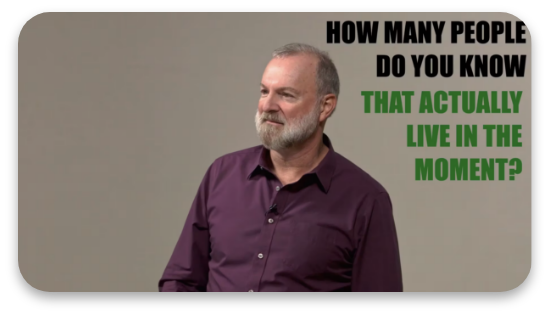
You're forgetting those things which are behind, reaching forth unto that which is before you, while you look at the backdrop of the return of Christ. Absolutely you can live that way. That's how you live in the moment. The past is gone. It's over. I just don't have words to emphasize that enough. Let it go. It's over. Any bitterness, any wrath, any clamor, any anger you have, let it go. And live in the moment. In the moment is all the presence and joy and blessings that you're looking for. It's right in front of you.
But it won't make much difference without the backdrop of the return of Christ. Then it makes sense. Then it puts it all in perspective. All three of these are necessary. This is what we want to do. Back to 2 Timothy. This is part of loving his appearing. Very unique phrasing here. Love his appearing. We're loving something that God has set before us. Doesn't say love God. It says love his appearing. Well, see why. 2 Timothy chapter 4. In 2 Timothy chapter 4, we're continuing with this. In verse 7, it says, I have kept the faith.
And this is the household faith. The faith. The household faith. There's going to be religious systems, even of our own doing, that are going to work against this. Our own concoctions. But the household of faith is what we're after. That household of faith is that every born-again believer has received the faith of Jesus Christ, which embodies and encapsulates his completed work. It's given to you. It's the faith of Jesus Christ. To Jesus, it was believing, because he had to carry it out.
But after the fact, God calls it the faith of Jesus Christ, which is given to every born-again believer since the day of Pentecost, as recorded in Acts chapter 2. Everyone has it. That's why there's great respect we have one for another. I didn't do the work on the cross for you. You didn't do it for me. Jesus Christ did it. But then that package is given to each every born-again believer. We believe unto the faith of Jesus Christ. And it builds great respect. Notice he doesn't say, I keep the body of Christ, or I keep the mystery.
I don't read that in there. Do you? That's not what it says. See, the reason why is because the household of faith is the basis for living the mystery. It's the basis of it, because each of us has been given the measure of faith, according to Romans chapter 12, verse 3. You have the measure of faith. I have the measure of faith. There's nobody above anybody else in our understanding. But then Romans 12 moves on to start functioning in the body. Now we have different functions. That's different.
But if we jump to the functioning, we start to be respecter of persons. You can't jump. You have to stay put on the household of faith, that we all have the same faith of Jesus Christ. And this is what Paul fought for. It doesn't matter what denomination people come from, whether they're Episcopalian, Roman, Lutheran, Methodist, Jehovah Witness, it makes no difference to God. They're not in the book anyway. It makes no difference. There's a respect that we have for God's children that is unparalleled, because it was God's work. Now it doesn't mean I agree with everybody.
You don't have to either. I don't. But I do respect what God did in that person. That's right. And they may not be the most affluent person. They may not be somebody that looks like you. It doesn't matter. It doesn't matter. It's what did God do. And Paul kept. And the word kept means to care for. He cared for the household of faith. That's where he put his life on the line for it. That's part of loving his appearing. It meant something to him. It was significant to him. And all the other religious systems can go by the wayside.
They don't mean anything. We can organize ourselves, and we should, absolutely, no problem there. But the household of faith is a spiritual framework. It has nothing to do with a location or a name, nothing. It has everything to do with what God did through Jesus Christ. And we rejoice in the glory of God through this. Look at Romans chapter 5. Romans chapter 5, please. Romans chapter 5, verse 1. Therefore, being justified by faith or believing, we believe unto the faith of Jesus Christ. We have peace with God through our Lord Jesus Christ. We already have the peace.
Applying the Teaching in Daily Life
Do you realize you're at peace with God? I mean, when he says peace, he means peace. You are totally at peace with God. Get comfortable with him. Don't be moving in your seat with God, uncomfortable with him. Get real comfortable with him. That's why talking with him is really good. It really is. For whom also we have access by faith into this grace, wherein we stand and rejoice in the hope of the glory of God. It says rejoice in the hope of the glory of God.
Not only so, but we glory in tribulation, which is mental pressure, also knowing that mental pressure, tribulations, mental pressure, worketh or achieveth endurance, endurance. And patience or endurance experience, which is a positive proving of the word and experience what? If you want to build hope in your life, when you're in the mental pressure, endure according to the word. When you're on the other end of it, that's when you really kind of see it. When you're in the middle of it, it's more difficult.
But every time we endure through mental pressure, we're building the positive proving of the word, every time, like a building block, like a Lego. And when you're building the positive proving of the word, you are confirming and establishing and strengthening the truth that one day Jesus Christ is going to come back and give you a new body, and you'll have rewards throughout all eternity. Every time. That's how you build the hope, when you're challenged. Isn't that what Jesus Christ did for the joy that was set before him? And you build it every single day, the positive proving of the word.
Look at Galatians chapter 6. Please, Galatians chapter 6. Titus 1.5 calls it the common faith. That means it's common to every born-again believer. Here in Galatians 6, in verse 10, it says, as we have therefore opportunity, let us do good unto all men, especially unto them who are of the what? That's what it says. And the word opportunity is the opportune time, like the right thing at the right time. We cannot spend our time trying to fix the world. It's not going to happen. Do the right thing at the right time.
Get involved with people and situations and causes, if you want to, but that produce that spiritual fruit. The right thing at the right time. Even amongst the household, I often tell people, well, it's got to fit for you. It's got to be a good fit. Because I'm trying to encourage them to partner with God in every situation. It's got to be a good fit. And when it's a good fit, man, things really sink. I think we've seen some things in these meetings, right? And we put a plan together, but no one could have necessarily scripted everything that was done.
Because God was working in people, working in you to be here, working in many of the conversations and things that have occurred. This is what Paul kept. Look at 1 Timothy 4. This is what Paul kept. He kept the household faith. Now, he notes in 1 Timothy 4, in verse 1, now the Spirit speaketh expressly that in the latter times, some, not all, some, shall depart from what? The faith. Giving heed to seducing spirits and doctrines of devils. Speaking lies and hypocrisy, having their conscience seared with a hot iron.
Now, to depart from the household faith has nothing to do with leaving a building or a location. Has nothing to do with it. It has nothing to do with leaving a group of people. It's leaving it in our heart. Once we understand the household of faith, that that faith is common to every born-again believer, to treat people with disrespect would be in the category, practically, of departing from the household of faith. Your fellow Christian believers. Again, you don't have to agree with everything.
But to treat them with disrespect would be in the category of practically departing from the household faith. And then when that happens, people do this. They give heed. They start listening to seducing spirits and doctrines of devils. And there's always going to be hypocrisy. There's always going to be hypocrisy and lying. That's right. Hypocrisy means you don't say what you mean and mean what you say. I've said this many times.
If you find anybody, I don't care if they're born again or not, if you find anybody that just says what they mean and mean what they say, that person is gold. I'd more rather hang out with them than anybody else. Well, you know, I'm speaking kind of figuratively, in a sense. I'd rather be with the household. But do you understand saying what you mean and mean what you say? It's so critical and important. Because the adversary always tricks people and always goes the same route, lying and hypocrisy. That's not what we want. That's not to love his appearing.
A Life Shaped by God’s Word
That's not to. Back to 2 Timothy, please. 2 Timothy. So at the end of Paul's life, he shares these truths. So they must have been pretty significant. Again, this is however many years Paul lived. And he was given the greatest revelation ever given to the Christian believer. This must be pretty significant for him to write these verses. I have fought a good fight. I fought for what was really valuable. And the way that I test that is, is it going to make it into eternity or not? It can't be that valuable if it's not. I have finished my course.
I didn't go the world's route. Yeah, I made some tough decisions. Like the great poem by Robert Frost, The Road Not Taken. Two roads diverge in the yellow wood. And I desired I couldn't travel them both. Be one traveler long I stood, look down one as far as I could to where it bent into the undergrowth. Then took the other which was just as fair, with perhaps having the better claim, because it was grassy and wanted wear. Knowing for the passing there really warned them about the same. And both that morning equally lay, leaves no step had trodden black.
Oh, I kept the first for another day. Knowing how way leads on to way, I doubted if I should ever come back. I shall be telling this with a sigh. Somewhere ages and ages hence, two roads diverge in the yellow wood. And I, I took the road less traveled by. And that has made all the difference. I know I paraphrased that some. But it's a great poem. See, you take God's course, not your own. Get him involved, that's how you do it. And I kept the household faith.
I didn't fall prey and I, or I didn't succumb to religious systems or my own. I just stuck with the household faith and then build the environment that produces an encouragement for people to function in the body. Tremendous. Henceforth there is laid up for me a crown of righteousness. That's one of the category of rewards, which the Lord, the righteous judge, shall give me at that day. And not to me only, but unto all them that love his appearing. We love his appearing. And I'll tell you what, to love his appearing demonstrates our love for God. It's his plan.
It's his plan. It's his idea. It's one way we demonstrate our love for God is loving his appearing. Our willingness to embrace God's plan of salvation and redemption when we love his appearing. When we love his appearing, it demonstrates our value system is God's value system. What's really important when we love his appearing, it demonstrates our recognition that this world is not our home. When we love his appearing, it demonstrates our acceptance that despite our failures at times, only glory and rewards await us.
When we love his appearing, it demonstrates our acceptance to put the past behind and live in the moment. And when we love his appearing, it demonstrates our vision for ourselves and other Christian believers is only glory. We want to continue to love his appearing. Heavenly Father, thank you for the blessings of your word. And so many aspects of heart and insight and wisdom and understanding have been ignited and have been fired up within us. And Father, I know that there's men and women in this group that have great service, ministries to perform. And Father, you're talking to them.
I know you are. And all I can say, Father, is thank you for that. And Father, thank you for opening the eyes of our understanding that from this day forward, we are not alone. We are in a household. Even though locations may be different, time zones, schedules, you've placed a spirit within us. And we drink from the same spirit, that gift of Holy Spirit. And Father, there's men and women in this group, young people, that you have set things on their hearts.
And thank you for fanning that and encouraging them along, that they fight the good fight, they finish the course, and they keep the faith. And they encourage the rest of us. And they strengthen the rest of us. And they're not sifted like wheat. But they, by free will, Heavenly Father, you cradle them in your heart. And you supply whatever their need is. And no matter what, Father, you provide the word that they need every single day. And that there's men and women that are willing to receive their lives, their ministries, their hearts.
And you continue to bless this great work, this homothumadon movement that we continue to be part of. Thank you, Heavenly Father, for Jesus Christ and for the privilege to love the appearing of our Lord. In the name of Jesus Christ, amen.
Key Takeaways
- What does it mean to love his appearing?
- In this tremendous revelation by the apostle Paul, he's nearing the end of his life.
- And Paul looks back and by revelation capsulizes his journey as a Christian believer into three categories, which can be identified, can be claimed, and lived by any believer.
- And we'll look at those in Second Timothy, chapter four, verse six.
- For I am now ready to be offered, and the time of my departure is at a hand.
Frequently Asked Questions
What is the main message of “Hope Conference #8: Love His Appearing”?
Rev. Rico Magnelli presents “Hope Conference #8: Love His Appearing,” beginning with second Timothy, chapter four, please. The teaching draws from Philippians 1, Luke 22, 2 Corinthians 4, 2 Timothy 4 and applies these truths to faith, spiritual growth, and daily Christian living.
Which scriptures are central to this teaching?
The teaching draws especially from Philippians 1, Luke 22, 2 Corinthians 4, 2 Timothy 4, Jeremiah 8, Jeremiah 6, Romans 12, Titus 1.
How can believers apply this teaching?
For I am now ready to be offered, and the time of my departure is at a hand.
Scripture References
Philippians 1; Luke 22; 2 Corinthians 4; 2 Timothy 4; Jeremiah 8; Jeremiah 6; Romans 12; Titus 1; Galatians 6; 1 Timothy 4
This text was prepared from the teaching audio or source document. Please verify scripture references against your own Bible.