Overview
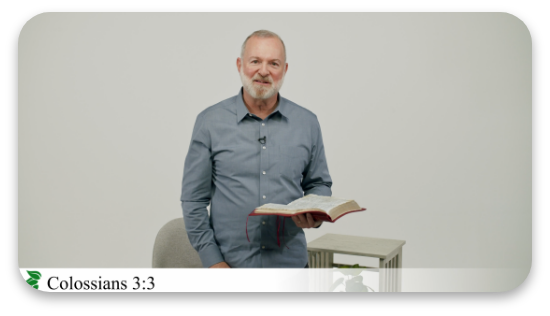
Rev. Rico Magnelli examines “Life Through Grace” through Ephesians 2, 2 Peter 3, Romans 5, Romans 6, showing how grace, salvation, living shape a believer’s relationship with God, daily choices, and service to others.
Transcript
Understanding Life Through Grace
Life through grace. Please turn to Ephesians chapter 2. Grace is a topic we all can grow in. As the final words of the Apostle Peter noted in 2 Peter 3 18, not only in understanding, but most significantly in application.
It’s the living and the sharing of grace that the early followers of Christ exhibited that sets the practical foundation for the Christian lifestyle today. They did this, these early Christians. They did this even when they did not know the fullness of what they had been given in Christ until much later the Apostle Paul received a deeper understanding of grace, which he then taught and wrote it down for others.
In this light, we will consider life through grace. The life God offers through grace has two basic components to it, and they are bound together, and they’re simple. Eternal life and newness of life.
For Christians, living their salvation daily is significant to a life worth living. Understanding grace reaches a limit in the human mind unless God gets involved. God designed grace to be lived, to really begin to understand it.
Putting the things of God into practice has more to do with enabling understanding than any intellectual or academic approach. If Christians are not living their salvation daily, they are missing grace daily. Ephesians chapter 2, in verse 5, we read, Even when we were dead in sins, have God quickened us together or made us alive with Christ, by grace ye are saved, and hath raised us up together and made us sit together in heavenly places in Christ Jesus, that in the ages to come he might show the exceeding riches of his grace in his kindness toward us through Christ Jesus.
We are saved by grace through faith. It says, For by grace are you saved through faith, and that not of yourselves, it is the gift of God. So it is a gift from God through faith that we are saved.
And it says that in the ages to come he might show the exceeding riches of his grace. The immensity of grace cannot be measured with any physical metric. It can only be unfolded, if you will, through the unlimited measure of eternity.
Grace is so huge, it’s going to take all eternity for God to unfold it unto us, what we have received. Look at Romans chapter 5, please. We are saved by grace through faith, and that faith is the faith of Jesus Christ, his accomplished work, his finished work, because he accomplished it for us.
That’s why we receive this favor from God that is not merited or deserved, because he did the work, Jesus Christ. In Romans chapter 5 verse 1, it says, Therefore being justified by faith. See, we were dead in sins.
So God had to legally justify us, and he did it by faith. He did it by the faith of Jesus Christ. And as a result, we have peace with God through our Lord Jesus Christ.
The Biblical Foundation
By whom? Jesus Christ. Also, we have access by faith. We have access to God now into this grace that he gives to us, wherein we stand and rejoice in the hope of the glory of God.
See, we didn’t have access like this before. Now we have access. It’s through faith, we have access into this grace.
And when we’re in the grace, we stand. We take a firm position. We don’t allow ourselves to be manipulated.
We don’t allow ourselves to be coerced into another position. We are standing in that grace. We remain there.
And what do we do in there? We rejoice. See, rejoicing is something you do now. It’s something we do now.
It’s not something for the future. It’s because of the future that will be ours in its totality at the return of Christ. Sure, but we rejoice now.
Living our salvation today is the key to this walk in newness of life. And that newness of life is something that we stand in that grace, in that favor of God, and we rejoice in the hope of the glory of God. Look at Romans chapter 6, please.
Salvation is to be lived today. You say, how can we do that? It’s the knowledge of what God shows us through the accomplished work of Christ that allows us to throw off the shackles, to throw off all the dead weight that’s holding people back, to throw off all the past sin, the bitterness, the anger, the resentment, to throw all that stuff out because all of that was taken to the cross. It’s a new life.
Christians should be living a new life in joy and rejoicing. Romans chapter 6, verse 4. Therefore we are, the text is re-were, past tense, buried with Him by baptism, into death, that like as Christ was raised from the dead by the glory of the Father, even so we should walk also, or we also should walk in newness of life. It’s not the old life, but for us to walk in this newness of life, we’ve had to let go of something.
Examples and Spiritual Lessons
We can’t keep bringing up the past. We have to let go. It’s a new life.
It’s a fresh life. Every day can be like this. When someone lives their salvation, the past is just for fond memories and lessons.
It’s about it. And the future is just for glorious anticipation when we live our salvation. Look at Philippians chapter 2, please.
The early Christians, without the depth of the teaching that we have access to today, we’re doing this. In Philippians chapter 2, in verse 12, Paul writes, Wherefore my beloved, as ye have always obeyed, not as in my presence only, but now much more in my absence. So obedience when no one’s around.
Work out your own salvation with fear and trembling. Now, that cannot mean that you can work your way into heaven. That’s not what it means, and you know this.
It’s bringing your salvation into your daily living. It’s bringing salvation to work. It’s bringing eternal life to when you recreate.
It’s bringing eternal life when you open your mouth. That the words that we speak, they minister grace unto others, not condemnation and judgment and negativity. You work out your own salvation.
Each of us has been saved by grace through faith. But each of us has to work this out. And this word work out means to work down, to achieve.
It’s like we make a practical connection between salvation and our lifestyle. It’s not work for salvation, but it’s living your salvation. And we’re supposed to do this with fear and trembling.
That’s an interesting phrase in the word. And this phrase indicates an awareness of your own limits because it reflects a reverence and an awe for God because it’s an impossibility to work out your own salvation, to make the connections in your practical day-by-day living without God’s involvement. You know how we know this? It says it in the next verse.
Faith in Action
A lot of people quote it. For it is gone which worketh in you both to will and to do of his good pleasure. What is he working in you to produce whatever you need to work out your own salvation with respect and awe of God? It’s to bring eternity into the day-by-day living.
Now that sounds almost like an impossibility. That’s not an impossibility because you have Christ within you who’s seated at the right hand of the throne of God. The world is a very throwaway temporal arrangement.
And they begin to infect people with this idea. We, on the other hand, as Christians, have eternal life. And that changes so many things in the way that we think, what we say, what we invest in, in our hearts and times and resources.
It says, wherefore my beloved, as you’ve always obeyed, not as in my presence only, but now much more in my absence, work out. Work it down, man, achieve it, get it done. Your own salvation with respect and awe for God.
Why God? Because it’s God that worketh in you, energizes within you to this end to both to will and to do of his good pleasure. Do all things without murmurings and disputing. That’s talking about arguing and complaining.
And the arguing and complaining is talking about doing that to God. Because he’s the one that work in you. To do what? To bring salvation down to the day by day practical way of living.
Acts chapter two, please. Now, these early Christians that I mentioned to you began on the right foot. They began living this way without understanding fully all the depth of what they had received.
See, living salvation through grace reaches a limit in the human mind unless God gets involved. In the human mind, it becomes an intellectual or an academic proposition. But when it begins to fill our whole being, there’s great rejoicing.
And there’s other things that we’re going to read here in Acts chapter two that are illuminating. Here on the day of Pentecost, about 3,000 souls were added to the apostles. And it says in verse 42, And they continued steadfastly in the apostles’ doctrine and in fellowship and in breaking of bread and in prayers.
And fear or respect came upon every soul. And many wonders and signs were done by the apostles. And all that believed were together and had all things common.
Walking in Love and Confidence
And sold their possessions and goods and parted them to all men as every man had need. And they continuing daily with one accord in the temple and breaking bread from house to house to eat their meat with gladness and singleness of heart. Praising God and having favor or sharing that grace with all the people.
And the Lord added to the church daily, such as should be saved. This is an amazing section about some amazing people. They learned that now they were saved through the accomplished work of Christ.
They no longer had to fulfill the law. They were saved. So when someone is living their salvation like these early Christians were doing, there’s five things I want to point out here.
Number one, who were they listening to? In verse 42 it says, And they continued in the apostles’ doctrine. That means that they were tuning their hearts and ears into the apostles’ doctrine. When you and I are living our salvation, who you listen to is extremely significant.
Who you listen to especially regarding your identity. And axiomatically that means who you’re listening to, you’re also making decisions who you’re not listening to. When someone is living their salvation like these early Christians, they chose to continue to listen to the apostles’ doctrine.
That means that if other things came up, perhaps they just pushed them aside and focused their heart on that. So my question is, who are you listening to? Are they reinforcing who you are in Christ Jesus? That’s number one. Then it says, and they continued steadfastly.
So this was a habitual practice for them in the apostles’ doctrine and in fellowship. This is the second thing. Now fellowship just means you share something in common with somebody.
It doesn’t necessarily meet a meeting. They were sharing in common the grace that they had learned about through the apostles’ doctrine. Look at who they chose to spend time with.
Who do you choose to spend time with? Their preference was the brethren that they had just learned about. Why? To encourage each other and to be encouraged. That’s right.
Who you listen to, who you spend time with, says a lot about how we are living salvation. Remember in Acts 2.5, it says, And there were dwelling of Jerusalem Jews, devout men out of every nation under heaven. It names something like 16 different areas noted.
Applying the Teaching in Daily Life
Do you know that it never refers to this group again the same way? All that stuff where they came from doesn’t come up after this. Why? Because they were now of one accord. They didn’t bring up that, oh, you’re an Elamite, or you’re, you know, from this place and that place necessarily.
They had found something that they had not known before. They were living their salvation. The third thing that they did is in verse 43, And respect came upon every soul.
And many wonders and signs were done by the apostles. When someone is living their salvation, there’s a mutual respect that’s engendered. So the question is, what do you think about the brethren? Brothers and sisters in Christ, if you’re living your salvation, you are going to be motivated.
You are going to move and gravitate towards mutual respect. It will grow more and more for each of us based on what God’s done. Now, that doesn’t mean that you have to respect what people do with it.
That’s a different story. I’m talking about what God has done in each of us. Who we listen to, who do we spend time with, what we think about the brethren, God’s people, all are tied into living your salvation.
What else did they do? In verse 44, And all that believed were together and had all things common, and sold their possessions and goods, and parted them to all men, as every man had need. When someone is living their salvation, their value system changes. This word common doesn’t mean that everyone was sharing everything.
It means that their attitude towards material things was, my material things are not holy. They are not sacrosanct. They are not sacred.
They are not untouchable. They had an attitude that the earth is the Lord’s in the fullness thereof. See, when someone is living their salvation, their value system changes.
They gravitate more towards the things of eternity, the things of truth, than the things that are temporal and corruptible. Still need those things, but their value system changes. In terms of where things are placed in top priority and their value, the things of God start to rise and rise and rise and rise, and the things of the earth begin to diminish and decrease and decrease and decrease.
A Life Shaped by God’s Word
That’s how you know someone is living their salvation. And then finally, it says, And they continuing daily with one accord in the temple and breaking bread from house to house to eat their meat with gladness and singleness of heart. They continued this whole practice of what they were doing.
And it concludes by saying in verse 47, Praising God and having favor, or the word favor is grace. They were having favor. They were holding favor out one to another, holding that grace with all the people.
The Lord added to the church daily, such as should be saved. When people are living their salvation, they have what I would call a John 3 16 worldview. You know what I mean by a John 3 16 worldview? For God so loved the world that he gave his only begotten son that whosoever believeth in him should not perish, but have everlasting life.
They were praising God and they were sharing grace, not only with their newfound group. They were sharing it with all the people. So other people started to join.
Other people started to realize that something great is happening here. These early Christians did not have what we would call the New Testament in writing. They had what the apostles were sharing of what they learned from Jesus Christ and then what God was showing them.
Yet here, right at the inception of the church, they were listening to the apostles doctrine. They were deciding to spend time together, preferring one another. They had a mutual respect that was being engendered by what God had done for all of them.
Their value system changed. They realized that there’s something greater here in terms of priority and their worldview, if you will, their view began to see that this grace can be shared with others because God so loved the inhabitants of the world that he gave his only begotten son. It is the living and the sharing of grace that the early followers of Christ exhibited.
Even though they didn’t have the deeper understanding of the grace of God revealed later to the apostle Paul, they still were living it. And these wonderful believers set a practical foundation for the Christian lifestyle today. What we would call life through grace, eternal and new, living our salvation today, because the life of God that he offers has those two components, eternal life and newness of life.
As I mentioned, understanding grace reaches a limit in the human mind. Intellectually, it can only go so far. Unless God gets involved, God designed grace to be lived, to really begin to understand it as much as we can in this life.
Putting the things of God into practice has more to do with enabling understanding than any intellectual or academic approach. If Christians are not living their salvation daily, they are missing grace daily. Thank you.
Key Takeaways
- What we would call life through grace, eternal and new, living our salvation today, because the life of God that he offers has those two components, eternal life and newness of life.
- See, living salvation through grace reaches a limit in the human mind unless God gets involved.
- If Christians are not living their salvation daily, they are missing grace daily.
- It’s the living and the sharing of grace that the early followers of Christ exhibited that sets the practical foundation for the Christian lifestyle today.
- We are saved by grace through faith, and that faith is the faith of Jesus Christ, his accomplished work, his finished work, because he accomplished it for us.
Frequently Asked Questions
What is the main message of “Life Through Grace”?
Rev. Rico Magnelli examines “Life Through Grace” through Ephesians 2, 2 Peter 3, Romans 5, Romans 6, showing how grace, salvation, living shape a believer’s relationship with God, daily choices, and service to others.
Which scriptures are central to this teaching?
The teaching draws especially from Ephesians 2, 2 Peter 3, Romans 5, Romans 6, Philippians 2.
How can believers apply this teaching?
We are saved by grace through faith, and that faith is the faith of Jesus Christ, his accomplished work, his finished work, because he accomplished it for us.
Scripture References
Ephesians 2; 2 Peter 3; Romans 5; Romans 6; Philippians 2; Acts 2
This text was prepared from the teaching audio or source document. Please verify scripture references against your own Bible.