Overview
Grace is the wind that moves us, and Moses in Egypt is what it looks like to sail with it when the direction makes no rational sense. Teaching at the Grace 2023 Conference, this session reads Exodus 2, Acts 7 and Hebrews 11 from the ESV and follows one Levite family through three changes of plan: hide the baby, put him in a basket of bulrushes in the Nile, and hand him to the daughter of the Pharaoh who had ordered the Hebrew boys killed. None of it was rational, and Hebrews 11:23 says it was done by faith, not out of fear of the king’s edict. You are the captain of the ship; the wind changes, and the reward belongs to those who change with it.
Transcript
Grace Is the Wind That Moves Us: The Sailing Ship Picture
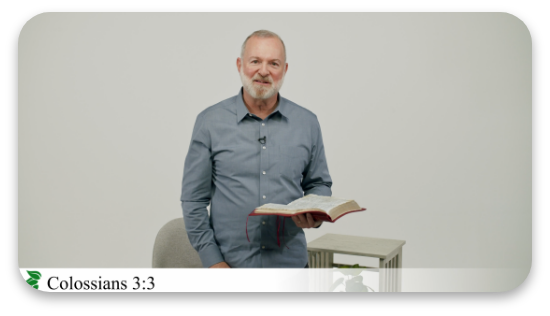
Thank you very much. If you will take your Bibles and turn to Exodus chapter two, I’m gonna be reading from the ESV, so maybe a little different from your King James. We are also gonna be looking at Acts chapter seven and Hebrews 11. Those are the three areas we’re gonna be at this morning as we look at the life of Moses. And I’ve narrowed it down. Moses’s life was huge. There was a lot going on with Moses. So I’m just gonna look at Moses’s life in Egypt, in Egypt. And we’re gonna see that grace of God with Moses in his earlier life.
I also wanted to really use and look at the example of grace as the wind that moves us. The sailing ship, I wore my name tag up here on stage to make the huge example of this. The sailboat on your name tag, it’s over on the left and you really can’t see it, but that’s a sailboat on the left side. And I just think for me, it’s a great example that grace is the wind that moves us along in life. And Tom used the example of God as the captain or the pilot. Well, this is a little different example because in this example, you’re the pilot in the boat and you have to choose where you’re gonna go.
Now, sailing, I’m not a big sailing guy, but I know a little bit. And I know that the pilot, the captain of the ship, he can, if he wants to, he doesn’t have to go in the direction of the wind. He can go off. But whenever you go, your ship will move the fastest if you’re going with the wind, right? But you can go in other directions, but you won’t be able to go as fast and you won’t be going in the direction that the wind is blowing. But you can go off if you want to on your own way. So that’s kind of the sailing example that I’m gonna be using in this teaching. You’re the captain, you’re going with the wind.
Pharaoh’s Edict: Every Hebrew Boy Thrown Into the Nile
All right, Exodus chapter two. Oh, a little before chapter two, well, the history here, Pharaoh was afraid of how big all the Hebrews were growing. And so he brings out the rule that all the men children, the boys that were born were to be killed. Throw them in the Nile. That’s evil in a culture. We may think that our culture is an evil place to live. It’s not going so well. Well, think about if the rule came down from the president of the United States that every male child that’s born had to be killed. What would you do? All right, move, right? You’d get out. Well, they didn’t have that option.
Exodus 2:1-2 and Acts 7:20: Beautiful in God’s Sight
So here we are, Exodus chapter two, verse one. Now a man from the house of Levi went and took as his wife a Levite woman and the woman conceived and bore a son. And when she saw that he was a fine child, she hid him three months. She saw that he was a fine child. Now I know every mother thinks their baby is the most beautiful in the world, right? But I don’t believe that was exactly what she was concerned with, that it was just a pretty baby.
Turn to Acts chapter seven. Here’s our other chapter. Acts chapter seven, verse 20. We’re gonna get a little different take on this beautiful baby thing. Acts seven, verse 20. At this time, Moses was born. This is Stephen when he was teaching to the Sanhedrin on his time. And so he’s going through the history of Israel. At this time, Moses was born and he was beautiful in whose sight? God’s sight.
So another aspect here was that it was God that saw Moses. And does God care if we’re pretty or handsome? No, obviously, look at me. I got no hair. I got glasses. I got spots all over my body, you know. So it wasn’t the physical beauty of Moses. God saw Moses’s life, right? God can see all of our life. He saw what Moses was gonna do. And it was beautiful in his sight.
And so what was the mother seeing? Well, she was seeing like God. Now, she probably didn’t know what Moses was gonna do, right? But she thought, this is a special child. He’s beautiful. So she was going with God. God saw that he was beautiful. Mom saw that he was beautiful. She saw that he was a fine child in the ESV.
Hebrews 11:23: Hidden by Faith, Not Out of Fear of the King’s Edict
She hid him three months. So that was the plan here. She was gonna hide him. Rationally thinking, how are you going to hide a baby? Do babies cry? How are you gonna hide a baby? If you were gonna come up with a plan, it’s like, all right, well, I’m gonna hide this baby so no one will know that I have a boy child. That would be pretty tough to do, right? Well, that was still the plan. That was God’s plan here. Hide the baby, all right? They go with the plan.
Now, was she afraid of the Pharaoh’s edict? Take this. Turn to Hebrews 11. Our other spot. We’ll be going back and forth from these a couple of times. Keep your finger there in Exodus, or toe, whichever works for you. Exodus, I mean, Hebrews 11, verse 23. By faith, Moses, when he was born. By what? Faith. Oh, that’s a great key.
By faith, Moses, when he was born, was hidden for three months by his parents because they saw that the child was beautiful. Again, mother and dad locked in. It’s a great child. And they were afraid of the king’s edict? No, they were not afraid. They did not, this plan to hide the child was not taken because they were afraid of the king’s edict. His plan. They were taking action based on God’s grace. How do we go? The wind is blowing this way. Hide the baby.
When She Could Hide Him No Longer: The Wind Changes Direction
Okay, let’s go back to Exodus. Hide the baby. She hid him for three months. There in two. Verse three. When she could hide him no longer. Uh-oh. Change of plans. Change of plans. We can’t hide him any longer. That’s not gonna work. We gotta do something different. All right?
Now, let’s go back to the sailing example. Does the wind only blow in one direction? No. Wind direction changes from day to day. It can change in a moment. You’ve been going weeks and going west. The wind’s right behind you. You’re making great time. And then all of a sudden the wind starts to blow north. Well, if you’re gonna go with the wind, you have to change direction. You gotta go with the wind. Can you still continue west? Yeah, you could. But you’re not gonna be going as fast or as well or as easily as you could be. So you’ve gotta change.
That’s important. We’ve got to be flexible in our life. We can’t just hold on to what we’ve always done or what we’re doing right now. Hey, it’s working. But things change. We’ve gotta be flexible. Sometimes we gotta let go of what we’ve been doing. Even if we don’t always know, well, I can’t really see how this is gonna work out. But we’ve gotta believe God by faith, okay? This is the way the wind’s blowing now. Hiding the baby’s not working. We gotta go a different way.
Exodus 2:3: A Basket of Bulrushes in the Nile
All right, what’s the new plan? So she took for him a basket made of bulrushes and daubed it with bitumen and pitch. And she put the child in it and placed it among the reeds by the riverbank. So now she decides, okay, I’m gonna do what Pharaoh said. I’m gonna put the kid in the Nile. But now she’s got a basket. So it wasn’t like she was going full in. But they made a basket. She put it in a basket.
Now, we know what happened, right? We know the story, and we’ll get to it, Pharaoh’s daughter. Did she know that Pharaoh’s daughter was gonna get it? I don’t see it in the Word. It doesn’t say, and God sent an angel and told her, put the kid in the basket, put him in the Nile, Pharaoh’s daughter is gonna get it. I don’t see it. Maybe she did, I don’t know. But the Word doesn’t say that she knew the plan. What she knew so far, the new plan, make a basket, put the three-month-old in the basket, put him in the Nile somewhere. So she did. And she had Moses’s sister watch. Did his sister know what was gonna happen? We don’t know, maybe, but we don’t know.
When God’s Direction Does Not Seem Rational
The example, I guess, is that we don’t always know how it’s gonna happen, what’s gonna go on. And rationally speaking, it still doesn’t sound like a good plan to me, right? And that happens in life. There’s gonna be times when, rationally speaking, the direction God wants us to go doesn’t make any sense. I’ve had that happen to me in a couple of times in my life.
It’s like, this doesn’t seem right. We moved from Florida, beautiful Florida, we’d been here 13 years, we moved to Ohio. No one else in my family wanted to go to Ohio. And we’d lived there and everything had been fine, but I got to the point where it was like, we need to get out of Ohio, we need to get out of Florida. It’s just, we need to go. And Ohio was where we went, but it didn’t seem rational. My boys loved Florida. My younger son was like, he was a sophomore in high school. That’s a tough time. But that was where we needed to go. So we went and it worked out fine. My son was blessed. But rationally speaking, not your best plan. And we’re gonna find out it gets even worse.
Exodus 2:5-7: Pharaoh’s Daughter Finds the Basket and the Sister Speaks Up
Now, so the sister stood at a distance to know what would be done to him. Now, the daughter of Pharaoh came down to bathe at the river, while her young women walked beside the river. And she saw the basket among the reeds and she sent her servant woman and she took it. And when she opened it, she saw the child and behold, the baby was crying. And she took pity on him and said, this is one of the Hebrews children.
Wow. So he, who was her father? The Pharaoh. What was Pharaoh’s command? Kill the Hebrew boy babies. Would it be a rational plan to give it to the daughter of Pharaoh? She was gonna have to do what her dad said, right?
So then the sister, Moses’ sister, she sees this. She goes, oh my goodness. What would be rational for the sister? She would run up there and grab the baby and go. Right? You’re gonna give your brother to Pharaoh’s daughter? But what did Moses’ sister do? She went with the flow. Somehow she knew, okay, this is gonna work. All right, now what’s my next step?
All right. Then his sister, verse seven, said to Pharaoh’s daughter, so she runs up, shall I go and call you a nurse from the Hebrew women to nurse the child for you? Is that rational? Look, Pharaoh’s daughter, don’t you think she could find an Egyptian nurse to nurse the baby? Sure, why would she get a Hebrew woman? But that was what she was inspired to say. The grace for her at that time.
Exodus 2:9-10: Paid to Nurse Her Own Son
And Pharaoh’s daughter said to her, yeah, go. So the girl went and called the child’s mother. And Pharaoh’s daughter said to her, take this child away and nurse him for me and I will give you your wages. What a deal. Was she gonna be paid to nurse Moses at home? On her own in her family? No. So, I mean, see, by following God’s wind direction, the pattern there, what the blessing was. It was incredible. Incredible.
All right, let’s keep going here. I think that the big point here is that we live by faith and we go with the direction that God is leading us, no matter what the rational idea may be. We can’t depend on the old man mindset and thinking. We gotta move with God.
So, and even Pharaoh’s daughter, I don’t know how God pulled that off, whether it was just working off her emotions or just her pity or what it was, because Pharaoh’s daughter was going with the plan. She was gonna take this baby for her own. How would she have done, how did she go to Pharaoh and say, look, I found this Hebrew male baby at the river and I really want to raise him as my own? How did that work? Man, that’s grace working. And how he did it in an Egyptian woman, I don’t know. But Pharaoh’s daughter went along with the plan.
And verse 10, and when the child grew, she, Moses’ mother, brought him to Pharaoh’s daughter and he became her son, Pharaoh’s daughter’s son. Now it says when he grew older, we don’t know exactly how old that was, how long Moses was able to grow up with his family, mother and father, we don’t know. If it was just long enough to be nursed, maybe it was, I don’t know, two, three years. You know, I know other cultures nurse kids longer. Some cultures, four or five years old, they still nurse. Probably not full time, but you know. So we don’t know how long Moses was with the family, but it was a while. So he had some upbringing with his natural family before he moved in with Pharaoh’s daughter. And he became her son and she named him Moses because she said, I drew him out of the water.
Acts 7:21-22: Instructed in All the Wisdom of the Egyptians
Turn to Acts 7. Again, here’s an interesting point about some of the detail of Moses’ life while he was with Pharaoh’s daughter because Exodus doesn’t give us anything like, well, so he grew up with Pharaoh’s daughter. What happened? Well, in Acts 7, verse 21. And when he was exposed, that means when he was put in the Nile, and Pharaoh’s daughter adopted him and brought him up as her own son. And Moses was instructed in all the wisdom of the Egyptians. And he was mighty in words and deeds.
So he grew up in Pharaoh’s household. He was instructed. He went through grade school and high school and college in the Egyptian system. Probably the, you know, what kind of education would you get relative to the culture in the household of Pharaoh? The best, the best. Nothing could be better. Now, if you were going to lead a nation of millions, what kind of education would help you to do that best? The best you could get, right? God worked in that situation so Moses could receive the best training. Now, Moses was still gonna walk with God, but he also had secular training that would help him to be the very best for when it came time for him to lead Israel.
Acts 7:23-29: At Forty the Wind Changes, and Moses Flees to Midian
Now, verse 23 here in Acts 7, it says, when he was 40 years old, it came into his heart to visit his brothers, the children of Israel. He was 40 years old. That’s a long time. We don’t know if Moses knew the whole plan during that time, if God worked in him. He said, okay, you’re gonna be doing this down. We don’t know what he knew about all that. I’m sure he knew about the Hebrews and some of their history and maybe quite a bit, but we don’t know exactly how much. But when he was 40, the wind changes for Moses.
Verse 24, and seeing one of them being wronged, he defended the oppressed man and avenged him by striking down the Egyptian. Verse 25, he supposed that his brothers would understand that God was giving them salvation by his hand. So at this time, at least he knew that he was the one that was gonna bring salvation to the people of Israel, those Hebrews in Egypt. But was the timing what he thought? No, the timing wasn’t there. He thought it was gonna happen then. That was the direction he thought he was gonna go, but he finds out they did not understand.
And let’s skip to 27. The man who was wronging his neighbor said, who made you a ruler and a judge over us? Do you want to kill me as you killed the Egyptian? And at this retort, Moses fled. It’s like, all right, this isn’t it. The direction is go out of Egypt, get out. So he had to change his planning for whatever reason. And he went with God’s plan. And that was when he went to Midian. And he was there 40 years more. Tom talked about Abraham at the age that he went. Moses was 80 when then he came back to make that move. Time to God doesn’t change, doesn’t matter.
Hebrews 11:24-26: Moses Chose to Give Up the Treasures of Egypt
So the other thing, turn to Hebrews, here in Hebrews 11, the key again that Moses moved with, verse 24, by faith, Moses, by faith, Moses, when he was grown up, he refused to be called the son of Pharaoh’s daughter. Was he made to do that? Did Pharaoh’s daughter unadopt him and throw him out? No, Moses chose, Moses refused, choosing rather. Who choose? Moses chose.
Rather to be mistreated with the people of God than to enjoy the fleeting pleasures of sin. Sometimes we have to give up something. Could be something big. What did Moses give up? What was the wealth that Moses lived in? He gave that up. He would be a multi, multi-billionaire in our culture. He gave it up, left, moved to Midian and lived in a tent.
Sometimes we have to be willing to let go and move in a completely different direction if that’s the way God wants us to go. And if we do, there will be a reward. Look at this next verse, 26. He considered the reproach of Christ greater wealth than the treasures of Egypt. He was looking to the Messiah and what that was gonna bring. That was greater wealth than the treasures of Egypt. He was looking to the reward.
Line Up Your Ship With the Grace of God
By faith, he left Egypt, not being afraid of the anger of the king, for he endured as seeing him who is invisible. By faith, he left. He moved with God’s direction. You and I can look to Moses as an example for us in our lives that we can move with God. We have the spirit of God in our lives. We have God’s grace in our lives. We just need to line up our ship with that grace of God to see the great rewards, not only in eternity, not just in the future, but the rewards each day, each moment as we line ourselves up with God and see the great rewards that God has for us. Thank you, God bless.
Key Takeaways
- Grace is the wind that moves us along in life. You are the pilot in the boat and you have to choose where you are going to go; you can go off on your own way, but your ship will move the fastest if you are going with the wind.
- The wind direction changes, so the plan changes. Hiding Moses worked for three months, and when she could hide him no longer the family had to be flexible and let go of what had been working.
- Hebrews 11:23 says the baby was hidden by faith. The plan to hide the child was not taken because his parents were afraid of the king’s edict; they were taking action based on God’s grace.
- Rationally speaking it was not a good plan, from putting a three-month-old in the Nile to handing him to the daughter of the Pharaoh who had ordered the Hebrew boys killed, and the result was that Moses’ own mother was paid wages to nurse her own son.
- Acts 7:22 says Moses was instructed in all the wisdom of the Egyptians. God worked in that situation so Moses could receive the best training available for a man who would one day lead a nation of millions.
- Moses chose. He refused to be called the son of Pharaoh’s daughter, gave up wealth that would make him a multi-billionaire in our culture, moved to Midian and lived in a tent, because he considered the reproach of Christ greater wealth than the treasures of Egypt.
Frequently Asked Questions
What does it mean that grace is the wind that moves us?
It is a sailing picture: God’s grace is the wind and you are the captain of the ship. The captain does not have to go in the direction of the wind and can go off on his own way, but the ship will move fastest when it is going with the wind. Because wind direction changes from day to day and can change in a moment, going with it means being willing to change course rather than holding on to what has always worked.
Were Moses’ parents afraid of Pharaoh’s edict when they hid him?
No. Hebrews 11:23 says Moses was hidden for three months by his parents by faith, because they saw that the child was beautiful, and they were not afraid of the king’s edict. The plan to hide the child was not taken out of fear of Pharaoh’s rule that the Hebrew boys be thrown into the Nile; his parents were taking action based on God’s grace, seeing the child the way God saw him in Acts 7:20.
Why did Moses grow up in Pharaoh’s household and receive an Egyptian education?
Acts 7:21-22 says Pharaoh’s daughter adopted him and brought him up as her own son, and that Moses was instructed in all the wisdom of the Egyptians and was mighty in words and deeds. He went through the whole Egyptian system, which was the best education available in that culture. God worked in that situation so Moses could receive the best training for the day he would lead a nation of millions.
Scripture References
Exodus 2; Acts 7; Hebrews 11; Exodus 1:22; Exodus 2:1; Exodus 2:2; Acts 7:20; Hebrews 11:23; Exodus 2:3; Exodus 2:4; Exodus 2:5; Exodus 2:6; Exodus 2:7; Exodus 2:8; Exodus 2:9; Exodus 2:10; Acts 7:21; Acts 7:22; Acts 7:23; Acts 7:24; Acts 7:25; Acts 7:27; Acts 7:28; Acts 7:29; Hebrews 11:24; Hebrews 11:25; Hebrews 11:26; Hebrews 11:27
This text was prepared from the teaching audio. Please verify scripture references against your own Bible.