Overview
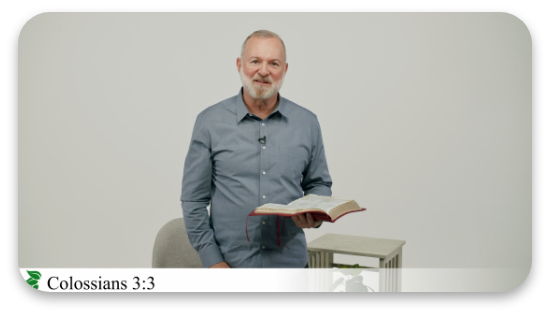
God hath not given us the spirit of fear, and in this teaching that fear is cowardice or timidity. Rev. Rico Magnelli reads 2 Timothy 1:7 and 1:8 at the end of Paul’s life, when many had rejected him and his teaching that Christ is in each child of God. Timothy was not afraid, but it was a temptation to cower, so Paul points him to the spirit God did give: power, love and a sound mind, over against what the world offers as money, love and wisdom. Because that spirit is his, Timothy is not to be ashamed of the testimony of our Lord, nor of Paul, a prisoner by free will. Luke 4 and 1 Corinthians 12 then show the cost of familiarity.
Transcript
Freedom from Fear in 2 Timothy 1:7: The Context of Paul’s Last Letter
Please turn to 2 Timothy 1:7, we’re going to briefly consider a little bit more on this freedom from fear. So 2 Timothy 1:7, freedom from fear, not ashamed. A little bit of context here, towards the end of Paul’s life, many had rejected him and his teaching regarding Jesus Christ.
And here he pens this tremendous epistle to Timothy, his protégé, towards the end of his life. Paul was undeterred by the rejection, and he continued to encourage Timothy to continue with the things he had learned about Jesus Christ. And these were certainly challenging times in the early church, let’s make no mistake about it.
As they rejected Paul, so too this attitude permeated the early church late into the first century. And what happened was, is religious doctrines sprang up, and the significance of each child of God with Christ in them was lost. So this is the environment in the context of 2 Timothy, and in 2 Timothy 1:7 it says, For God hath not given us the spirit of fear, but of power and of love and of a sound mind.
The Spirit of Fear Means Cowardice or Timidity
God hath not given us the spirit of fear. That fear is cowardice or timidity. In the context of the church being in such decline at this time in the first century, and many enemies and rejecters of what Paul was teaching regarding Christ in people, and the household of faith, the body of Christ, it makes a lot of sense.
Timothy wasn’t afraid, but it was a temptation to cower. And the word says in the latter part of the verse, but of power and of love and of a sound mind. And there is a figure of speech in here, an ellipsis, that we would properly supply the phrase, but the spirit of power and of love and of a sound mind.
Power, Love and a Sound Mind Versus the World’s Counterfeits
So God had not given us the spirit of fear or cowardice, but the spirit of power and of love and of a sound mind. And these three things have corresponding and contrasting worldly enticements. It would come through what the world represents as power or money, and the power that it brings people.
But God has given you and I all the power in Christ Jesus you’re ever going to need. Or what the world represents as love, the love of God is greater than that. And of course, a sound mind.
And the world would contrast this with the wisdom of the world. The world is ever learning, trying to accumulate so much wisdom, yet they can’t come to a whole sound mind without the knowledge of the word and our Lord Jesus Christ. But yet in the spirit given to us, we have all the power we need, all the love we need, and the sound, healthy, whole mind that we need. We don’t need what the world necessarily is offering in terms of our sound, whole mind.
2 Timothy 1:8: Be Not Ashamed of the Testimony of Our Lord
Verse 8, be not therefore ashamed of the testimony of our Lord, nor of me his prisoner, but be thou partaker of the afflictions of the gospel according to the power of God. He encourages the young leader, Timothy, not to be ashamed of the testimony, which is the word witness, of our Lord.
He includes himself, Paul included himself in Timothy as our Lord, meaning he’s your Lord, Timothy, he’s my Lord. And this is referring to Jesus Christ. See, to make Jesus Christ Lord for the unsaved is what we would call the new birth.
To make Jesus Christ Lord for the saved is to be sold out in service. That is what he’s talking about. He’s talking about, don’t be ashamed of the witness of our Lord Jesus Christ, and nor of me his prisoner.
A Vessel Unto Honor, Meet for the Master’s Use
Paul was his prisoner by choice, meaning he had sold himself out in the cause of Christ. Another way to look at it is in 2 Timothy 2:21, it says this way, that we are to be a vessel unto honor, sanctified, and meet for the master’s use, and prepared unto every good work. Once someone gets born again, they confess Jesus as Lord, believe that God raised him from the dead, then they sell out to Jesus Christ as Lord in service.
And Paul is saying, don’t be ashamed of selling out to our Lord. Paul was a prisoner by free will. He made himself captive to the cause of Christ.
The Pressure to Cower Comes From the World
And there is a temptation, a cowardice, a timidity, if you will, to not sell out to Jesus Christ, absolutely. And the pressure can come from the world in many different ways. Here in this context, it would come through what the world represents as power or money, or what the world represents as love.
The love of God is greater than that, and of course, a sound mind. The world is ever learning, trying to accumulate so much wisdom, yet they can’t come to a whole sound mind without the knowledge of the Word and our Lord Jesus Christ. And Paul is encouraging him not to be afraid and not be ashamed of the witness of our Lord.
Luke 4: No Prophet Is Accepted in His Own Country
Look at Luke chapter 4, please, Luke chapter 4. See, in the first century, when they rejected the Apostle Paul and the teaching, that’s when everything started to go down. But this is not something new. Look here in Luke chapter 4, when Jesus Christ opens his public ministry, we see this truth.
He opens it up in his hometown of Nazareth, and he grew up there. He was a carpenter there. His family was there. Many people he knew. And they couldn’t get over that this young man had been raised in the town with them, and where did he come to all this tremendous oratory skill? Where did he come across all this? They couldn’t reconcile it.
In Luke chapter 4, in verse 24, and he said, Verily I say unto you, no prophet is accepted in his own country.
Too Familiar: That’s a Son of God, That’s a Daughter of God
See, he was too familiar to them. They had seen him day in and day out. He was too familiar. They could not get past that. That’s something we have to guard against with each other and never allow us to get too familiar with each other, where we take each other, you know, oh, that’s just him or that’s just her. No, that’s a daughter of God. That’s a son of God.
Elias and Eliseus: The Widow of Sarepta and Naaman the Syrian
And he goes on to say, but I tell you of a truth. Many widows were in Israel in the days of Elias, and that’s Elijah. One is translated from the Greek, one is translated from the Hebrew. That’s why it’s spelled differently. When the heaven was shut up three years and six months, when great famine was throughout all the land, but unto none of them was Elijah sent, save unto Sarepta, city of Sidon, unto a woman that was a widow.
And many lepers were in Israel in the time of Eliseus, which is Elisha, the prophet. And none of them was cleansed, saving Naaman, the Syrian. And the people responded with great anger.
Why Jesus, Elijah and Elisha Were Rejected in Their Own Time
See, they rejected Jesus in his hometown because they were too familiar with him. They could not accept that he was anointed of God. He was the Christ.
They rejected Elijah and Elisha in their day and time, because what they told was the truth regarding the true God. And they identified error of the false gods. See, these men should have been embraced and accepted.
1 Corinthians 12: The World Does Not Determine the Value of a Child of God
Look at 1 Corinthians 12, please. We can never allow the world’s influence to determine the value of a child of God. Now I understand that not everybody is going to walk according to the word.
I don’t necessarily have to respect what people do with what God gives them, but I do respect what God did in them, and that’s Christ. 1 Corinthians 12, verse 23, and those members of the body, which we think to be less honorable, upon these we bestow more abundant honor, and our uncomely parts have more abundant comeliness. Even as the body has different members and parts that some might consider a little bit more comely or uncomely, God has tempered each one.
In the physical body as well as the spiritual body together. For our comely parts have no need, but God has tempered the body together, having given more abundant honor to that part which lacked. When that really lives within an individual, then the next two verses make sense.
No Schism in the Body: The Same Care One for Another
That there should be no schism in the body. There should be no schism in the body, but that the members should have the same care one for another. Mutually, reciprocally have the same care.
And that doesn’t mean in quantity, it means in quality. Because there are times when certain members need more attention, need more support, need more effort. That would be in the category of quantity.
But the level of care we have one for another in quality, even if it’s one minute, it still has the same level. It never drops the threshold of quality. It’s always at the highest level. Even if it’s one minute, or one day, or one hour, or one week. Quantities can change, the quality will not. Because we have the same care one for another.
This Treasure in Earthen Vessels: We Value What God Did in Us
Because 2 Corinthians 4:7 says that we have a treasure in earthen vessels. And that’s what we value. We value what God did in us.
And we want to encourage that in each of us. And in the first century, they lost it. Even by the end of Paul’s life, they lost it. And there were doctrines and religious systems that had already been set in motion. Even during the time of the life of the Apostle Paul. And that’s something we cannot allow.
Whether One Member Suffer, All Members Suffer With It
And this can be a fear, or we can be tempted to be afraid, to be ashamed of the witness of our Lord. Or ashamed of people that have dedicated themselves. And whether one member suffer, all members suffer with it.
Or one member be honored, all members rejoice with it. Now you are the body of Christ, and members in particular. That means individual members with Christ within us, we are yet part of a larger whole, the body of Christ.
And the body of Christ emphasizes the interdependent functioning of each member in unity. So like Paul was encouraging Timothy not to be afraid, and not to be ashamed, we have a spirit that has everything that we need. The power, the love, and the sound mind that the world does not have to draw us away.
Every Moment Is Precious: We Fight for What We Value
And we just never are ashamed of the witness of our Lord. And as we each serve our Lord Jesus Christ the best we can, we encourage one another. We encourage and reach out to each other. We pray for each other. And not take each other for granted. Even if we’re familiar with somebody, they may even live in the same home.
See them every day. Never take them for granted. Absolutely not. Every moment is precious. Every moment is precious. We fight for what we value.
And it starts with the greatest value God could put in man, and that was what he wrought in Jesus Christ, the new birth, the faith of Jesus Christ, and eternal life abiding within us. So, a little exhortation on freedom from fear, not being ashamed.
Key Takeaways
- The fear in 2 Timothy 1:7 is cowardice or timidity, and it fits a first-century church in decline where many had rejected Paul and his teaching about Christ in people.
- An ellipsis in the verse should properly be supplied as, but the spirit of power and of love and of a sound mind.
- Power, love and a sound mind each have a contrasting worldly enticement: power or money, the world’s love, and the wisdom the world is ever learning but which never becomes a whole sound mind.
- Paul was a prisoner by free will, sold out in the cause of Christ, a vessel unto honor, sanctified, and meet for the master’s use, so Timothy was not to be ashamed of him or of the witness of our Lord.
- Jesus was rejected at Nazareth because he was too familiar to them, and that same familiarity can make us take each other for granted instead of seeing a son of God or a daughter of God.
- There should be no schism in the body, and the same care one for another is measured in quality, not quantity: even if it’s one minute, it never drops the threshold of quality.
Frequently Asked Questions
What does the spirit of fear mean in 2 Timothy 1:7?
That fear is cowardice or timidity. Rev. Rico Magnelli sets the verse in the context of the church being in such decline at this time in the first century, with many enemies and rejecters of what Paul was teaching regarding Christ in people. Timothy wasn’t afraid, but it was a temptation to cower, and God had not given him that spirit but the spirit of power and of love and of a sound mind.
Why does Paul call himself the Lord’s prisoner in 2 Timothy 1:8?
Paul was his prisoner by choice, meaning he had sold himself out in the cause of Christ. He was a prisoner by free will who made himself captive to the cause of Christ. The teaching links this to 2 Timothy 2:21, that we are to be a vessel unto honor, sanctified, and meet for the master’s use. To make Jesus Christ Lord for the saved is to be sold out in service, and Paul says don’t be ashamed of that.
What does it mean to have the same care one for another in 1 Corinthians 12?
It means the care is the same in quality, not in quantity. There are times when certain members need more attention, need more support, need more effort, and that would be in the category of quantity. But the level of care we have one for another in quality, even if it’s one minute, it still has the same level. It never drops the threshold of quality. It’s always at the highest level.
Scripture References
2 Timothy 1:7; 2 Timothy 1:8; 2 Timothy 2:21; Luke 4; Luke 4:24; Luke 4:25; Luke 4:26; Luke 4:27; 1 Corinthians 12; 1 Corinthians 12:23; 1 Corinthians 12:24; 1 Corinthians 12:25; 2 Corinthians 4:7; 1 Corinthians 12:26; 1 Corinthians 12:27
This text was prepared from the teaching audio. Please verify scripture references against your own Bible.