Overview
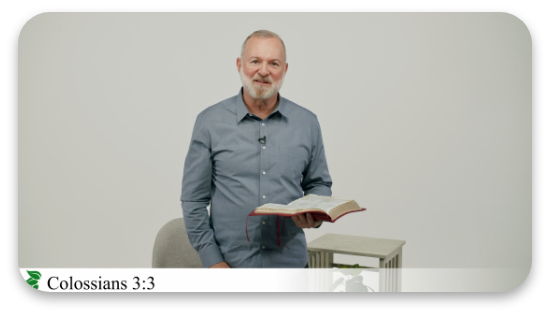
Sara Grilliot examines “Grace is Our Unearned Identity” through Ephesians 2, James 3, Romans 5, showing how grace, identity, christ shape a believer’s relationship with God, daily choices, and service to others.
Transcript
Understanding Grace is Our Unearned Identity
This teaching is about how grace is part of our identity. This is the third part of a three-part series, the first one taught by Suzanne Grilio on August 24, 2023, which was about grace and works and how we only need to reach out to God’s grace to access it because it is part of our inheritance. The second part in the series was by Michelle on the same date, August 24, 2023, and was about living grace, how we do this in our everyday life and how easy it is when we acknowledge God.
So now in how grace is part of our identity, we’re going to talk about how grace is part of our identity in Christ. So let’s start with the punchline. We can’t earn grace.
I think we can all agree on that after what we heard in other parts of the series and in other teachings on this website about grace. Our identity in Christ was not earned. It was given as the gift of God.
The very fact that we have our identity in Christ is grace. Grace is at the foundation of our identity because we couldn’t possibly earn it. This is an important point because in our culture, we are very focused on working to earn.
We work, we get rewarded, primarily with money to buy things. And for many of us, working to earn takes up a lot of our time. Or maybe it did at a certain point in our lives, if it doesn’t today.
The Biblical Foundation
I explained this concept to my son the other day. He’s three years old. When the Amazon truck pulled up in front of our house, I told him we have to work to have money to buy these things.
The truck doesn’t just show up with all this stuff for us. So with grace, it really requires constantly remembering that you can’t earn it. It’s a gift.
You can’t do anything to get it. You can’t work hard enough for grace. It was a gift, and you also cannot lose it.
This may even feel a little uncomfortable, but we don’t have to be tied to an earned identity like we may be tied to one in many of our worldly endeavors. Please turn to Ephesians 2, 8 through 10 if you’re following along in a Bible. Ephesians 2, 8 through 10.
In verse 8, it says, for by grace are you saved through faith, and that not of yourselves it is the gift of God, not of works, lest any man should boast. For we are his workmanship, created in Christ Jesus unto good works, which God hath before ordained that we should walk in them. The very fact that our identity is in Christ, that we are seated in the heavenlies, is grace.
Examples and Spiritual Lessons
Ephesians 2, verses 4 through 6 say, But God, who is rich in mercy, for his great love wherewith he loved us, even when we were dead in sins, hath quickened us together with Christ, by grace ye are saved, and hath risen us up together and made us sit together in heavenly places in Christ Jesus. We did nothing to earn this, but we sit with Christ in heavenly places. God identifies us with Christ.
He sees no difference in our standing versus the standing of his Son, Jesus Christ. Think about that, in light of everything Jesus Christ accomplished and the impact he had on mankind, both directly at the individual level and indirectly at a macro level. We can have the same impact on society, at a macro level or individual level, as we remember our identity and operate with grace.
Sometimes we don’t even know that we are operating with grace, we just walk out on our identity. We have that same identity, the same standing as Jesus Christ did, because of the work he accomplished. So let’s talk for a few minutes about identity.
What is identity? Is it your passport? Is it your social security number? Is it your email address or your various roles, like a job title? Maybe you’re an aunt, maybe you’re an uncle, a brother, a sister, a mom, or a dad. In IT, you hear things like common identity management or stolen identity. We just got a passport for our three-year-old, and I remember thinking, now he is official.
Faith in Action
He has his identity documentation and proof of his citizenship. It’s really hard sometimes not to think this way, because sometimes identity can feel like an object or even like a destiny of some kind. This is who I am.
This is who I’ve always been. Maybe this is who I have to be, but it isn’t who you have to be. Your identity is in Christ.
Your identity is a son of God, and your function is to operate within his framework and his will. And thank God that comes with grace, because without it, we may feel like a failure. We may feel like we are not doing enough.
We may feel like we are not enough. Well, that couldn’t be farther from the truth when we are walking with God. So let’s talk about this a little more.
God has called each of us to do something, probably a lot of things. Some things we probably don’t even realize or know why he has called us to do those things. Well, how do we know what God has called us to do? This is a big question and one that is frequently asked.
Walking in Love and Confidence
What is God’s will for my life? Since we are talking about your identity or my identity, which is very personal, only you or I can answer this with God. But here is a guide in James 3 verses 17 and 18. James 3 verses 17 and 18.
But the wisdom that is from above is first pure, then peaceable, gentle, and easy to be entreated, full of mercy and good fruits, without partiality and without hypocrisy. And the fruit of righteousness is sown in peace of them that make peace. Each of us is called to do something different and it is very personal.
We also don’t know the short-term or long-term impact of what we’ve been called to do. We may be called to do something for an hour. We may be called to do something for decades.
And within that, God has given us the gift of grace so we can carry those things out that we’ve been called to do with success. In Romans 5 verse 2, it says, by whom also we have access by faith into the grace wherein we stand and rejoice in the hope of the glory of God. We stand.
Think of this as we are always standing in his grace, which we have been able to access through the faith of Jesus Christ. And we are able to do it, to stay standing, doing what he has called us to do because of his grace. Second Corinthians 9, 8. And God is able to make all grace abound toward you, that ye, always having all sufficiency in all things, may abound to every good work.
Applying the Teaching in Daily Life
Isn’t that wonderful to know? God has made all grace abound toward each one of us. And we have all sufficiency in all things so that we can abound to every good work. So no matter what God has called us to do, whether it be for an hour or even less, or maybe to do for decades, he’s given us everything that we need.
He’s given us all grace and all sufficiency so that we can carry out whatever it is that he has called us to do. He’s fully equipped us. He’s given us access by faith to his son, Jesus Christ.
And it is through his faith, Jesus Christ faith, that we received more grace than we ever could have hoped for. We haven’t earned it. In fact, we cannot earn it.
And we have to remind ourselves that we cannot earn it. There are not works that we can do. There is not effort that we can take to earn that grace, but rather it’s been given to us as a gift.
Our response then is to act according to God’s calling. God called us to act according to that identity, our identity in Jesus Christ. And his grace continues abounding toward us so that we can do all that he has called us to do.
Key Takeaways
- So now in how grace is part of our identity, we’re going to talk about how grace is part of our identity in Christ.
- The very fact that our identity is in Christ, that we are seated in the heavenlies, is grace.
- And within that, God has given us the gift of grace so we can carry those things out that we’ve been called to do with success.
- This teaching is about how grace is part of our identity.
- The very fact that we have our identity in Christ is grace.
Frequently Asked Questions
What is the main message of “Grace is Our Unearned Identity”?
Sara Grilliot examines “Grace is Our Unearned Identity” through Ephesians 2, James 3, Romans 5, showing how grace, identity, christ shape a believer’s relationship with God, daily choices, and service to others.
Which scriptures are central to this teaching?
The teaching draws especially from Ephesians 2, James 3, Romans 5.
How can believers apply this teaching?
And within that, God has given us the gift of grace so we can carry those things out that we’ve been called to do with success.
Scripture References
Ephesians 2; James 3; Romans 5
This text was prepared from the teaching audio or source document. Please verify scripture references against your own Bible.