Overview
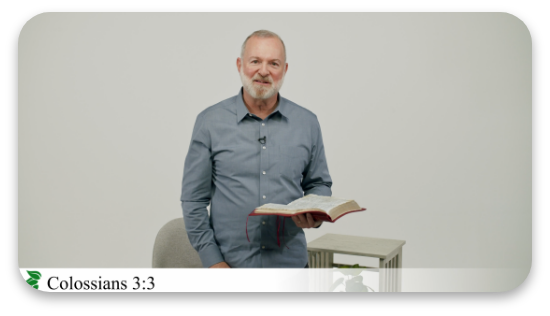
This teaching presents patience as purposeful waiting and endurance directed toward a positive goal—not frustration, passivity, or negativity. Using Psalms 40 and 37, the parable of the sower, James 1, and Jeremiah 29, it shows patience as a quality initiated by God, developed through believing, and accompanied by anticipation of His perfect timing.
Transcript
What Biblical Patience Means
Can you please turn to Psalm, Psalm 40, if you all would turn to Psalm 40. When you say the word patient, what do you think of? Me, I’m a teacher, so I think of a teacher that is working with a student who has difficulty grasping a math concept and the teacher shows that student different ways to approach the problem. The goal of being patient with the student is to help him understand.
Or maybe you think of a friend or a relative in a hospital waiting for a procedure to be done. The goal being to fix a medical issue. Or perhaps you think of patients in the opposite direction, like that inpatient driver who’s honking and honking and laying on his horn because he wants to get past you.
That’s his goal. It’s the opposite of what we think. So there are several different aspects to being patient.
Like the teacher, it implies enduring to help that student get it right. And like the patient, it implies waiting until that procedure can be done. And the opposite of being patient is to be slow to anger, opposite of that driver that was honking at you.
Waiting Patiently for the Lord
In each of these scenarios, the purpose of being patient was to achieve a goal. Our God is patient. So if you’ll go to Psalm 40, and we’re gonna look at one of the earliest usages of the word patient.
And that’s right in Psalm 40, verse one. I waited patiently for the Lord, and he inclined unto me and heard my cry. He brought me up also out of a horrible pit, out of the miry clay, I think there’s a song about that, and set my feet upon a rock and established my goings.
So one of these first earliest usages of patient happens to be a figure of speech. And the figure is polyptoton. In other words, this can be translated, in waiting, I waited.
Polyptoton is a figure of speech that involves the repetition of words. But the words are delivered from the same root. So placing different forms of the same word in close proximity to each other, emphasizes the root word.
In the case of Psalms, it’s wait. Y’all know an author called Dr. Seuss, he was a master at putting words and using polyptoton. There’s one thing I looked up and it said, from Dr. Seuss, today you are you.
That is truer than true. There is no one alive who is you-er than you. My kids used to love reading some of this Dr. Seuss stuff because really the emphasis made it so clear.
You’re an individual, you’re true. There’s no one you-er than you. So in Psalm 40, this figure of speech is emphasizing the wait.
And the wait, what does that mean? When you wait for something? This means to delay taking any further action until a particular time. That’s waiting. Just delaying action until a particular time.
So what was the psalmist waiting for in verse one? He was waiting for all the goody stuff in verse two. To be up out of a horrible pit and to be placed upon a rock, establishing my goal, establishing his goings. So to be patient has a huge emphasis on waiting because you want to achieve a goal.
It’s a very, very positive understanding of the word. Have you ever been frustrated with something? Perhaps you’re doing some type of craftwork or maybe you’re building something and you get a little frustrated because I know this has happened to me. I was building furniture in my new home that God blessed me with and the directions were terrible and I was getting so frustrated.
And I didn’t have anybody come over and say to me, oh, you’re frustrated. You should be patient. That would just make somebody angry at the time because they’re already frustrated.
That is not what patience is. Actually, it’s the complete opposite. There is no frustration.
Resting in God’s Timing
There is no negative connotation to this word patience. It is amazing when you look at it from the word of God, from God’s perspective. So flip back a couple of Psalms to Psalm 37.
Let’s flip back a couple of pages in your Bible to Psalm 37 and look at another usage of the earlier usage of patience. Verse seven. And read, rest in the Lord and wait patiently for him.
There’s that figure speech again. In waiting, I waited. Threat not thyself because of him who prospers in his way, because of the man who bring his wicked devices to pass.
Once again, we’re emphasizing waiting, but here there’s another dimension about patience that we can see. So while you’re waiting, don’t get caught up with others who are not waiting for the same thing you are. Don’t worry about what other people are doing or what that neighbor next door, his furniture is all together and mine is not.
That’s not what it’s about. Let’s read the context to get a better understanding of this patience idea. So just go back to verse one of Psalm 37.
And read, fret not thyself. The word fret means don’t get all anxious and impatient. Get antsy.
Fret not thyself because of evildoers. Neither be thou envious against the workers of iniquity, for they shall soon be cut down like the grass. Well, have you cut your lawn lately? What did you do with those grass clippings? You didn’t worship them, you throw them out.
That’s what evil doers, that’s what, you know, God has a plan for them. That’s what’s gonna happen. So the grass shall soon be cut down and wither as the green herb.
Trust in the Lord and do good. So shalt thou dwell in the land and verily thou shalt be fed. Nothing bad about that.
Delight thyself also in the Lord and he shall give thee the desires of thine heart. Oh, there’s another aspect that I’m like, oh yeah, I can patiently wait for that. Commit thy way unto the Lord.
Trust also in him and he shall bring it to pass. Well, cha-ching on that one, we’ve all waited for something that God has promised us and when it came to pass, how did that make you feel? Like a million bucks, which is how you should feel. You’re a child of God.
And he shall bring forth thy righteousness as the light. What a beautiful phrase. And thy judgment as the noon day.
And here we come with that word patient. So rest in the Lord and wait patiently for him. Threat not thyself because of him who prospers in his way, because of the man who bringeth wicked devices to pass.
He’s made it abundantly clear. First of all, the people who are evildoers, don’t worry about them. They’re out of here.
Just ignore them. But rest in the Lord, waiting patiently. So it gives a little bit of a dimension of sometimes when you’re waiting or being patient because God has the timetable, not us, you just thought that some people will be very negative.
Remember Noah? He waited over a hundred years and those people were not throwing at him words of encouragement and joy. They were not nice to Noah, but he waited patiently because he knew what God was going to bring to pass. So patience is needed.
It’s an absolute necessity in our lives to have all the good things in verses one through seven. This is how our God set up life. He’s the author of patience.
Bringing Forth Fruit With Patience
And since he never changes, you know what? He will always be patient with us. Let’s go to Luke chapter eight. We’re going to Luke chapter eight to look at the parable of the sower and the seed, something we’re all very familiar with, but it’s got some great ideas or a little bit more dimensional analysis if you wanna look at that, I’m a math person, but it just helps us to understand a little bit more about what this great patience is all about.
So in Luke chapter eight, let’s pick up the account in verse four. And when much people were gathered together and were come to him talking about Jesus Christ, were come to him out of every city, he spake by a parable. A sower went out to sow his seed.
And as he sowed, some fell by the wayside and it was trodden down and the fowls of the air devoured it. And some fell upon a rock. And as soon as it was sprung up, it withered away because it lacked moisture.
And some fell among thorns and the thorns sprang up with it and choked it. And other fell on good ground and sprang up and bear fruit a hundredfold. Lots and lots of fruit.
And when he had said these things, he cried, he that has ears to hear, let him hear. There’s that poly, by the way, that polyptoton again. And if you have ears to hear, let them hear.
And his disciples asked him saying, what might this parable be? I don’t get it. They didn’t have Holy Spirit back then. Jesus Christ had to be pretty plain with them.
And he said, unto you is given to know the mysteries of the kingdom of God. But to others in parables, that seeing they might not see and hearing they might not understand. So now the parable is this.
So I explain it to them as plain as plain can get. The seed is the word of God. Okay.
Those by the wayside are they that hear. Then cometh the devil and taketh away the word out of their hearts, lest they should believe and be saved. Ah, whoa.
They on the rock are they which when they hear, receive the word with joy. Yay. And these have no root, which for a while believe and in time, and in time, temptation, they fall away.
And that which fell among the thorns are they which when they have heard, go forth and are choked with cares and riches and pleasures of their life and bring no fruit to perfection. But, that on the good ground are they, which in an honest and good heart, having heard the word, keep it and bring forth fruit with patience. Ta-da.
What an amazing thing to have this patience. Anybody who’s a farmer knows that when you sow seed, it doesn’t turn into corn or wheat or whatever it is that you’re sowing. It doesn’t happen overnight, but they anticipate it.
Endurance and Joyful Anticipation
So part of patience is anticipating when that final goal is achieved. It’s exciting. It’s wonderful to wait for these things and build that patience.
It implies the word endurance. And sometimes I don’t like to use that word with people because it has such a negative connotation in our culture. But endurance is phenomenal.
That is how our bodies work. Ever been to the gym? I know many of you have. Ever gone for a goal? Ever wanted to lose weight or strengthen your upper body or whatever it is that you do with your body.
You endure, but it’s not a negative thing. Just means you’re working for a goal, an exciting goal. Maybe ladies, you wanna wear that new dress at some event.
You’re working and you’re patient about it with endurance, with the goal in mind. But it’s a joyful idea. So endurance, that’s also a part of patience.
Actually, the word patience, when I looked it up, means a holding up under. So many of you might be familiar with Atlas. I’m talking about the Atlas that you find a map, but that thing, I think it’s Greek mythology, that mighty, mighty man who has the whole world upon his shoulders.
That’s what I think about in the sense that he is under and upholding. That’s what endurance means. You’re under, you’re upholding, that’s patience.
That’s how God intended us to achieve things on his prime table. None of these examples have a negative connotation whatsoever. That’s because God initiated patience.
The same God who initiated light and love, because that’s who he is, is also patient. So it’s a really positive thing and an excellent way to live our lives, because it’s God’s ways and his ways are way better than ours are. God has a timetable and his timing is perfect.
God’s Timetable in Creation
Remember, he inhabits eternity. He has set up the seasons. Summer follows spring, spring follows winter, winter follows fall, fall follows summer, summer follows spring.
I mean, it’s already a scheduled way that the earth was set up in Genesis. The timing is already set. Out here in Utah, we get a lot of amazing snow and skiers, oh, they wait patiently for that snow.
They’re not frustrated that it’s not snowing right now in June and July. No, they understand they need to wait. And the anticipation of sliding down that hill is part of the waiting process.
They’re building up their anticipation of that goal. That’s patience. Another great example that I’m very familiar with, with patience, is being a pregnant woman.
When I found out I was pregnant, I was so excited. My first child, oh, what is this gonna mean? What’s it gonna be all about? I didn’t get frustrated that my child wasn’t born two weeks later. No, I may have had some difficulties being pregnant, but nothing that I couldn’t endure for the joy that was gonna happen.
I knew that the amount of time it takes for that child to fully develop was nine months. In fact, I didn’t want my child to be born in less than nine months because I understood the timetable there. So I was patient.
So patience is enduring and waiting, quite often with anticipation until a particular time when the event actually happens. And God is the one who set up the waiting period. You can see it throughout God’s creation.
Let Patience Have Her Perfect Work
So it’s a good thing. No frustration involved whatsoever. Let’s go to James chapter one, the back of your Bible.
James chapter one. Here’s a couple of verses that perhaps you are very well, you know what it’s about. You’re familiar with this verse.
James chapter one. We’re gonna read verses three and four. Knowing this, that the trying of your faith worketh patience, but let patience have her perfect work that ye may be perfect and entire, wanting nothing.
How’s that goal grab you? Wanting nothing. In other words, when you’re faced with decisions to believe God, your endurance has a chance to grow. It’s a good thing.
So let it grow. For when your endurance is fully developed, you’ll be complete, needing nothing. Wow.
God’s Plans, Hope, and Future
God is sure a God of love. He set up this timetable and the idea of patience with all the light and love that he truly is. So let’s close out in Jeremiah chapter 29.
One of my favorite verses in the scriptures because it just, oh, it just tells us who God really is. In Jeremiah chapter 29. I’m gonna read this from the NIV version.
We’re just looking at one verse. Jeremiah 29, verse 11. And it reads, for I know the plans I have for you, declared the Lord.
Plans to prosper you and not to harm you. Plans to give you hope and a future. That’s why God initiated patience.
He has these amazing plans for us and he’s waiting for these things to happen. So he has these plans to prosper us, to bring us to a great hope, Jesus Christ returned, and an amazing future. God’s patience is part of his sovereign plan and perfect timing.
God knew when you’d be born before you were ever born, right? He knows eternity’s timeline and he is patient for things to happen. To use that figure of speech, polyptoton, God is patiently waiting for all the great things that are going to happen in our lives. God bless you.
Key Takeaways
- Patience is described as delaying further action until the proper time in order to reach a worthwhile goal.
- The repeated wording in “I waited patiently” emphasizes waiting and is identified as the figure of speech polyptoton.
- Biblical patience has no necessary connotation of frustration; it includes rest, endurance, and anticipation.
- The good-ground hearers in the parable of the sower keep the Word and bring forth fruit with patience.
- Examples from farming, exercise, the seasons, skiing, and pregnancy illustrate waiting for a known process to reach maturity.
- God’s patience is connected to His plans to prosper His people, give them hope, and bring His purposes to pass in perfect timing.
Frequently Asked Questions
What is biblical patience?
Biblical patience is purposeful waiting and a holding up under while anticipating a positive result. The teaching emphasizes that patience is not frustration; it is endurance directed toward a goal.
Why is patience connected with God’s timing?
God established processes, seasons, and appointed times throughout creation. Patience allows a believer to wait without fretting while trusting that God’s timetable and purposes are sound.
How does patience grow in a believer’s life?
The teaching says that keeping God’s Word, continuing through tests of believing, and allowing patience to complete its work develop endurance and help a believer become complete and fruitful.
Scripture References
Psalm 40:1–3; Psalm 37:1–7; Luke 8:4–15; James 1:3–4; Jeremiah 29:11
Verification Note
This WordPress pack was prepared from the complete source transcript. Topical headings were added for navigation, while the transcript paragraphs were retained in their original order. Scripture references, names, and transcription wording should be checked against the original audio or video before final publication.