Overview
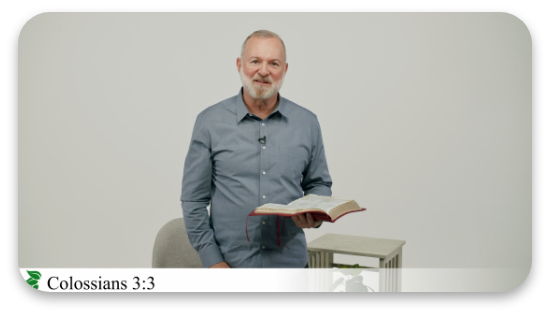
A still small voice is how God finally reached Elijah: not through the wind that rent the mountains, not the earthquake and not the fire, but a low whisper in his heart at Horeb. In 1 Kings 19, Rev. Rico Magnelli walks through Jezebel’s death threat, Elijah’s collapse under the juniper tree, and the angel’s instruction to arise and eat, and shows that God cared for the prophet’s body before he ever addressed the crisis. The teaching sets Elijah’s view against God’s view: Elijah rehearses an endless negative loop in isolation, while God already has the plan, the successors and the seven thousand who have not bowed to Baal ready to go.
Transcript
Bad News, a Dire Report, and the Temptation to Give Up
We want to consider a still small voice from the life of Elijah. You can turn to 1 Kings chapter 19. Sometimes in life we receive bad news, a dire report, a pending threat to life and limb, and we’re tempted to give up.
This is a time to get quiet with the Lord and talk honestly with him. What’s interesting is when we do, we find out that he has already prepared a path for us to navigate the challenge. Despite the situation and how it looks, it never changes God.
God is and remains the same. When David fought Goliath, God did not reduce the size of Goliath or disarm him. He simply worked in David on how to overcome the challenge.
Be Still and Know That I Am God
Getting ourselves quiet with God is so necessary, especially in challenging situations. It says in Psalm 46:10, be still and know that I am God. Be still in your heart, leave room in your heart for him to experience him, is what that’s talking about.
And I’m reminded of when the children of Israel, some two and a half million people, had their backs against the Red Sea and the Egyptian army was approaching. Moses makes this great statement in Exodus 14:13. He says, fear not, stand still, meaning firm in the face of the challenge, and see the salvation of God.
Well, we want to look at Elijah and how he got quiet with God in his heart. And he heard a still, small voice. And that’s what led him out of his challenge.
Who Elijah Was: The Drought, the Widow and the Prophets of Baal
Now, a little bit of background, Elijah was, as many of you know, a great prophet. And previous to chapter 19, we read about how he prophesied for a drought that would last about three and a half years. And that drought was a judgment, if you will, against Baal.
Baal was one of the Canaanite deities that Israel had fallen into worshiping. Baal was a deity of fertility and rain, ironically. Well, after he announces this drought, he flees from the evil king Ahab, and Elijah is miraculously sustained by birds, by a brook, for a period of time.
Then he’s sent to be sustained by a widow woman with food that does not run out. And during that time, Elijah raises her son from the dead. Amazing.
Jezebel’s Death Threat in 1 Kings 19
Eventually, Elijah shows himself and confronts Ahab and takes a stand against the prophets of Baal in front of all Israel, and defeats and eliminates them. It’s then that he receives this credible death threat from Ahab’s wife, Jezebel. She was the promoter, if you will, and the protector of Baal worship.
So this is where we pick it up in 1 Kings 19, verse 1. And Ahab told Jezebel all that Elijah had done, withal how he had slain all the prophets with the sword. Then Jezebel sent a messenger unto Elijah, saying, so let the gods do to me and more also if I make not thy life as the life of one of them by tomorrow about this time. So Elijah certainly considered this a credible threat.
This was not something to take lightly. And you know, we may not necessarily receive a death threat, but we can receive bad news. We can be tempted to feel helpless, even fearing for our life.
Under the Juniper Tree: It Is Enough, Now, O Lord
What does Elijah do? Verse 3, and when he saw that he arose and went for his life and came to Beersheba, which is in the south of Judah, which belonged to Judah and left his servant there, but he himself went a day’s journey into the wilderness and came and sat down under a juniper tree. And he requested for himself that he might die and said, it is enough now, O Lord, take away my life for I am not better than my fathers. So he’s tempted to give up against this intimidating challenge.
And at times that can happen, you can feel helpless in such a situation. What’s interesting here is the juniper tree has some symbolic significance to certainly Israel. It represents protection and healing and care, but it also represents resilience because it’s known for its ability to endure harsh environments.
So he’s under this tree and he says, I’m done. I’m not better than my fathers. And maybe he even thought about Abraham, who had been down in Beersheba for a while, years and years and years ago.
Arise and Eat: God Takes Care of the Man Before the Problem
You know, a lot of things go through your mind, reflections and considerations when these types of challenges come and we have to face them. It says in verse five, and as he lay and slept under a juniper tree, behold, then an angel touched him and said unto him, arise and eat. I think that’s so beautiful.
Arise and eat. God’s first response to him is to take care of him. God’s concerned for his well-being.
He doesn’t address the issue yet. Arise and eat. Verse six, and he looked and behold, there was a cake baken on the coals and a cruse of water at his head.
And he did eat and drink and laid him down again. He must have been pretty exhausted. See, sometimes dealing with challenging situations can be emotionally draining.
Why Rest and Simple Routines Matter in a Crisis
It isn’t just physically draining. It can be emotionally draining. And that’s why at times rest is so in need.
Sometimes continuing in simple routines can be what we need during challenging times. Why is that? It’s because they can bring stability and comfort by doing something we’re familiar with. Also, look at, again, God’s care for this great man.
He wants him to maintain his body, have the rest that he needs, you know, good eating and certainly water contribute to that well-being. Verse seven, and the angel of the Lord came again the second time and touched him and said, Arise and eat, because the journey is too great for thee. So God knows where he’s going.
He absolutely knows what’s going to happen. See, that’s the whole backdrop here. This whole record, there’s many ways to handle this record, but one way to handle this record is Elijah’s view and God’s view, and they bring different results.
Forty Days to Horeb, the Mount of God
Verse eight, and he arose and did eat and drink and went in the strength of that meat 40 days and 40 nights unto Horeb, the Mount of God. So he went south. Horeb is another way of describing Mount Sinai, where Moses received the tablets of stone.
So he’s on this incredible journey, and he reaches Horeb, or Sinai, and he came thither unto a cave and lodged there. And behold, the word of the Lord came to him, and he said unto him, What doest thou here, Elijah? What an interesting question. Of course, God knows what’s going on, but the question requires a response.
Elijah’s View and God’s View
See, again, Elijah’s view and God’s view, because God knew what he had done in the previous chapters to take a stand for Israel and really rid them of the scourge of Baal. He knew that, and God never would have asked Elijah to take a stand against Baal if he wasn’t willing to back him up. So God is working with Elijah here, asking him a question, getting him to respond, and watch how he responds in verse 10.
And he said, I have been very jealous or zealous for the Lord God of hosts, for the children of Israel have forsaken thy covenant, thrown down thine altars, and slain thy prophets with the sword. And I, even I, only am left, and they seek my life to take it away. Well, Elijah’s view, God’s view.
The Endless Loop of Rehearsing the Negatives
How many times do you think, in the isolation that he had put himself in, that he rehearsed this narrative that we just read in verse 10 in his mind? How many times did it run through his mind? I don’t know. More than likely, it was like an endless loop again and again. And that’s often what happens when we are limited to our view.
Our view, when we lean to our own understanding, we rehearse the scenario. We rehearse the negatives. We rehearse these things again and again and again, because that’s the way we often approach things as human beings.
But our job is to get to God’s view. See, God already has a way out. God already has a solution for him.
But he isn’t ready yet to receive it. Elijah is viewing things through his perspective. And what happened is that perspective led him to isolation.
It led him to recounting the failures of Israel. And it ensued, or it followed with fear and anxiety about the death threat on his life. And I can certainly understand he more than likely just felt hopelessness.
That’s why he wanted to give up his life. But again, the other view in this record is God’s view. And God is viewing things from the counsel of his own will and his sovereignty.
He is God. He’s not like God. He’s not like Baal.
The Wind, the Earthquake and the Fire: The Lord Was Not in Them
He is God. And that’s how Elijah starts to come up and out of this situation. Verse 11.
And he said, Go forth, stand upon the mount before the Lord. And behold, the Lord passed by, and a great and strong wind rent the mountains. Certainly very destructive and attention-getting phenomenon.
And brake in pieces the rocks before the Lord. But watch this. But the Lord was not in the wind.
Sometimes we wait for something spectacular or something that is attention-getting. But really what we need is that still small voice on the inside, that tranquility on the inside. And after the wind, an earthquake.
But the Lord was not in the earthquake. And after the earthquake, a fire. You know, these are three very interesting, phenomenal occurrences.
A wind that breaks rocks. An earthquake and a fire. But yet God is in none of them.
A Still Small Voice: The Low Whisper in the Heart
When we set that in contrast with verse 12, and after the earthquake, a fire. But the Lord was not in the fire. And after the fire, a still small voice.
It’s amazing. A still small voice. Some translate this as a low whisper or the voice of a gentle breeze.
What’s so significant is in his heart, in Elijah’s heart, he got it. And it was so when Elijah heard it. There it is.
He heard it. He heard the still small voice. He saw all the significant phenomena.
But it was that still small voice, that whisper in his heart. And that’s when he takes action. That he wrapped his face in a mantle and went out and stood in the entering in of the cave.
Deliverance and Guidance Pass Through the Heart: Behold, I Stand at the Door and Knock
And behold, there came a voice unto him and said, what doest thou here, Elijah? He’s going to ask him the same question. See, so much deliverance, healing and restoration of life, guidance and wisdom passes through the heart. It’s not our musings.
It’s not our kind of reasonings and our endless negative loops. It’s in the heart. And in the heart, we realize that God is God.
And therefore, we can face challenges as they come. You know, it says in Revelation 3:20, behold, I stand at the door and knock. If any man hear my voice and open the door, I will come in to him and will sup with him and he with me.
It’s beautiful imagery about God here in this case would be Jesus Christ approaching the heart of man. You know, it’s beautiful. The Lord can knock, but unless we open, we have to open that door.
The Same Loop, and the Plan God Already Had
It says, verse 14, and he said, I have been very jealous for the Lord God of hosts, because the children of Israel have forsaken thy covenant, thrown down thine altars and slain thy prophets with the sword. And I, even I only am left and they seek my life to take it away. So it’s the same loop that he had rehearsed earlier.
You know, it’s recorded here twice. Like I said, how many times during that 40 days do you think he thought about that? He was a human being more than likely often, but this is how the Lord responds. Now he’s going to provide the wisdom to see verses 14 through 18 are already God’s plan.
God already knew the plan. And the Lord said unto him, go return on thy way to the wilderness of Damascus. And when thou comest anoint Hazael to be king over Syria and Jehu, the son of Nimshi, shalt thou anoint to be king over Israel and Elisha, the son of Shaphat of Abel-meholah, shalt thou anoint to be prophet in thy room.
Elijah Was Not Alone: The Support Team and the Seven Thousand
So he wasn’t alone. There was a support team there ready to go. That’s the beauty sometimes of the household of God.
We have a support team and we want to tap into that support team because we can all feel isolated, hopeless at times. Sure. And there shall come to pass, verse 17, that him that escapeth the sword of Hazael shall Jehu slay and him that escapeth the sword of Jehu shall Elisha slay.
Look at the overlap. God’s got it covered.
Then verse 18, yet I have left me 7,000 in Israel, all the knees which have not bowed unto Baal, and every mouth which hath not kissed him.
There’s plenty of people in our support system, if you will, in our spheres of influence that have not bowed the knee to Baal. And I thank God every day for each and every one of you. I thank God each day for the wonderful friends and family spiritually that God has given to us to be a support that won’t bow to Baal, just won’t bow, no matter what happens, regardless of the challenge, will not take a knee and kiss Baal’s ring, if you will.
We bow to one, the God and Father of our Lord Jesus Christ.
Getting Quiet With the Lord When the Bad News Comes
The key to get Elijah was to get him to commune with God in his heart, to listen for the still small voice of wisdom, deliverance, and peace, and the plan that God had already had ready to go, actually. So sometimes in life we certainly receive bad news, a dire report, a pending threat to life and limb, just like Elijah.
It may not be a death threat, and we might get tempted in a variety of things. That’s the time to get quiet with the Lord and talk honestly with him. When the Lord is involved, I’m good.
When I know in my heart he is involved, I’m good, because he is God. What we will find as we commune in our heart with him and seek that still small voice of his encouragement, of his be still and experience him, is that he’s already prepared a path for us to navigate the challenge.
Key Takeaways
- The still small voice came after the wind, the earthquake and the fire, and the Lord was not in any of the three: what we need is that still small voice on the inside, that tranquility on the inside.
- God’s first response to a man under a death threat was arise and eat. He doesn’t address the issue yet; he takes care of him, because dealing with challenging situations is emotionally draining and not just physically draining.
- The record runs on two views. Elijah’s view is isolation, recounting the failures of Israel, and an endless loop of the same narrative; God’s view is from the counsel of his own will and his sovereignty.
- God already had the way out before Elijah asked: verses 14 through 18 are already God’s plan, with Hazael, Jehu and Elisha anointed and a support team ready to go.
- Elijah said I, even I, only am left, but God had left himself 7,000 in Israel who had not bowed unto Baal, so the isolation was never the whole picture.
- So much deliverance, healing and restoration of life, guidance and wisdom passes through the heart, not through our musings, our reasonings or our endless negative loops.
Frequently Asked Questions
What is the still small voice in 1 Kings 19?
It is how God finally spoke to Elijah at Horeb, after a great and strong wind rent the mountains, after an earthquake and after a fire, and the Lord was not in any of them. Some translate it as a low whisper or the voice of a gentle breeze. Rev. Rico Magnelli points out that Elijah saw all the significant phenomena, but it was that still small voice, that whisper in his heart, that he actually heard and acted on.
Why did Elijah want to die under the juniper tree?
He had just received a credible death threat from Jezebel, so he went for his life to Beersheba, left his servant, went a day’s journey into the wilderness and asked God to take away his life, saying it is enough now, O Lord. His perspective led him to isolation, to recounting the failures of Israel, and to fear and anxiety about the death threat, until he more than likely just felt hopelessness.
Why did God tell Elijah to arise and eat before answering him?
Because God’s first response to him is to take care of him. He doesn’t address the issue yet. An angel touched him and provided a cake baken on the coals and a cruse of water, then came a second time and said arise and eat, because the journey is too great for thee. Sometimes dealing with challenging situations is emotionally draining as well as physically draining, and that’s why at times rest is so in need.
Scripture References
1 Kings 19; Psalm 46:10; Exodus 14:13; 1 Kings 19:1; 1 Kings 19:2; 1 Kings 19:3; 1 Kings 19:4; 1 Kings 19:5; 1 Kings 19:6; 1 Kings 19:7; 1 Kings 19:8; 1 Kings 19:9; 1 Kings 19:10; 1 Kings 19:11; 1 Kings 19:12; 1 Kings 19:13; Revelation 3:20; 1 Kings 19:14; 1 Kings 19:15; 1 Kings 19:16; 1 Kings 19:17; 1 Kings 19:18
This text was prepared from the teaching audio. Please verify scripture references against your own Bible.