Overview
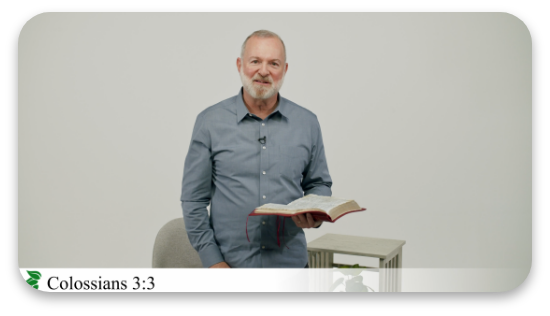
Going to God means doing what David did at Ziklag: when his city was burned, his family taken captive and his own men spoke of stoning him, he encouraged himself in the Lord his God, and then he called for the ephod and asked God what to do instead of leaning on his expertise in war. In this teaching Rev. Rico Magnelli reads 1 Samuel 30 alongside 2 Corinthians 1, 5 and 6 to show both halves of that habit. David went to God directly, with no one to prompt him, and recovered all. The Corinthians needed help getting there, and Paul, Silas and Timothy gave it by being helpers of their joy, which is the ministry of reconciliation.
Transcript
Going to God Produces the Right Results
1 Samuel chapter 30. We want to consider go to God. When we’re challenged, going to God produces the right results. The thing about this is, though, it takes honesty on our part to evaluate when we are not getting those results, what I call reading your own fruit. And sometimes we need help to get to God, and when people come to us for help, we don’t provide them with opinions or preferences, but guide and encourage them back to God, because he will guide us and deliver us from all our mental pressures and challenges. There’s a wonderful example here in David that we’re going to read about briefly.
When David was pursued by his own king, Saul, who wanted to kill him, he fled to the land of the Philistines, and the Philistines, as you know, were enemies of Israel. Then the Philistines rejected him also, but David was, in a manner of speaking, a man without a country. He was abandoned.
David at Ziklag: The City Burned and the Families Taken Captive
And this is where we pick it up in chapter 30 verse 1. And it came to pass when David and his men, about 600, were come to Ziklag on the third day that the Amalekites had invaded the south, and Ziklag and smitten Ziklag and burned it with fire. And to see your home burned, there’s a finality to it. There’s an impact to that, an impression that goes on in your mind and heart.
So this must have affected him and the others. But not only that, verse 2, and had taken the women captives that were therein, they slew not any, either great or small, but carried them away and went on their way. So they come home, and their home is burned, and all the people that they love have been taken.
So David and his men came to the city, and behold, it was burned with fire, and their wives and their sons and their daughters were taken captives. Then David and the people that were with him lifted up their voice and wept until they had no more power to weep. Perhaps you’ve been in a situation like that where you are just almost exhausted with crying.
And God put a mechanism in our bodies. Crying can be very valuable because it gives us a release so things don’t stay penned up in our bodies. So it can be very valuable. But to reach the point where you have no more power to cry anymore, that’s something. But watch this carefully. And David’s two wives were taken captives, Ahinoam the Jezreelitess, and Abigail, the wife of Nabal the Carmelite.
What Greatly Distressed Means: Life Closing In on David
And David was greatly distressed, wasn’t just a little bit, he was greatly distressed for the people spake of stoning him because the soul of all the people was grieved. This word distressed in the Greek Old Testament means to crowd. Like 15 pounds of bologna in a five-pound bag, like 25 people in a 10-capacity elevator, they don’t fit.
Life was closing in on David. He was compressed in his mind. He was greatly pressured. But watch this man. And then he had to deal with the people. For the people spake of stoning him.
So he’s a man without a country. His home is burned. The ones that he loves have been taken captive because the soul of the people was grieved. And the word grieved here in the Hebrew is bitter. They were bitter. So you’d think that maybe perhaps they were thinking negatively of David. I could see why. David could see why. David was not a fool.
David Encouraged Himself in the Lord His God
Every man for his sons and for his daughters. But watch the response. But David encouraged himself in the Lord his God. David encouraged himself in the Lord his God. The two things I want to point out here are the word distressed and encouraged. In the Greek grammatical construction of the Old Testament, the composition of these two words are basically constructed the same.
He was distressed, but look at what his response was. He encouraged himself in the Lord his God. This is to go to God. This is what it means. To go to God. It must have been a habit of his to be able to go to God because when things really got bad, look at what he did.
He went to God. He encouraged himself in the Lord his God. The word Lord is Jehovah, reflecting a relationship. And the word God is Elohim, the creator. You never can get too far from this because even as our heavenly father in our day and time, he is still God almighty. We’re never one thought away from him being our father, our heavenly father, yet he is the creator of the heavens and the earth.
Asking God Even When You Are the Expert
All that power is behind that relationship. Now watch this. David was a man of war, but he doesn’t rely on his skills. He doesn’t rely on his knowledge of war. Look what he does. And David said to Abiathar the priest, Ahimelech’s son, I pray thee bring me hither the ephod.
An ephod was a vesture in which the priest would utilize to receive information and guidance from God. And Abiathar brought hither the ephod to David. And even though David was an expert in war, look at what he does. And David inquired at the Lord, saying, Shall I pursue after this troop? Shall I overtake them? And he answered him, Pursue, for thou shalt surely overtake them, and without fail recover all. See, David pursued God. He encouraged himself in the Lord his God.
Psalm 16:11: In Thy Presence Is Fullness of Joy, and David Recovers All
It says in Psalm 16:11, which David wrote, quote, Thou wilt shew me the path of life, in thy presence is the fullness of joy. At thy right hand there are pleasures forevermore. See, he sought God. He knew that in the presence of God was the fullness of joy, even though the circumstances were not the best. He sought God out. And it’s also interesting that even though he was very accomplished at warfare, he asked God.
Look at the humility that’s involved in going to God. Even if you’re an expert in a field, checking with God is a very wise thing. Even though you know the business, even though you know the ropes, even though you know the people, even though you know what to do, what a great habit to check with God.
So David did pursue them. And in verse 19, it says, And there was nothing lacking to them, neither small nor great, neither spoil, nor anything that they had taken to them. David recovered all. Look at 2 Corinthians. He went to God. That was a habit pattern. You can read about it in the Psalms. Many of the Psalms were written by David. Like I quoted you Psalm 16:11.
Sometimes We Need Help to Go to God: The Corinthian Church
Now, sometimes we need help to go to God. There’s no indication in that record that anyone encouraged him. He actually went directly to God. And there are times when certainly we do this, but maybe there are times we need help. Maybe we forget we need to be reminded to go to God. We get caught up in our own little world and our own challenges, our own thinking.
We’re relying on something other than God. Well, that’s exactly what the Corinthian church were dealing with. The Corinthian church, here in 2 Corinthians chapter 1, we’ll look at, they were carnal Christians. That means that they were born again, but they elevated natural knowledge above spiritual knowledge. And Paul and Silas and Timothy endeavored to help them get back to God. And there’s this great verse in verse 24 of the first chapter of 2 Corinthians that really captures so much of this.
Helpers of Your Joy in 2 Corinthians 1:24
Not for that we, Paul, Silas and Timothy, have dominion over your faith. Faith here is the faith of Jesus Christ. The accomplished work of Christ given to every born again believer. But are helpers of your what? Joy. For by faith or the faith you stand. By the accomplished work of Christ, when he believed God, when Jesus Christ believed God and God packaged Jesus Christ believing, he gave it to us as the faith of Jesus Christ.
Even when we know how to go to God, when we’re challenged, there may be times when we need help. Or like Paul, Silas and Timothy, they were giving them help. And being a helper of someone’s joy is to get them back to God’s right hand. Because at his right hand are pleasures evermore. In his presence is the fullness of joy. It’s to bring people back to God. Sometimes we can do it on our own. That’s great. Sometimes we might need help.
The Ministry of Reconciliation in 2 Corinthians 5
And certainly we can help other people. Look at 2 Corinthians chapter 5. Look at the context here in verse 18 of 2 Corinthians 5. And it says, and all things are of God who hath reconciled or brought back together us to himself. How did he do it? By Jesus Christ. And has given to us the ministry, the service of reconciliation. He’s given to us now that privilege to serve and help people get back to God. That’s what Paul, Silas and Timothy were doing.
To wit, that God was in Christ reconciling the world unto himself, not imputing their trespasses unto them, and hath committed unto us the word of reconciliation. Now then we are ambassadors for Christ. We represent Christ. As though God did beseech you by us, we pray you in Christ’s stead, be ye reconciled to God. See, as we walk in that reconciliation, that oneness with God, we help others. We put their hand in God’s hand.
Now Is the Day of Salvation: Living in Light of Eternal Life
Maybe there are times we need help, but this is all involved in going to God. Look at chapter 6 verse 1. We then, as workers together with him, what’s the context? Bringing people back to God. That’s the labor. Beseech you also that you receive not the grace of God in vain. For he saith, I have heard thee in the time accepted, and in the day of salvation have I succored thee. Behold, now, now, now is the accepted time. Behold, now is the day of salvation. See, when we got born again, we got saved. But people have to live that salvation.
They live in light of eternal life. Now is the time to live in light of having eternal life. We can model that for people. We can demonstrate what it’s like to live as if I know beyond a shadow of a doubt I have eternal life. In the midst of all challenges, I can have peace. In the midst of all challenges and confusion, I can have clarity of thought. I can have tranquility of soul. Why? Because I know I have eternal life. That’s what Paul is saying.
Giving No Offense: Modeling Reconciliation Under Pressure
Look at verse 3. Giving no offense in anything that the ministry be not blamed. What Paul is saying here is that Paul and Timothy and Silas, they weren’t putting any obstacles in the Corinthians’ way. They weren’t putting any obstacles in their way. We’re going to get to what the obstacles were. It’s the world. But in all things approving ourselves as ministers of God in much patience, in affliction, in necessities, in distresses.
See, they were ministers. They were servants. And in this context, they’re modeling what it means to be challenged and yet be reconciled, be at one with God at the same time. Because in affliction, in necessities, in distresses, in stripes, in imprisonments, in tumults, in labors, in watchings, in fastings, those are challenges. But yet they were modeling for them what it is to live as one reconciled to God in his presence where there’s the fullness of joy and at his right hand where there’s pleasures evermore. By pureness, by knowledge, by longsuffering, by kindness, by the Holy Spirit, by love unfeigned.
Those are the things that they employed, Paul and Timothy and Silas. By the word of truth is what they used. By the power of God is what they used. By the armor of righteousness on the right hand and on the left, they used. Look at verse 8. By honor and dishonor, meaning at times when they were honored and at times when they were dishonored, they still maintained that connection with God. And they modeled it for the Corinthians.
By evil report and good report. Sometimes people said bad things about Paul. Sometimes people said good things about Paul. Didn’t make any difference to Paul. He’s still shown as a light along with Timothy and Silas as ones that are already reconciled to God. They’re living their salvation, their eternal life as if they know where they’re going.
As Unknown, and Yet Well Known
As unknown and yet well known. The unknown meaning the world doesn’t recognize, you know, I come in the door and they say, well, here comes a son of God who’s seated at the right hand of the throne of God. They don’t know me that way. They don’t know you that way. You’re unknown to the world. You can drive down the street and people don’t know anything.
But then there are people, it says, and yet well known. You are known very well of God. God knows you inside and out. He knows you’re his son, his daughter. And the people that love God know you too. That’s right. As dying and behold, we live. We’re dealing with challenges, but yet we live in the grace of God. As chastened and not killed.
As Poor, Yet Making Many Rich: What We Really Deposit
As sorrowful yet always rejoicing. Look at this. As poor yet making many rich. We don’t deposit oodles and oodles and oodles of money in people’s lives. We deposit the rich truth of the knowledge of the glory of God in the face of Jesus Christ, which is the true treasure. That’s what we deposit.
We model that for people as having nothing. And that reflects that the earth is the Lord’s in the fullness thereof. It doesn’t mean that they didn’t have anything. They understood that the earth is the Lord’s in the fullness thereof. And we steward physical things for a period of time, yet possessing all things. Yeah.
Because the earth is the Lord’s in the fullness thereof. And he’s our heavenly father. O you Corinthians, our mouth is open unto you. Our heart is enlarged. Meaning they were opening their heart to these guys. Let us model this for you. You are not straitened in us, but you are straitened in your own bowels. In other words, we’re not putting you in a box. You’re doing it yourself.
Be Not Unequally Yoked: Where the Heart Is Intertwined
Watch this. Now for a recompense in the same. I speak as unto my children, but be ye also enlarged. How do you open your heart in these categories? Well, now he’s going to tell you. Be ye not unequally yoked together with unbelievers. That means that your heart is not intertwined with the things of the world.
Why do we listen to people that don’t bring us back to God? And the people that want to bring us back to God, we don’t pay as much attention to. We pay more attention to people that do not bring us to God. Yeah.
Be not unequally yoked together with unbelievers. For what fellowship has righteousness with unrighteousness? And what communion has light with darkness? And what concord have Christ with Belial? Or what part hath he that believeth with an infidel? And what agreement hath the temple of God with idols? For ye are the temple of the living God. As God has said, I will dwell in them and walk in them.
Come Out From Among Them, and Be Ye Separate
And I will be their God and they shall be my people. And look at the admonition he says, wherefore come out from among them. In other words, don’t intertwine your heart with the things of the world. Intertwine your heart with the things of God. And be ye separate. That doesn’t mean that we’re hermits and we go to the hills and hide in caves and eat Twinkies till the return of Christ.
It doesn’t mean that at all. It means our heart is intertwined with the things of God and our Lord and Savior Jesus Christ. And then we reach out in the valley of human need to help people. Just like Paul, Silas, and Timothy were doing here. Saith the Lord. Touch not the unclean thing. The unclean thing is that which is idolatrous. And I will receive you and will be a father unto you. And you shall be my sons and daughters, saith the Lord Almighty.
Build the Habit of Going to God, Then Help Somebody Else
Paul, Silas, and Timothy opened their hearts wide to the Corinthians because they were being influenced by the world. They were saying, hey, listen, look at our example. We have all sorts of challenges. Yet going to God is what’s going to get you the right results. This is something the Corinthians needed to hear. This is something we need to hear. We build habits of going to God. And there may be time when we need help, each of us. So we get help.
But you go to somebody that’s going to help you. Do what? Help you get to God. That is the ministry of reconciliation. It is in his presence where there’s fullness of joy. And we are helpers of people’s joy. It’s at his right hand in which we are seated where there’s pleasures forevermore.
So I highly encourage us to go to God. And then you know what? Help somebody else that needs help. The comfort, the encouragement, the love, the teaching, whatever’s needed. Model it for them. Show them what it’s like to live in a challenging situation or miss the challenge and still have peace and still have joy, which is beyond the circumstances. Go to God.
Key Takeaways
- Going to God produces the right results when we are challenged, but it takes honesty to evaluate when we are not getting those results, what Rico Magnelli calls reading your own fruit.
- In 1 Samuel 30:6 the word distressed means to crowd, like 15 pounds of bologna in a five-pound bag, and Rico Magnelli notes that distressed and encouraged are basically constructed the same way in the Greek Old Testament.
- The word Lord in that verse is Jehovah, reflecting a relationship, and the word God is Elohim, the creator, so all the power of the creator of the heavens and the earth stands behind that relationship.
- David was a man of war and an expert in it, yet he called for the ephod and inquired at the Lord before pursuing. Checking with God is a wise habit even when you know the business, the ropes and the people.
- Psalm 16:11 is the destination: in God’s presence is the fullness of joy and at his right hand there are pleasures forevermore, which is where being a helper of someone’s joy takes them.
- Being unequally yoked means the heart intertwined with the things of the world. Being separate does not mean hiding in caves and eating Twinkies till the return of Christ, but reaching out in the valley of human need.
Frequently Asked Questions
What does it mean that David encouraged himself in the Lord his God?
David had lost his city to fire, his wives and the families of his men to the Amalekites, and the loyalty of his own men, who spoke of stoning him. The word distressed in 1 Samuel 30:6 means to crowd, life closing in and compressing him in his mind. Rico Magnelli points out that distressed and encouraged are basically constructed the same way in the Greek Old Testament, and that going to God had clearly become a habit for David.
How do you help someone else go to God?
By being a helper of their joy rather than handing them opinions or preferences. In 2 Corinthians 1:24 Paul, Silas and Timothy say they do not have dominion over the Corinthians’ faith but are helpers of their joy, and 2 Corinthians 5:18 calls that service the ministry of reconciliation. Since in God’s presence is the fullness of joy, helping means putting a person’s hand back in God’s hand, not in yours.
What does be not unequally yoked together with unbelievers mean in 2 Corinthians 6:14?
It means your heart is not intertwined with the things of the world. The Corinthians were carnal Christians who elevated natural knowledge above spiritual knowledge and paid more attention to the people who did not bring them back to God. Come out from among them and be ye separate does not mean becoming hermits who hide in caves till the return of Christ. It means intertwining your heart with God and then reaching out in the valley of human need.
Scripture References
1 Samuel 30; 1 Samuel 30:1; 1 Samuel 30:2; 1 Samuel 30:3; 1 Samuel 30:4; 1 Samuel 30:5; 1 Samuel 30:6; 1 Samuel 30:7; 1 Samuel 30:8; Psalm 16:11; 1 Samuel 30:19; 2 Corinthians 1:24; 2 Corinthians 5:18; 2 Corinthians 5:19; 2 Corinthians 5:20; 2 Corinthians 6:1; 2 Corinthians 6:2; 2 Corinthians 6:3; 2 Corinthians 6:4; 2 Corinthians 6:5; 2 Corinthians 6:6; 2 Corinthians 6:7; 2 Corinthians 6:8; 2 Corinthians 6:9; 2 Corinthians 6:10; 2 Corinthians 6:11; 2 Corinthians 6:12; 2 Corinthians 6:13; 2 Corinthians 6:14; 2 Corinthians 6:15; 2 Corinthians 6:16; 2 Corinthians 6:17; 2 Corinthians 6:18
This text was prepared from the teaching audio. Please verify scripture references against your own Bible.