Overview
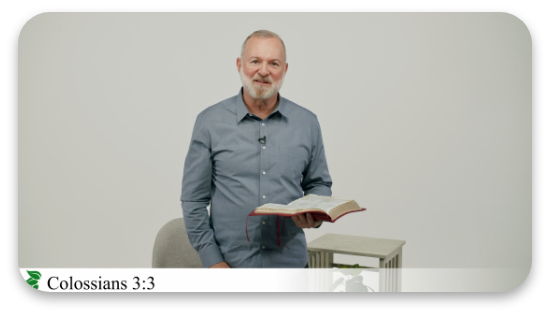
When believers reach an impasse, the essential question is not, “Who is right?” but, “What is right?” The answer is that God and His Word are right. Rev. Rico Magnelli contrasts Acts 15, where apostles, elders, and the whole church considered a doctrinal dispute together, with Acts 21, where Paul was told to follow a legalistic course of action. The teaching emphasizes doing things with God, requiring biblical answers, and allowing God’s Word—not personalities, pressure, or stirred emotions—to determine the way forward.
Transcript
God and His Word Are Right
God bless you in the name of Jesus Christ and welcome to this special leadership conference call. My name is Rico Magnelli and please turn to Hebrews chapter 5. Hebrews chapter 5. As you recall from the first special leadership conference Apologia is a Greek word which can mean an answer of truth in the face of accusation. When we as believers reach an impasse the question is not Who is right? But what is right? And the reason why that is is Who is right or who do you stand with leads to focusing on people? But What is right gets us to the truth.
The correct response is God and his word are right. That’s who I stand with and what I stand on. Then if we all do that then it’s a lot easier to deal with things.
You know, it says in Psalm 119 verse 105 thy word is a lamp unto my feet and a light unto my path. It’s the word that allows us to know how to navigate in life. Because it’s only God’s word that has the the the illumined power, the light bright enough to expose even the subtlest of nuances in life.
We know that the word according to Hebrews 4.12 is quick and powerful or alive and energetic. It’s a living word. And it’s God that we trust to direct our steps and his word shows us the way.
Strong Meat Discerns Good and Evil
As the mature in Christ the strong meat that we need provides the spiritual nourishment to help us. Because spiritual anemia weakness and inability is due to the improper diet or the neglect of the word. That’s why we need to get to the meat of the word.
Hebrews chapter 5 verse 14, but strong meat belongeth to them that are of full age or mature. Even those who by reason of use have their senses exercised to discern both good and evil. Only the meat of the word allows the mature to really make those distinctions between the good and evil.
It’s the meat of the word, the depth of the word, not just a surface look at the word. We have to go in deep to the word and get the meat of it. The word good here is interesting.
It’s translated from the Greek word kallos and it’s spelled or transliterated K-A-L-L-S Kallos and the word evil is translated from a Greek word Kakos transliterated K-A-K-O-S. So kallos and kakos. There’s only one character difference.
Otherwise, they look exactly the same and oftentimes that’s the way situations are in life. It’s hard to tell the difference. It’s hard to make the distinction.
That’s why we have to put on the light of the word. It’s so important to get to the word itself. Not opinions, the word.
What does the word say? Talk about overcoming the world. Wow. The worldly practices of top-down leadership or lording over God’s people as we saw in the apologia, the previous leadership conference call from Luke 22 25 through 27 2nd Corinthians 1 24 and 1st Peter 5 1 through 3. The corporate business side, not the biblical side.
That biblical side is the word and the people and you need both because we work in our cultures and we work according to the frameworks of our country and other locations. But what’s needed is a balance to be restored by putting the business aspect back in its place and put the word first. Please turn to Acts 15.
Acts 15 and Acts 21: Two Contrasting Outcomes
Acts chapter 15. We’ll see this again, the impact from the book of Acts from God’s word. Now to understand often God utilizes contrast for us to understand things.
He’ll utilize contrast in his word to help us you know, get a truth, understand it. Like light and darkness. It’s easy to understand or he talks about the works of the flesh and the fruit of the Spirit.
Well, we’re going to look at two records and see a contrast. Acts 15 and Acts 21. In the first, Acts 15, the gift ministries, the gift ministries, the apostles in this case, as a group were present and the course of action that resulted is the word was living and moving as a result of Acts 15 and the apostles being present.
In the second one, Acts 21, the apostles of the group were not present. Were not present and the action taken resulted in the word not living and moving and the knowledge of the mystery was brushed aside. Instead, what happened in that record, Paul was actually controlled.
The Apostles and Elders Consider the Matter Together
He was told, do what we say. It’s another example of lording over God’s people. Let’s pick it up in Acts 15 in verse 1. And certain men which came down from Judea taught the brethren and said, Except ye be circumcised after the manner of Moses, ye cannot be saved.
Well, that’s not true. Verse 2, when therefore Paul and Barnabas had no small dissension and disputation with them, they determined that Paul and Barnabas and certain other of them should go up to Jerusalem unto the apostles and elders about this question. Pretty neat.
Now, I want to pay close attention to this phrase apostles and elders. It comes up five times in this record. Five times.
Here in verse 2. Look at verse 4, please. You’ll see it again. And when they were come to Jerusalem, they were received in the church and of the apostles, plural, and elders.
Now look at verse 6. And the apostles and elders Now take a look at verse 22. Then it pleased, then pleased it the apostles and elders. And then finally in verse 23.
And they wrote letters by them after this manner, the apostles and elders. So there’s five times in this record that it comes up. Let’s go back to verse 3. And being brought on their way by the church, they passed through Pharnacy and Samaria declaring the conversion of the Gentiles, and they caused great joy unto all the brethren.
Sure, people are getting born again and receiving the gift of Holy Spirit. That’s fantastic. Everybody’s excited about new people being one to the word.
Declaring What God Had Done With Them
And when they were come to Jerusalem, they were received in the church and of the apostles and elders. And they declared all things that God had done with them. I want to stop right here because this is very significant.
They were declaring what God had done with them. It wasn’t about them. It’s about what God is doing.
That’s extremely significant. When we get excited about the things that are happening in our areas and our fellowships, stuff like that, we want to tell people about it. We’re excited about what God is doing.
The key here is the word with. That God had done with them. This word with is a Greek preposition.
Meta. Meta. And in this usage, it means in association with or denoting companionship.
Wow. Could you imagine being in association with God, being in companionship with God? Yeah, it’s called fellowship. It’s called fellowship with God.
See, this is what God really wants. God is more interested in what we do with Him than even what we do for Him. Because He wants to be involved.
He’s the one that opens the eyes of our understanding. He’s the one that brings us comfort as the God of all comfort. He’s the one that brings peace as the God of peace into our heart.
See, He is the one. Jesus Christ is the way, but the way leads to God, the Father. He wants us to do things with Him.
See, doing things for God can easily turn into works, to be accepted by God. You know, I’m doing this for God. And in and of itself, that’s not bad, but see, it can turn into doing them in order to be accepted by Him.
But we’ve already been accepted in the Beloved. We are accepted in Christ Jesus by the accomplished work of Jesus Christ. That’s why there’s no more work to be done in order to be accepted.
Salvation by Grace and the Faith Shared by the Household
Fantastic. Let’s keep reading. But there was a certain of the sect of the Pharisees which believed, saying that it was needful to circumcise them and to commend them to keep the law of Moses.
And the apostles and elders, there it is, came together for to consider of this matter. See, they considered it as a group. And there had been much disputing.
And when there had been much disputing, in other words, everybody had input. That inclusivity is so important in how the body of Christ functions. Peter rose up and said unto the men and brethren, Ye know how that a good while ago God made choice among us that the Gentiles by my mouth should hear the word of the gospel and believe.
And God which knoweth the hearts bare them witness, giving them the Holy Ghost, Holy Spirit, that’s the gift, even as he did unto us. And put no difference between us and them, purifying their hearts by faith. That’s right.
There is. We’re all on the same plane. No one’s above.
No one’s below. We all have Christ within. And we share the same faith, the faith of Jesus Christ.
That’s really what the household means. We share that family faith. Now therefore, why can’t ye God to put a yoke upon the neck of the disciples which neither our fathers nor we were able to bear? Sure, we all share the same faith of Jesus Christ.
That’s the household. And he’s saying, why can’t ye God to put a whole yoke upon the neck of the disciples which neither our fathers nor we were able to bear? But we believe that through the grace of our Lord Jesus Christ, we shall be saved even as they. Sure.
Salvation is by grace. It’s unmerited divine favor. It’s… It’s nothing that we did.
We believed on Jesus Christ, but he accomplished it for us. What a great truth. Verse 12.
Then all the multitude kept silent and gave audience to Barnabas and Paul, declaring what miracles and wonders God had brought among the Gentiles by them. It was God that was at work in these situations. Then the following verses describe James, who is presiding over this meeting, and he gives the direction based on all the input.
The Whole Church Moves Together
Let’s pick it up in verse 22. Then pleased it the apostles and elders, there it is again, with the whole church to send chosen men of their own company to Antioch with Paul and Barnabas, namely Judas, surnamed Barsabbas, and Silas, chief men among the brethren. And they wrote letters by them after this manner.
The apostles and elders, there’s the final use of that phrase in this record, and brethren, send greeting unto the brethren which are of the Gentiles in Antioch and Syria and Cilicia. It’s neat that he called them the brethren of the Gentiles. They knew that there were brothers and sisters in the Lord.
They knew that there were brothers and sisters. See, it’s beautiful. Verse 24.
For as much as we have heard that certain which went out from us have troubled you with words, subverting your souls, saying you must be circumcised and keep the law, to whom we gave no such commandment. Now I want to point out something here in this verse 24. It says some from out from us, went out from us, have troubled you with words.
The words, the word troubled, is the Greek word tarasso. Tarasso. And this word tarasso means to stir up, agitate, to disturb by various emotions.
Well, this was contrary to what should have been done. When the apostles and the elders with the whole church agreed together, they gave their approval as the whole church to send this letter. This is Ephesians 4.3. Endeavoring to keep the unity of spirit and the bond of peace.
But these that had troubled them, what they caused was stirring up an agitation. And it means to disturb by various emotions. And once you get people stirred up or agitated by emotions and fear gets in, then any distortion or perversion of the truth can be passed on.
Emotional Agitation Can Distort the Gospel
Keep your keep your ribbon here. We’ll be back to Acts and please turn to Galatians. Galatians.
Galatians chapter 1. Even if something that people know is absolutely true, they’ve seen it themselves. If you get people emotionally whipped up enough, they’ll start to consider whether that’s true or not. That’s not good.
Here in Galatians chapter 1 is recorded this truth. Verse 6. I marvel. Paul marveled.
I marveled that you were so soon removed from him that called you into the grace of Christ unto another gospel. Paul was marveling that they were moved away from the grace that’s in Christ Jesus. And it says another gospel.
And the word another means when there’s only two involved. There’s the true gospel, the good news of the grace of God in Christ Jesus, and there’s everything else. How did they do it? Here it is in verse 7. Which is not another, but there be some, that’s people, that trouble, torosso you and would pervert the gospel of Christ.
They stir up people’s emotions with words, with accusations, with threats or intimidation. And what it leads to is they’ll pervert the gospel. And the pervert means to turn or to change.
That’s where and how it’s done. It’s amazing. But you got to get people stirred up.
And even to the point where, look at Galatians 4, even to the point where people that we’ve experienced walk and do the word, get turned into something that they’re not. Look at verse 16 in Galatians 4, verse 16. And I therefore become your enemy because I tell you the truth.
Unity Is Built One Heart and One Soul at a Time
How did that happen? Well, it starts with the emotions, intimidation, control, and then people that share the truth with us become the enemy. Look at 1st Corinthians chapter 3, please. 1st Corinthians chapter 3. See, unity is not built by eliminating people.
Unity is built one heart and one soul at a time. And anybody that does it knows the love and the labor that it takes. People take time to work with them.
We’re not chess pieces on a board. It takes time to work with people, a lot of patience. See, unity is built on the one calling we all share.
We’ve all been called. And then with lowliness and meekness, with long-suffering and forbearing one another in love, we can endeavor to keep that unity, like Ephesians 4, 1 through 3 says. It takes a lot of love, a lot of forgiveness.
That’s what it takes. It’s the same as when you build the one-fleshed relationship in marriage. It takes a lot of love and a lot of forgiveness.
Even Jesus Christ, in dealing with Judas, who betrayed him, forgave him. That’s love. Here in 1st Corinthians chapter 3, it says in verse 1, And I, brethren, could not speak unto you as unto spiritual, but as unto carnal, even as unto babes in Christ.
I fed you with milk and not with meat, for hitherto you were not able to bear it, neither yet now are you able. Why weren’t they able? What was the indication that they weren’t able? Verse 3, for ye are yet carnal, carnal meaning they’re still walking by their five senses. How did he know that? Keep reading.
For whereas there is among you envying and strife and division, are you not carnal and walk as men? For while one saith, I am of Paul, and another, I am of Apollos, are you not carnal? Who then is Paul, and who is Apollos, but ministers, by whom ye believe, even as the Lord gave to every man? I have planted, Apollos watered, but God is the one that gives the increase. Wow. See, during the Civil War, Abraham Lincoln was asked whose side God was on.
And I love his response. This is Abraham Lincoln’s quote. Sir, my concern is not whether God is on our side.
My greatest concern is to be on God’s side, for God is always right. End quote. That’s the position to stand on.
It’s not who is right, but what is right. And the word is always right. See, when we focus in on who is right, or who do you stand with, that leads to focusing on people.
The Word—not Personalities—Determines What Is Right
The correct response is we stand with God and with him on his word. That’s what’s right. Please turn back to Acts 16.
Acts 16. We looked at Acts 15 and the Jerusalem Council, and that the apostles and elders were present, and specifically the apostles. And let’s look at the result of what they did.
Verse 4 of chapter 16 of the book of Acts. And as they went through the city, they delivered them the decrees for to keep, that were ordained of the apostles and elders. There’s the gift ministries working together, which were at Jerusalem.
And so were the churches established in the faith, and increased in number daily. Look at the result of that. There was an impasse in the church.
The apostles were present to endorse this decision, to give their input, and then boom. So were the churches established in the faith, and increased in number daily. Wow.
Acts 21: Do What We Say
Now let’s look at the contrast in Acts 21. This is a number of years later. Paul really shouldn’t have gone to Jerusalem.
We know this. God didn’t want him to go. The household told him.
There was even a prophet that came and told him that he shouldn’t have gone to Jerusalem, but anyway he went. And now let’s see the response from Jerusalem, and the leadership there in the church. Verse 18 of Acts 21.
And the day following, Paul went in with us, which would include Luke, unto James, and all the elders were present. Now it doesn’t say the apostles. It just says James.
Now James was a leader, and had a gift ministry. No question about it. He wrote the book of James.
And all the elders were present, but where are the apostles? They’re noticeably missing. How interesting. Now we don’t know what happened.
The Word doesn’t tell us, but we do know they’re not mentioned, and God has a specific reason for why he says something, when he says it, to whom he says it, and every other aspect of it. So, in this record, where Paul goes to Jerusalem, is the last time the word disciple is used. Look at verse 16.
There went with us also certain of the disciples of Caesarea, and brought with them one Manassian of Cyprus, an old disciple. That’s the last occurrence in the book of Acts, with whom we should lodge. God doesn’t bring up the word disciple anymore.
A disciplined follower. How interesting. And even in this record, the apostles are not present.
Verse 19, and when he had saluted them, he declared particularly what things God had wrought among the Gentiles by his ministry. Now, that’s what we want to talk about. What is God doing in people’s lives? Look at the deliverance that God is bringing to people.
We’re after what God is at work. Doing. We’re interested in what he wants.
So, this is what they declared, and look at the response. And when they heard it, they glorified the Lord, and said unto him, Thou seest, brother, how many thousands of Judeans there are which believe, and they are all zealous of the law. And they are informed of thee, that thou teachest all the Jews, or Judeans, which are among the Gentiles, to forsake Moses, saying that they ought not to circumcise their children, neither to walk after the customs.
What is it therefore? The multitude must meet, come together, for they will hear that thou art come. Here it is. Here’s the contrast of what things God wrought in verse 23.
Do therefore this, that we say to thee. Do what we say. Wow, what a contrast between what God had wrought, and now do what we say.
And then they give Paul an assignment to engage in legalistic standards to endorse the law. This is top-down leadership. Right here.
When the knowledge of the mystery is knocking at their door. What did God wrought? See, by this time, the Apostle Paul had already written 1st and 2nd Thessalonians. He’d written the Book of Romans.
He’d written 1st and 2nd Corinthians, and Galatians. They’d all been written. It was out there for people to understand.
And Paul was ready to deliver the truth regarding the revelation of the mystery, as much as he understood up to that point. Certainly Christ can use hope of glory. Wow.
But yet they wanted him to do this. Do what we say. This is what we were talking about.
To isolate and control. You know, it says in Romans 10.4, which Paul had already written by this point. Romans 10.4 says, For Christ is the end of the law, for righteousness to everyone that believeth.
Paul never should have carried this out. But what we see is the isolation and the control. Galatians 4.17, which we handled in the previous sharing.
They who trouble and provoke the gospel are zealous for your allegiance. But not in a good sense. No.
They desire to isolate and control you so that you are zealous for their beliefs only. Doing what I say is the control. Top-down leadership.
As opposed to do what the Word says. That’s the contrast. A grace administration minister only wants people to do what the Word says.
Ephesians 4: A Biblical Template for Functioning
What’s the key missing piece between Acts 15 and Acts 21? The key missing piece is the apostles are noticeably not present in Acts 21. And the results speak for themselves. Please turn to Ephesians 4. The mystery is tremendous.
And this is what we want to steward. Live and teach. Moving the Word is really simple.
It’s about meeting needs of the people. With love in the Word. Giving them the answers from the Word and loving them.
When people’s needs are met, the Word will move. The gift ministries working together with the Word is what catalyzes the needs to be met. Then what happens is the saints rise up and contribute to the work of the ministry.
And further they develop their long suits of service. And in the manifestations of the Spirit and build the body of Christ. We’ll see this in Ephesians.
Christ in each believer gives us the advantage over the world. God can work in each believer. He can communicate directly to each and every one of us.
That is fantastic. This is part of the mystery. Christ in you, the hope of glory.
Isaiah 54.13 says, And all my children shall be taught of the Lord. And great shall be the peace of my children. When God is opening the eyes of our understanding.
When he’s involved in the depth of our heart. When we get rid of the fear. When he’s involved, we will have great peace.
Because he’s the one that’s showing us. He’s the one that’s involved deeply in our lives. It’s what God wants that we’re interested in.
Let’s see here what it should be in terms of a template for functioning. Ephesians 4.8. Wherefore he saith, When he ascended upon high, he laid captivity captive and gave gifts unto man. Jesus Christ ascended into heaven.
And we have the gift ministries to carry on his work. Verse 11. And he gave some apostles and some prophets and some evangelists and some pastors and teachers.
All of those are plural. For the perfecting of the saints. For the work of the ministry.
For the edifying of the body of Christ. The perfecting of the saints. The word perfecting is in the sense of mending the saints in their renewed mind walk.
Filling in those gaps that are necessary. So when they go into the bounty of God’s abundance. They get a full haul.
They get the full package. And once those needs are met, people want to know what can I do. They just want to serve.
Then the work of the ministry flows right into that. And when the work of the ministry is accomplished and developed and advanced. Then it leads to the edifying of the body of Christ.
In the ministries of service, gift ministries and manifestations all come together beautifully to build the body of Christ. Verse 13. For we all come in the unity of the faith, the family faith and of the knowledge of the son of God unto a perfect man, unto the measure of the stature of the fullness of Christ.
That we henceforth be no more children. Children spiritually. Not children in age.
We grow up. Tossed to and fro and carried about with every wind of doctrine. By the sight of men and cunning craftiness whereby they lie in wait to deceive.
But speaking the truth in love may grow up into him in all things. Which is the head, even Christ. From whom, Christ, the whole body fitly joined together and compacted by that which every joint supplieth.
According to the effectual working and the measure of every part maketh increase of the body unto the edifying of itself in love. Oh my gosh. That language is just fantastic.
See, every joint supplieth. The effectual working and the measure of every part. It’s not one, two, three, four people.
It’s everybody working together. And it’s done in love. With great love and tenderness and forgiveness.
Each individual is important. Each individual can renew their mind. Because each individual has Christ in them, the hope of glory.
And this is what needs to be manifested and taught and really emphasized. See, it’s not about positions. It’s not about titles.
Those can help us to facilitate communication and help us get clear and concerned on certain aspects. What it’s about is those spiritual abilities that God has called each and every one of us with to function together. And that is what we need to emphasize.
Practical Steps for Returning to the Word
And that is what needs to be first. The word first. So you might ask, what is next? Well, there are so many God-inspired ideas, even technologies and avenues to pursue, certainly to do it without fear or intimidation.
And it will help us move the word and reach those in hunger and thirst after righteousness. Together, we will move a mystery approach with the gift ministries working together. See, to do this, ensuring people and things line up with it is written, will ignite the collective heart of the saints and catalyze a revival of the word regarding the mystery that we have not seen for a long time.
The mystery lives in local areas, but it needs to live in the leadership body. And as each individual sees the truth of this and embraces this, it will be one voice that will speak to unleash the amazing potential latent in the lives and hearts of God’s people. That’s the one accord of the book of Acts.
If the word shared and what’s been said makes sense to you, here’s what we can do. Some practical things. Number one, speak up if you’re inspired.
Be very kind and loving and clear but firm. Let people know what you know as you are inspired to do so. God will work in you if you’re willing to do of his good pleasure.
Number two, require a biblical answer to your questions to the end that you are satisfied. It’s simple. Chapter and verse, please.
Chapter and verse, please. If anyone asserts anything, ask them. Can you show me the chapter and verse, please, so I can understand? That’s an honest and biblical way to approach things.
Number three, then prove the word to yourself. Prove it to yourself. Romans 12 says that we should prove that perfect and acceptable and perfect will of God.
Acts 1711, talking about the Bereans, states, these were more normal than those in Thessalonica in that they received the word with all readiness of mind and searched the scriptures daily whether those things were so. Man, they had to learn the word on a day-by-day basis. They were checking to see if those things were right.
When we make the word our own, we can read up on the mystery. Number four, review 1 Corinthians 13 on the love of God, because we harbor no ill towards anyone. Absolutely not.
No bitterness, no anger. No, just the love of God. And the last thing, five, pray abundantly.
Pray like you’ve never prayed before. And open your heart to God. He listens.
Speak and Live the Wisdom of God in a Mystery
Please turn to 1 Corinthians 2. God says in Isaiah 4610, declaring the end from the beginning and from ancient times the things that are not yet done, saying, My counsel shall stand, and I will do all my pleasure. God knows the end of a matter from the beginning. He knows what has transpired.
He already knows what’s going to happen. That’s why we can be at peace and at rest. We don’t need to be agitated, because God is involved.
And his counsel shall stand. And he will do what his pleasure is. It also says in Isaiah 5511, So shall my word be that goeth forth out of my mouth.
It shall not return unto me void, but it shall accomplish that which I please, and it shall prosper in the thing whereto I sent it. God’s word will prosper, because it’s his word. And it won’t return to God void, but it will accomplish what pleases him and prosper where he sends it.
1 Corinthians 2, verse 7. But speak the wisdom of God in a mystery, even the hidden wisdom which God ordained before the world unto our glory. Wisdom is the right application of knowledge. And we want to speak the mystery.
We want to speak the truths of it. And more than that, we want to live it. That’s not what the world wants, certainly, and not what the adversary wants.
Look at verse 8. Which none of the princes of this world knew, for had they known it, they would not have crucified the Lord of glory. The adversary is after the word, specifically the knowledge of the mystery, where no one is above one another. We are all members in particular in the body of Christ.
All of us are needed. All of us have contributions. All of us have been called of God.
This is the truth of God’s word. And this is the way that we conduct ourselves each and every day. Ephesians 6, 19, and 20 express beautifully what people should say about us.
And for me, that utterance may be given unto me, that I may open my mouth boldly, no fear, to make known the mystery of the gospel, for which I am an ambassador in bonds, that therein I may speak boldly as I ought to speak. Heavenly Father, thank you for your love. Thank you for your grace, your mercy, and your peace.
And Father, we lift to you the hearts of your people. And thank you for your blessing and your wisdom and your guidance to continue to prosper our way in the wonderful and the powerful name of Jesus Christ. Amen.
God bless you.
Key Takeaways
- The proper question at an impasse is what is right, not which person or group is right.
- Mature believers use the depth of God’s Word to discern between things that may look nearly identical.
- Acts 15 models inclusive, Word-centered consideration by apostles, elders, and the whole church.
- Fear, emotional agitation, intimidation, and personality-centered allegiance can move people away from grace.
- Believers should ask for chapter and verse, prove the Word personally, walk in love, and pray abundantly.
Frequently Asked Questions
What question should believers ask when they reach an impasse?
They should ask what is right rather than who is right, because God and His Word are the final standard.
What is the major contrast between Acts 15 and Acts 21?
Acts 15 shows apostles, elders, and the church considering a matter together, while Acts 21 shows a directive imposed on Paul that moved toward legalism and control.
How can believers evaluate a disputed teaching or decision?
They can request a biblical answer, examine chapter and verse, search the Scriptures, prove the Word personally, walk in love, and pray.
Scripture References
- Hebrews 5:14
- Psalm 119:105
- Hebrews 4:12
- Acts 15:1–35
- Galatians 1:6–9
- Galatians 4:16–17
- 1 Corinthians 3:1–11
- Acts 16:4–5
- Acts 21:17–26
- Romans 10:4
- Ephesians 4:8–16
- Romans 12:1–2
- Acts 17:11
- 1 Corinthians 13
- 1 Corinthians 2:7–8
- Ephesians 6:19–20
Verification note: This page was prepared from a machine-generated transcript. Please check names, Greek terms, Scripture wording, verse references, and the intended Bible translation against the original audio before publication.