Overview
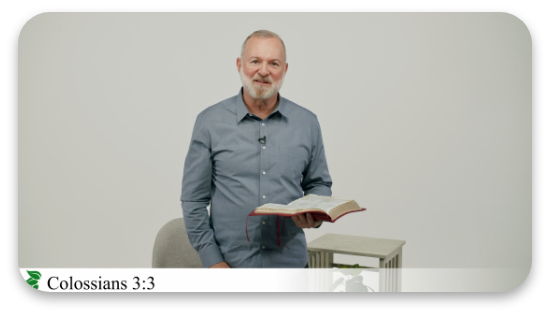
Rev. Jon Ryan opens the conference’s study of 2 Timothy 2 by placing Paul’s final counsel to Timothy in the context of mentoring and future leadership. Timothy is to be strong in the grace in Christ Jesus, entrust truth to faithful people who can teach others, and endure hardship without becoming entangled in the affairs that distract a soldier from pleasing the one who chose him.
Transcript
Paul’s Final Counsel to Timothy
Opening up Second Timothy 2, please welcome Reverend John Ryan. Thank you. Thank you very much.
Please be seated. It's wonderful to be here with you. I'm so thankful to be a part of this Mystery-Minded Leadership Conference with all of you.
And as I look around, I just have to say, you look marvelous. We're going to have a tremendous time as we delve into this Chapter 2 of Second Timothy. Now, Second Timothy was written at the very end of Paul's life.
In Chapter 4, he says that he had finished his course. He had kept the faith. He had fought a good fight.
And as he's reached this point, he is imparting. God's inspired him to write this letter as he's imparting to Timothy the things that he feels are so essential for him, so important for him to know, to be able to understand. Timothy had been mentored by Paul.
He had been brought up to learn how to be a minister as he functioned with Paul, as he stood shoulder to shoulder with him. In so many situations. And he had learned many, many things.
At one point, Paul says he has no man like-minded as Timothy is to share his heart, God's heart. And so we're going to see as we go through this weekend some of these great aspects of leadership in this second chapter. Now, as I said, Paul was at the very end of his life, and he's sharing this with this man, Timothy.
I want to look at four things together as we're going to just get into the first few verses. It starts off, Thou therefore, my son, be strong in the grace that is in Christ Jesus. What is it to be strong? Certainly, we know it's not about lifting weights, doing push-ups every morning.
Those things are good. But this is about a different strength. This is about the strength we have in God.
In God's ability to do. We're going to see, what did Timothy hear? We're going to consider some of that. The things that thou hast heard of me among many witnesses, the same commit thou to faithful men who shall be able to teach others also.
So what did he hear? We'll consider some of the things that Timothy was a part of with Paul. It's amazing to consider how he traveled with Paul, and we'll look at that. In verse 3, it says, Thou therefore endure hardness as a good soldier.
What is it to endure hardness? Why do we have to endure hardness? And that word hardness is a word that means suffering evil. Certainly, as Paul moved through situations, and anyone else that's really stood for God, they've had to contend with evil. And then we're going to see, what is it that God means when he says not to be entangled with the affairs of this life? We're not going to go into hiding.
But what do we do to stay unentangled? These things are essential. These are important for us to grasp, to understand, and then to apply in our lives. So here in 2 Timothy, in chapter 2, verse 1, Thou therefore, my son, be strong in the grace that is in Christ Jesus.
Be strong. This is God's clarion call. So many places, God has told his men and women that they need to be strong.
We heard in manifestations that we're to be strong. The opposite is to fear. And we're not to fear.
If you take your Bibles and turn to Deuteronomy, chapter 31. Deuteronomy 31. Interestingly, this book of Deuteronomy was written at the end of Moses' life.
Moses had delivered God's people. He was called of God at the age of 80 years old to go and lead God's people out of the captivity that they had been in Egypt for many, many years. Severe bondage.
And Moses goes there. He obeys God and he goes to Egypt. And he's able, with God's help, God's guidance, God's power, to lead Israel away from that captivity.
And he receives the law. He receives the Ten Commandments. He's the one that wrote Genesis, Exodus, Leviticus, Numbers, Deuteronomy.
In Deuteronomy chapter 1, verse 3, it says he wrote this book in the 11th month of the 40th year. He had just days left before he was going to fall asleep. Moses is 120 years old when he writes this book of Deuteronomy.
And we're going to see, like Paul, he is encouraging Joshua, who he has raised, who he has brought up to be a leader, and taught how to stand against the adversary's continual onslaught, how to overcome obstacles. We're going to see that he tells Joshua to be strong. In Deuteronomy 31, verse 6, See, God had given this land, called the Promised Land, 400 years earlier.
He had given it to Abraham. Abraham had left Ur of the Chaldees and went to the land that God would show him. And this is the land.
And over a course of events, Israel ended up in Egypt. And it saved their lives when they first went there. But they've overstayed.
And now they've been in this captivity. And Moses goes with God's direction and leads them away. And brings them back to the Promised Land.
Leads them out of that captivity back to, here they are, the Promised Land. They got there in the first year when they left Egypt. And they sent 12 men, a man from each tribe, into this Promised Land to bring back a report of what the land was like.
And it was abundance. It's called the Land of Milk and Honey. Because milk, you go up to the cow and it's like a faucet.
You just squeeze the udder and there's the milk. You don't have to work for it. You just have to go and know where to get it.
And with the honey, similarly, it's just there produced by the bees. And you can enjoy the sweet honey. And that's what God has for them.
They can move in. This land, even though it's inhabited, belongs to them. And these 12 men go into the land and they come back.
And 10 of them, even though they saw the abundance in that land, 10 of them are discouraged, are afraid, are intimidated. And even though Joshua and Caleb say, We can go. This is going to be bread for us.
Because they had confidence in God, the other men say, No, no, there's big, big walled cities. There's big, big men, like we heard in that song. Those were descendants.
That Goliath was descendants of some of these men, the children of Anak. And so they don't go. They're not strong and courageous.
They then wander for 40 years. Now God's mercy, his grace is abundant. God takes care of them.
He feeds them with manna from heaven. He takes care of their thirst when they need water. He tells Moses, Go to the rock and hit that rock with your staff.
And the water comes forth abundantly. He tells Moses to teach them about the promised seed, that there's going to be one that's going to come at some point, that he promised back with Adam and Eve. Moses got to write Genesis.
He certainly would have been able to teach them about this. And so now they've come again to this promised land. They've arrived here 40 years later.
Strong in the Grace in Christ Jesus
And Moses is telling Joshua, Be strong. Be very courageous. Now look at chapter 5 of Joshua, just a few pages.
Chapter 5, how do we be strong? How is Joshua going to be strong? Is he just going to tighten up his belt? Put on some different uniform? Some kind of a hat? No. What he's going to do to be strong is he's going to teach Israel. Teach Israel about God's ability.
Look at chapter 5 of Joshua. We'll pick it up in verse 1 here. And it came to pass, when all the kings of the Amorites, which were on the side of the Jordan westward, and all the kings of the Canaanites, which were by the sea, heard that the Lord had dried up the waters of Jordan from before the children of Israel, until we were passed over, that their heart melted.
Neither was their spirit in them anymore because of the children of Israel. Now you really can't look at someone and see their heart melting. God's telling us this is what's going on in these cities, where they're going to go.
They've come to the Promised Land. God parted the Jordan for them. They walked across the Jordan, similar to what had happened with the Red Sea 40 years earlier.
And as they're on the brink of moving into this Promised Land, God gives us insight. These folks are afraid. As a matter of fact, Joshua had sent two men into the city of Jericho, and that's what they came back and told him.
This girl Rahab that we met, the innkeeper on the wall, said they've been afraid we're going to come here for 40 years. That's the perspective. See, the adversary's afraid that you'll walk out on the word, that you'll actually believe God, and move forward with believing, and take what God's given you.
So now look what God has them do. In verse 2, at that time the Lord said unto Joshua, Make these sharp knives, and circumcise again the children of Israel the second time. And Joshua made him sharp knives, and circumcised the children of Israel at the hill of the Forskins.
That's an interesting name, the hill of the Forskins. But consider the leadership. Joshua tells these people, stand in line, men.
We've got something we're going to do here. If it wasn't for the teaching that accompanied this, I'm sure there would have been no volunteers. But see, God, he's not having them do this just so that they can keep the law.
There's a purpose, there's a teaching here. Like I said, 400 years ago, from this point, Abraham, the circumcision was first instituted with Abraham. We read in Romans chapter 4 that Abraham, when he was about 100 years old, looked at his body, and he considered his own body now dead.
Sexually, it just had nothing going. And the deadness of Sarah's womb. Sarah had been barren from the time that Abraham married her.
And yet God had promised them a child. And it says in Romans 4 that Abraham staggered not at the promise of God through unbelief, but was strong. Same word in 2 Timothy 2. But was strong in believing, giving glory to God, and being fully persuaded that what God had promised, he was able also to perform.
See, this was what was accompanying this circumcision at the time of Joshua. Abraham didn't have the wherewithal, the means to produce this child. But God filled in where he lacked.
God's grace filled in where he lacked. Interestingly, in that chapter 17 of Genesis is when the grace was abundant in that chapter. It was all about God's grace.
God was going to make a way where there seemed to be no way. Where Abraham was dead, Sarah was dead in a sexual fashion, and yet God was going to cause them to have this child. And they had the child.
So this was what circumcision was all about. Do you believe that God's able to do what appears to be impossible? The same obstacles were there as their fathers had seen 40 years before. See, at the time 40 years earlier when they had gotten to this promised land and turned away, everyone 20 years old and older died during the next 40 years.
So this is the next generation that's risen up. And God says, keep the circumcision. Teach them about what the circumcision means.
Look at verse 10. And the children of Israel encamped in Gilgal and kept the Passover on the 14th day of the month at Eden in the plains of Jericho. So here's more teaching.
God wanted them to keep the Passover. Again, not just because it's the law. This is the day we're supposed to have the Passover.
But because of the teaching. These people had been through it, most of them. Some of them had been born in the wilderness.
But many of them had been 40 years earlier in Egypt when God delivered His people by His ability. And that's what Passover was all about. God's ability to deliver His people.
And to remember that. That's how Joshua was strong. That's how he learned and he taught the people that God is not slack concerning His promise.
So when we consider being strong in the grace that's in Christ Jesus, we're being strong in God. Not that we're sufficient of ourselves. Our sufficiency is of God.
Look at Acts 9. The Apostle Paul, at the time he was called Saul, was maybe Saul the Terrorizer. I'm sure he had some nicknames. He was zealous.
He had all the credentials from the law of the tribe of Benjamin circumcised on the 8th day as touching the law. He was zealous. A Hebrew of the Hebrews.
But here he meets up with Jesus Christ. Jesus Christ appears to him on his way to Damascus where he's going to harass some more of God's people. And he tells him, Paul, you're going the wrong way.
It's hard for thee to kick against the pricks. And Saul gets born again right there. Who art thou, Lord? Called Jesus Christ Lord.
And he's recognizing, he's talking to him, he's born again, or he's raised from the dead. Paul's born again with that statement. Who art thou, Lord? And his whole mind is, I'm sure, turned around at that point.
He's blind for the next three days as he's brought lead to Damascus. And God calls this man Ananias to go and heal him. He tells Ananias that this man Paul, this man Saul at the time, is going to be a great man for my people.
And Ananias goes there and Saul gets delivered. And look what it says in Acts 9.22 But Saul increased the more in strength. That's that same word.
The word be strong in 2 Timothy 2.1 is Endunamu. E-N-D-U-N-A-M-O-O Make yourself strong. It's in the tense of the verb where the subject acts upon itself.
Paul increased in strength. He had to go through the word that he knew. He was certainly a scholar in the word of God.
But it had been misapplied. And now he has to realign his thinking. Like rebooting your computer.
Get it straightened out. Get rid of the virus that's screwing it all up. Get it back online so that it works properly.
Paul increased the more in strength and confounded the Judeans which dwelt in Damascus proving that this is very Christ. That this is the Messiah. This is the anointed one.
Entrust the Word to Faithful People
This is the one that they had looked for since the promise made in Genesis 3.15 This is what it was all about. Paul, he becomes Paul. He increased in strength.
You know you were all here to increase in strength. To make yourself stronger. To become the leaders that God's called you to be.
Go back to 2 Timothy chapter 2. So here in 2 Timothy 2 verse 2 it says, And the things that thou hast heard of me among many witnesses the same commit thou to faithful men who shall be able to teach others also. So where do we find these faithful men? You are among them here today. You've come so you can learn how to become stronger.
How you can become better leaders. Greater leaders. And you want to build this strength into your lives.
See God will direct the paths of men that are willing to do this. Timothy is exhorted by Paul to the things that thou hast heard of me among many witnesses the same commit thou to faithful men. Paul had done this.
Paul had made trips to the place where Timothy grew up. Lystra and Iconium Derby, that area. And he had first encountered Timothy on his trip that he made there in Acts 14.
Now in that trip Paul had to he healed a man that was born lame. Had never walked from his mother's womb. Right there in Lystra.
And as a result of this a group of people stoned him to death and dragged him out of the city. It says supposing he was dead they reckoned it. They did what they needed to do to determine he was dead.
But then a group of believers gathered around and raised Paul from the dead. And he returned with Barnabas to go speak the word some more. Timothy lived in that area.
I'm sure Timothy heard of it. If he wasn't right there, it's part of it. And then in Acts 16 Paul returns to Lystra.
And he finds Timothy. Timothy's got this great rapport, this great reputation in the household. And Paul invites Timothy, this young man, to travel with him.
To teach him. To help to raise him up. So that he can be given the word that he can teach others also.
See this was a faithful man that Paul encountered. Paul and Silas take Timothy along and they start to go to speak the word. And it says in Acts 16 as they're traveling the doors are closed.
They try to go to Mycenae. No doors open there. They try to go to Bithynia.
No doors open there. Eventually as they're heading west they get to the Aegean Sea. To what appears to be where Luke lives.
Maybe Luke's house. Luke was another faithful man. And when he arrives there, when Paul arrives there he receives the revelation from God that where he needs to go is across the Aegean Sea to Macedonia.
Well God didn't say you gotta turn around. You missed it. It was back over there just a little bit north of where you were.
No. They've been heading in the right direction the whole time. They just have to keep going.
It says in Acts 16 verse 10 immediately. We endeavored to go. We includes Luke.
Luke was a doctor. Probably had a practice there in Troas. At some point years later they come back to Troas with Luke.
And yet Luke says I'm going with you. If you're gonna go move the word, speak the word, I'm going with you. No one, including Luke knew at this point that he was gonna be called on to write the book of Acts.
To write the gospel of Luke. But he was a faithful man. And Paul led him Paul was led to Luke.
A faithful man that was gonna teach others also. Well Luke and Paul and Silas and Timothy head over to Philippi and they see great things. They see the doors open up.
They meet with this woman Lydia whose heart their Lord opened. She attended to the words that were spoken of Paul. And they get her and her group.
She had a group of women that prayed down by the river. They find some faithful women. And then Paul delivers this other young lady that's possessed with a soothsaying spirit and delivers her to the end.
She shuts down her her operation. Her masters that had been making money off of her are so upset that they have Paul and Silas thrown in jail. See it says in 1st Timothy or 2nd Timothy 2-3 that we have to endure hardness.
Timothy would have seen how Paul had to endure hardness. Evil. That word hardness is kakopatheo k-a-k-o-p-a-t-h-e-o that you have to suffer evil.
It's part of the spiritual competition that we enter into. And that we don't have to be beaten by evil. Paul and Silas get thrown in jail.
They're beaten. We don't have to be defeated by evil. In this case Paul and Silas were beaten.
And they're in jail yet they prayed. They didn't give up on God. They prayed and sang songs and God delivers them with a specific earthquake.
Nobody gets killed in this earthquake. It's an earthquake so specific that their shackles fall off. And Paul is able to Paul is able to bring deliverance to not only Silas that's with him but the jailer who's responsible for these men.
Paul cries out in the darkness, do thyself no harm for we are all here. Because if he lost the men his life was in jeopardy. And the jailer comes, he springs forth and asks for a light and then he's delivered in his household.
And then they leave Philippi. Paul and Silas and Timothy. Luke is left there in Philippi to take care of these wonderful believers that are brand new in the word.
Luke stays there for the next six years. Till Paul returns six years later, you can trace it in the book of Acts, Paul returns and meets up with Luke again up in Philippi. When Paul later on wrote the book of Philippians we read that only ye sent once and again unto my necessity when I was first at Thessalonica.
We'll see Paul, Silas and Timothy go down to Thessalonica Luke's up there says hey we gotta help Paul. He's moving the word down there. And so they sent help to Paul.
A Multiplying Pattern of Leadership
They sent funds that Paul needed so that he could continue to speak the word. Paul goes to Thessalonica, he's there three Sabbath days speaking the word. Runs into challenges again.
There's people that believe but the Judeans there they chase him out of town. He goes to Berea finds wonderful believers there. These same Judeans from Thessalonica come down, chase Paul out.
Timothy and Silas stay to take care of the new believers. Paul goes down to Athens and ends up in Corinth. Timothy and Silas have come down to meet him.
He sends them back to Thessalonica when he hears that these Thessalonian believers love Paul. They love the word that he taught. They believe it's the word of God.
Not just the word of men. They saw how Paul had and his men had just given them not the word only but even poured out their own souls because they were dear. They were dear to God so they were dear to Paul.
But Paul's encountering leaders all along the way. When he got to Corinth he meets up with Aquila and Priscilla. Faithful men.
Faithful men and women. A couple. Their names appear as a couple six times in the word of God.
This wonderful couple. At one point they lay down their necks for Paul. But God has directed him to all these wonderful believers.
Timothy's name is included on the epistle of 1 and 2 Thessalonians and the salutation of the epistle to 2 Corinthians and the epistle to the Colossians and the letter written to Philemon. It says Paul and Timothy or Paul and Timotheus. Timothy was right there with Paul learning.
So back in 2 Timothy chapter 2 Paul says to Timothy with at the end of his life and the things that thou hast heard of me among many witnesses the same commit thou to faithful men who shall be able to teach others also. How's Timothy going to find these faithful men? Just like he saw Paul did. Just like Paul.
If he moved along God will bring them to you. They'll cross your path. You'll be able to find these men and give them the opportunity as we are strong in the grace.
We'll teach them how to be strong in the grace that's in Christ Jesus. That God's got this for them. That they can count on God.
2 Timothy 2.3 says endure hard. Thou therefore endure hardness as a good soldier. Well Paul had to endure hardness so many times.
Had to withstand the evil one. Paul wrote Ephesians chapter 6. He wrote the other chapters as well. Ephesians chapter 6 verse 10 where it says finally my brethren.
What's it say? Be strong. How often does that come up? Be strong in the Lord and in the power of his might. And then it goes on to say put on the whole armor of God.
That we may be able to stand against the evil one. And it goes on and describes more about what we have. How we can be strong to operate these manifestations God's given us.
To walk with the power of God. Because greater is he that's in us than he that's in the world. So Paul had to be strong.
And he's teaching others to be strong in God. Not in their own ability. Their own personalities.
Those things are all wonderful. But to be strong in who you are as a son of God. Who you are in Christ.
This gift that God's given us. As we've gotten born again by grace. Not of works.
We're to be strong in that. And then 2 Timothy chapter 2 verse 4. No man that woreth. I'll read it to you here.
2 Timothy 2 verse 4. No man that woreth. That's actually the word labors. Entangles himself with the affairs of this life.
That he may please him who has chosen him to be a soldier or a laborer. So as we're going to labor for God. As we're going to be strong in the grace.
As we're going to find these leaders. That can teach others also. We can't get all wrapped up in the things that everyone else gets wrapped up in life.
Jesus Christ had taught in Matthew chapter 6. To seek ye first the kingdom of God and his righteousness. And all these things will be added unto you. In that presentation on the Sermon on the Mount.
He had shared with them. That they're not to lay up for themselves treasures on earth. That they're to lay up for themselves treasures in heaven.
That they don't have to worry about what they're going to put on. What they're going to eat. How they're going to be housed.
God takes care of the lilies of the field. He takes care of the fowls of the air. How much more is he going to take care of you? After all these things do the Gentiles seek.
But God knows you have need of all these things. So don't get entangled in all that. Go to Mark chapter 4. It says in this verse that we just looked at.
That entangles himself not with the affairs of this life. That he may please him. Who has chosen him to be a laborer.
When I read in Hebrews chapter 11. Verse 6. It says without believing. It is impossible to please God.
For he that cometh to God must believe that he is. And that he is a rewarder of those that diligently seek him. So believing is what pleases God.
And that's what Paul learned to do. And taught others to do. When everyone else is discouraged.
When they got to the promised land. And everyone was saying we can't go in there. Joshua was reminding them.
Don't forget God. God's with us. We can go there.
Paul at one point in this enduring hardness. Was arrested. And he had appealed to as a Roman citizen.
Endure Hardness as a Good Soldier
To go before Caesar. And he's being transported on a ship across the Mediterranean Sea. And during this transport.
They get caught up in what we would call a hurricane. It even had a name. They're stuck in this hurricane for 2 weeks.
They haven't eaten. The people on board. 276 of them haven't eaten for 2 weeks.
And they conclude. They finally get to the conclusion. After all their efforts.
That they weren't going to make it. It says in Acts chapter 27. That they determined.
That no longer were they able to extricate themselves from this. When all hope that we should be saved was lost. Is what it says.
Paul appeared on ship. Paul came on the deck and tells them. That they don't need to fear.
He tells them how to grab hold of their minds. He tells them to be of good cheer. To have your thoughts well arranged.
To grab hold of your minds. And realize that we can make it through this. In the way that he tells them this.
He says. This is what Paul was doing with his mind. While everyone else was freaking out.
They're caught in this devastating hurricane. That they've not been able to get out of. Paul has been going to God.
He remembers who he is. And who he serves. And he said the angel of God.
Whose I am and whom I serve appeared to me this night. And he goes on to tell them that God told them. That they're going to make it.
All of them. And therefore be of good cheer. Because he says I believe God.
What a great man. Do you think Timothy heard this story? Luke was with Paul on that boat. I'm sure Timothy heard all about how this happened.
And they all make it to the shore. They get themselves out of this hurricane. And they all survive.
And then Paul is still being brought to prison. Timothy was there with Paul. All of these different endeavors.
He learned how to believe God in the face of adversity. How to be strong in the grace. And here talking about not getting entangled with the affairs of this life.
The fears that can sometimes happen. And rip people's lives. In Mark chapter 4. Jesus Christ is teaching about the parable of the sower and the seed.
And he presents it starting in verse 4. But go down to verse 14. Where he explains to them what this is. The sower soweth the word.
And these are they, Mark 4.15. And these are they by the wayside where the word is sown. But when they have heard Satan cometh immediately. And taketh away the word that was sown in their hearts.
And these are they likewise. Which are sown on stony ground. Who when they have heard the word immediately receive it with gladness.
And have no root in themselves. And so endure but for a time. Afterward when affliction or persecution arises for the word's sake.
Immediately they are offended. And these are they which are sown among the thorns. Such as hear the word.
And the cares of this world. And the deceitfulness of riches. And the lust of other things entering in.
Choke the word and it becometh unfruitful. See these are the entanglements of life. The pressures and pleasures of life.
Jesus Christ is saying that brings no fruit to perfection. We want to produce fruit. We want to have our lives just like Paul's did.
Finish the course. Complete what God has given us to do. And we gain these great rewards as a result.
That's what it's all about. And then it goes on the next verse and says. And these are they which are sown on the good ground.
Such as hear the word and receive it. And bring forth fruit some 30 fold some 60 and some 100. We want to be those men and women.
And we are. You are those men and women that produce fruit. That bring forth different amounts.
Some 30 some 60 some 100 fold. The number matters not. The fact that you produce fruit is what God is interested in.
It's impossible to please God without believing. He that cometh to God must believe that he is. And we go to the word to believe who God is.
Paul said I believe God. And that we believe that he is a rewarder of those. That diligently seek him.
We are here today to diligently seek God. So we can receive those rich rewards. That God can lead us to those men and women.
That will be the leaders of tomorrow. Those men and women that will be the ones that stand. To make God known.
Focused on Pleasing the One Who Called
That will be the ones that will be strong in the grace. And that will be able to lead others as well. Thank you very much.
Key Takeaways
- Christian leadership is strengthened by grace in Christ Jesus rather than self-reliance.
- Truth is meant to be entrusted to faithful people who will teach others, creating a multiplying pattern of mentorship.
- A leader must be willing to endure hardship rather than interpret difficulty as failure.
- The soldier illustration emphasizes focus, discipline, and freedom from entangling distractions.
- Leadership looks beyond the present audience to the men and women who will stand and lead tomorrow.
Frequently Asked Questions
What does it mean to be strong in the grace that is in Christ Jesus?
It means drawing leadership strength from what God has supplied in Christ rather than attempting to lead through personal sufficiency alone.
Why does Paul tell Timothy to entrust the teaching to faithful people?
The pattern protects and multiplies sound teaching: Timothy received from Paul, faithful people receive from Timothy, and they become able to teach others also.
What does the soldier illustration teach leaders?
It teaches focused commitment. A leader accepts hardship and avoids entanglements that interfere with pleasing the one who called him or her to serve.
Scripture References
2 Timothy 2:1–4; 2 Timothy 4:7; Hebrews 11:6; Timothy 2; Deuteronomy 31; Romans 4; 2 Timothy 2; Acts 9; Genesis 3; Acts 14; Acts 16; Mark 4
Verification Note
Prepared from a recovered transcript with a legacy numeric filename. Verify Greek terms, proper names, quotations, verse references, punctuation, and unclear phrases against the original recording and a Bible before publication.