Overview
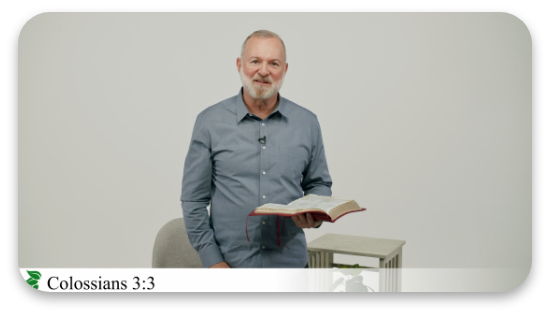
Rev. Jon Ryan presents “What Does a Leader Look Like?.” The teaching begins: What does a leader look like? It develops these biblical truths for faith, spiritual growth, and daily Christian living.
Transcript
Understanding What Does a Leader Look Like?
What does a leader look like? I was gonna have everybody make sure that you brought a mirror to the fellowship this evening, and then you could look in the mirror and see what a leader looks like. You know, God has called each one of us to be his sons and daughters, and he wants us to lead others to him, to show people and to tell people about the greatness of what is available because of his son, Jesus Christ, what he's made available through Jesus Christ. So let's turn in our Bibles, please, to 1st John, all the way in the back.
It's just before the book of Revelation in 1st John. We learned that we belong to God and that he is so proud of us. We're gonna go to chapter 3 here, 1st John chapter 3, and in verse 1 we read, Behold what manner of love the Father hath bestowed upon us that we should be called the sons of God. Therefore the world knoweth us not, because it knew him not.
Beloved, now are we the sons of God, and it doth not yet appear what we shall be, but we know that when he shall appear we shall be like him, for we shall see him as he is, while those pronouns are referring to Jesus Christ, and how exciting it is to know that we belong to God. It's just incredible. I'm going to read these same two verses in the Amplified Classic version of the Bible.
It says, See what an incredible quality of love the Father has given, shown, and bestowed on us, that we should be permitted to be named and called and counted the children of God. And so we are. The reason that the world does not know or recognize or acknowledge us is that it doesn't know or recognize acknowledge him, Jesus Christ. It doesn't even understand.
Beloved, we are even here and now God's children, and it is not yet disclosed, made clear, what we shall be hereafter, but we know that when he comes and is manifested we shall be as God's children resemble and be like him, for we shall see him just as he really is. And we look forward to that day and time of Christ's return with our hearts. I just I'm so excited at times to consider that Christ is going to come back just as surely as God promised that he would be here the first time, and God keeps his promises. And so he's coming back.
So in the meantime, as God's children, we lead. You know, I grew up in a family of six children, my mom and dad, and then I had five siblings. I was the oldest, and to a large degree, especially as in my younger years, I was to lead my brothers and sisters, to lead them in obeying and doing what my parents told me to do and not taking them in the wrong direction.
You know, at times, because of the situation where mom would be working and dad would be working, or at times we just had a mom, then I'm the babysitter, I'm the one that's taking care of them. And so I had a role to play, and I was, you know, entrusted to lead my brothers and sisters in the right direction, to help them to see that the rules of the house were maintained so that we could have peace in the house.
The Biblical Foundation
Well, to a large degree, God has called us his children, and we are to lead to show the world the great benefits and blessings of obeying God by our example. So it's pretty exciting. Go to the book of Colossians. Colossians tells us, and we're going to go to Colossians chapter 3. We learned some of the, I guess, the adjectives that can describe our lives and where to rise up to, to be what these descriptive adjectives are. In Colossians 3 verse 12, we read, put on therefore as the elect of God. So we just saw we're elected, we're God's children, his sons and his daughters.
Put on therefore as the elect of God, holy and beloved. God calls us holy, and we are his beloved. Put on bowels of mercies. So mercy is when there is consequences are deserved for someone's action, but the consequences are withheld. So we're to be like that with people, we're to have lives that extend mercy many times when people are, have done you wrong, and we don't just retaliate or do them wrong, you know, and say, well, that's karma. No, we just, we're merciful.
Bowels of mercies, kindness, kindness is to be benevolent to someone that's ungrateful, someone that doesn't deserve for you to be benevolent or kind. That's, that's what we're to be. And then humbleness of mind is the next one. So we're to have that humility that we can just treat people with that, like we're not better than them. We are able to extend God's love towards them and to realize that we're so thankful that we've been brought to this. So bowels of mercies, kindness, humbleness of mind, meekness.
Again, that's, we are to lead in each of these categories, to lead in meekness and being, I love that one of the words that I've always been taught that meekness is, is to be coachable. When I was in school and in high school and afterwards I was on sports teams and you needed to be coachable. You need to do what the coach told you to do in order to be successful, in order to win. The next adjective is long suffering. You know, that's to be patient, to, to again, be willing to put up with somebody's short suits so you can get to their long suits.
That's how I often see it. It's just, you know, we're, we're willing to be patient and let someone grow into the, the right behavior. And God does that for us and we're thankful when people have done that for us. They've given us the time to grow and realize who we really are. And then it goes on, forbearing one another and forgiving one another. If any man have a quarrel against any, even as Christ forgave you, so also do ye. So this is quite a little list here of, of actions that we can take, of, of behavior that we can exhibit.
We're, we're, we're humble, we're meek, we're forgiving, we're patient. And then it says this, what goes on top of all of it, verse 14 and above all these things, put on charity. Well, charity is love. I don't know why the King James at times substitutes the word charity. It really doesn't communicate clearly, but it's the same word that's translated love in so many places. So above all of this, we're to walk in love, which is the bond of perfectness and let the peace of God rule in your hearts to the which also you're called in one body and be thankful.
Well, there's quite a list of, of, of descriptive adjectives that can describe our lives. And if you are able to be merciful and kind and humble and meek and long suffering and forbearing and forgiving and loving, well, you are a leader. You are going to stand out. People are going to want to be around you. That's how you can tell if you're a leader, look behind you and see who's following. That's what God has called us to. And what a great thing to be called to. Look at well, Proverbs three, five, and six is another descriptive verse or two verses that we can aspire to.
Examples and Spiritual Lessons
And as we do that, we will be leading. So we'll go and look at Proverbs chapter three and in verse five, trust in the Lord with all thine heart and lean not unto thine own understanding and all thy ways acknowledge him and he shall direct thy paths. That's read the next verse also, be not wise in thine own eyes, fear or respect the Lord and depart from evil. So that's a leader.
If we are not trying to get our own way and put all our confidence in what we have decided in the direction that we've chosen and we're not just trying to lead because we want some, you know, we think that we're right, but we'd rather say, well, let's see what God has to say. That's a leader. That's a leader that we want to follow. The other leader is there. The leaders that want to just lead by their own ideas, their own opinions and direction, but oftentimes that's not going to take you. It's not trustworthy. It's not going to bring you to the right results.
You know, are we willing to go God's way and then help others to do the same? You know, it's in Romans chapter four, you don't have to turn to Romans right now, but I want you to turn to Acts, please, Acts chapter 18. But in Romans four, it says we are to follow in the steps of Abraham. Well, Abraham lived 4,000 years ago. So his steps, the way that he walked is in the word of God and we can emulate that. That's, he was certainly a leader, but it's not, we don't have to be like Moses or Abraham or David to be leaders.
We could just be the regular men and women that are in the communities that we live in and we are just as important. God wants us to be those men and women that can be examples. You know, it says in back in first John where we started that we can walk as he walked. Speaking of Jesus Christ, that's how we can live a life that's on a separate plane. So I just wanted to take you for a few minutes and take a look at this one couple that perhaps didn't see themselves as leaders in Acts chapter 18.
This couple you may have heard of it's Aquila and Priscilla. And it's just to give you a little thumbnail sketch. It says that he was born in Pontius and they had lived in Rome. They'd got married and lived in Rome until a time when Emperor Claudius, who was the emperor of Rome, had directed that all the Jews needed to leave Rome. So they were kicked out of their country. Imagine that. And so they traveled over to Corinth, which is east of Rome. If you look at your map, you'd find out it's east of Italy across the Aegean Sea.
And they ended up meeting up with the apostle Paul when they landed in Corinth. They were working. They happened to be of the same occupation as Paul in the King James. It says they were tent makers, but really when you study it a little more closely, you find that they were saddle makers, saddles for horses and livestock. And they connected. Now they may have been sad and upset that they were kicked out of Rome, but you know what? God had a plan for them. They were going to run into one of the greatest men that ever lived and actually lived with him.
They met up with Paul. Paul also was trained in saddle making, and they're living in Corinth for about a year and a half in the same household. And they've started a business there. And imagine how tremendous that was. But see, they were just a couple, and they just made decisions. They loved God, and they learned. I don't know if Paul was the one that introduced them to Jesus Christ, but they certainly latched on to what Paul taught them. And after a year and a half, Paul said, I'm leaving. I have to go back.
Faith in Action
He actually ultimately was going to go back to Jerusalem for a period of time. But first, he was going to stop in Ephesus. And Aquiline Priscilla had so grown fond of Paul that they traveled with him. They left Corinth. They had started a business, and they'd already been from Rome, but they started this saddle business in the Corinthian area. But they so loved God and the word that Paul said, I'm going. And he must have invited them, and they took him up on the invitation. And then Paul got to Ephesus, and he said, I've got to go further east.
I'm going to go back to Jerusalem. But you guys can stay here. And they stayed there in the Ephesus area. And Paul was gone for a year, and while they were there in the Ephesus area, they helped people. See, they did what we just read earlier in Colossians chapter 3. They were kind and humble and meek and forgiving, and they met up with a great man in the Word of God. His name was Apollos, who had come from Egypt, and he was a teacher.
And so they went to attend an event where he was teaching, and they realized he did not yet know about Jesus Christ. They didn't have the communication apparatus that we have. Everybody's walking around with a cell phone in their pocket. They didn't have communication, couldn't move that quickly around the world like it does today. But they saw something in this man, Apollos, and they were willing to trust God and be directed by God.
And so they went and approached Apollos after his teaching and invited him privately, wherever that was, maybe back to their home or wherever, but they expounded to him or taught him the Word more accurately. And Apollos, being a great man of God himself, received what they had to say. He didn't go, who the heck are you guys going to teach me? But he had great meekness and humility. As a matter of fact, some great things are written about him in Acts chapter 18. And so he received the Word that they were teaching him.
And then Apollos ended up going back to Corinth, where Aquil and Priscilla had been for the year and a half previous. And he ended up being a great man in Corinth. But it all started from this couple that was just kicked out of their homeland, and they became wonderful disciples of the Lord Jesus Christ. So let's read a little bit about this. We'll start in Acts 18 verse 1.
After these things, Paul departed from Athens and came to Corinth and found a certain Jew named Aquila, born in Pontius, lately come from Italy with his wife Priscilla, because that Claudius, the emperor, had commanded all the Jews, all Jews, to depart from Rome, and came unto them. So this is how they come together. They're just, like I said, Paul has come from the north, where he has been really expelled from the Thessalonica and Berea area up north. They'd gone to Athens for a period of time, and then he ended up down here in Corinth.
God was directing his steps, and God was directing the steps of Aquila and Priscilla. And so they come together, and it says in verse three, and because he was of the same craft, he abode with them and wrought or worked. For by their occupation, they were tent makers. That's more accurately saddle makers. And he reasoned in the synagogue every Sabbath. So this is Paul's manner, is he's teaching people the Word. He is a Judean, and he's going to the synagogue when he first gets to places, because he has an open door to speak to people there.
Walking with Confidence
But it says over the course of the next number of verses that many people were one to God by the ministry of Paul, and he's living with Aquila and Priscilla. It's pretty outstanding. Look down at verse 11, please. 1811 says, and he continued there a year and six months, teaching the Word of God among them. So that gives you what I told you, that he's there for a year and a half, which when you read about Paul's travels, that's often not how long he stayed. Sometimes it just says he was there in a place for certain days.
And sometimes it says he was there, like in Thessalonica, for three Sabbath days. That's three weeks. But here in Corinth, he stayed for 18 months, a year and a half. And so it goes on. Look at verse 18, Acts 18, 18. And it says, And Paul, after this, tarried there yet a good while, and then took his leave of the brethren, and sailed thence into Syria. And with him, Priscilla and Aquila, having shorn his head and sang Kriya, for he had a vow. So Paul's leaving Corinth, and Aquila and Priscilla said, We're going with you, Paul.
Verse 19, and he came to Ephesus and left them there. So this was an arrangement. They weren't coming, kicking and screaming. It was just an arrangement they made. We want to be part of what you're doing, Paul. But Paul says, You guys stay here. I've got to travel further. He left them there, but he himself entered into a synagogue and reasoned with the Jews. And when they desired him to tarry longer with them, he consented not but made them farewell, saying, I must by all means, keep this feast that cometh in Jerusalem. But I will return again unto you, if God will.
And he sailed from Ephesus. And when he had landed at Caesarea, and gone up and saluted the church, he went down to Antioch. So Paul's travels continued east. Now, verse 23. After he had spent some time there, well, actually, okay, we'll read. After he'd spent some time there, he departed and went over all the country of Galatia and Phrygia in order, strengthening all the disciples. So Paul was visiting the areas that he had been to previously, strengthening them. You know, he didn't go there with a workout tape and said, I want you to do the military exercises.
No, no, no, he was strengthening them with the Word. He would have been teaching them about how God was working and who Jesus Christ was, how they could live life at a higher plane. Now, verse 24. And a certain Jew named Apollos, born at Alexandria, that's Egypt, an eloquent man and mighty in the scriptures, came to Ephesus. So here's the introduction of this man who God's got great things to say about him. He's eloquent. He's mighty in the scriptures. It goes on, verse 25. This man was instructed in the way of the Lord and being fervent in the Spirit. He's read hot spiritually.
He's fake and taught diligently, so that's the best he knew. He was speaking the Word diligently, the things of the Lord, knowing only the baptism of John. He didn't know more about what Jesus Christ had accomplished. It goes on. And he began to speak boldly in the synagogue, whom when Aquila and Priscilla had heard, they took him unto them and expounded unto him the way of God more perfectly. Well, that shows amazing meekness on both parts.
They're willing to go and meet with this man that's got these great credentials, and he's willing to go and meet with them, because he wants to continue to diligently speak the things concerning the Lord. And so he's there with them, and they expounded unto him the way of God more perfectly. And when he was disposed to pass into Achaia, the brethren rode exhorting the disciples to receive him. Achaia is Corinth. So he's learned from Aquila and Priscilla. We have a whole group of people that we just left.
Applying the Teaching in Daily Life
They would have told him about Paul and said, we left these people because the Apostle Paul brought us here maybe so we could meet you, you know, because look what's turned out. And so Apollos goes back to Corinth, and he becomes a mighty man of God there. He would have had this amazing group. He would have told them about Aquila and Priscilla teaching them, would have told them about the Apostle Paul, what he had learned, and he would have learned from them what Paul and Aquila and Priscilla had taught. It would have been amazing.
As a matter of fact, you read in the beginning of the book of Corinthians that some people said, I'm of Apollos, and some people said I'm of Paul. And then Paul had to correct them with a letter to the Corinthian saying, we're workers together. Don't separate into two different groups following one leader or another. We are the same. We are workers together with God. But it's amazing how this all came together because here's this couple, Priscilla and Aquila. It's interesting. They show up six times, three times Priscilla's name is first, three times Aquila's name is first.
That just shows me that they had an equal impact. Sometimes maybe Priscilla was the one that was leading the the way of, you know, opening the door. Let's go talk to that person. And other times it may have been Aquila, but it's just incredible. Let's go to Romans chapter 16. So when they were kicked out of Rome, I read in the history that the emperor Claudius of Rome kicked all the Judeans or Jews out of Rome, and it would have been around 49 A.D. And then he died in 54 A.D. And so there comes a point where Aquila moved back to Rome.
Again, that's where their family was. Apparently he says he was born in Pontius. So maybe they had, you know, certainly good reason to get back there. But they went back to Rome because we read here in Romans to go to Romans chapter 16. And here Paul is closing out this epistle to the Romans. And he says in verse one, chapter 16, verse one, I commend unto you Phoebe, our sister, which is a servant of the church, which is at Sancrea, that you receive her in the Lord as become a saints.
And that you assist her in whatever business she had need of you, for she has been a sucker or a helper of many, and of myself also, greet Priscilla and Aquila, my helpers in Christ. I would say that's a leader. Paul is saying, greet this couple, my helpers in Christ, who have laid for my life, laid down their own necks unto whom not only I give thanks, but also all the churches of the Gentiles. Wow, somehow they had to stand in the gap for Paul, this wonderful couple doesn't say what happened. But there we see the evidence that Paul says, they laid down their necks.
They put their lives on the line for me. And we should all be grateful to them is what Paul writes here. It's incredible. And then look again at one more other verse in 2 Timothy, 2 Timothy 4. Now this is quite a number of years later. This is around 63, 64 AD that Paul writes 2 Timothy. So we first encountered Aquila and Priscilla back around 10 years earlier, 10, 11 years earlier. And they've moved with Paul from Corinth to Ephesus, they moved back to Rome, they were in Corinth, you know, obviously back in there at times.
And now we read in 2 Timothy towards the end of Paul's life in chapter 4. We read verse 5, verse 6. Paul writes, for I am now ready to be offered and the time of my departure is at hand. That means he knows his life is coming to an end. I have fought a good fight. I have finished my course. I have kept the faith. Henceforth there is laid up for me a crown of righteousness which the Lord, the righteous judge shall give me at that day and not to me only but unto all them also that love is appearing.
A Life Shaped by God’s Word
So these are the last words of Paul. He's about ready to to fall asleep. He said he's finished his course and he's writing to Timothy and he goes on in verse 9. Do thy diligence to come shortly unto me for Demas has forsaken me having loved this present world and is departed unto Thessalonica, Crescans to Galatia, Titus to Dalmatia. Only Luke is with me. Take Mark and bring him with thee, for he is proper to me for the ministry.
And Tychicus I have sent to Ephesus, the cloak that I left in Troas with Carpus, when thou comest bring with thee and the books, but especially the parfums. That's the word that he's written. That's the the epistles he's written. And then jump down to, excuse me, verse 19. Verse 19 says, Salute Prisca and Aquila and the household of an estuarous harasses abode at Corinth, at Trophimus I have left at Milethium sick. Do thy diligence to come before winter.
So this letter, this epistle is to Timothy and he's saying, you know, all these different instructions he's given to Timothy and he tells them, don't forget to salute Aquila and Priscilla. Tell them I'm thinking about them. I'm praying for them and I got great things. God has great things in store for them. So what does a leader look like? What looks like Aquila and Priscilla for one or for two. They just think they love God. They met up with the Apostle Paul and it set their life on this course that they never would have imagined for themselves.
At times they had to stand in the gap to protect Paul. They saw opportunities to give someone like Apollos a greater understanding of the word. They had exhibited these wonderful attributes that we read about at the beginning in Colossians chapter 3 verses 12 through 16. They were meek and humble and diligent and certainly above all of that they walked in love. So what's a leader look like? It looks like you.
You are such great men and women that stand on the word in this day and time and God will continue to open doors to you and to me so that we can help people to rise up to be those men and women that God has called us to be. So Father I thank you for your love, your goodness, your grace, your mercy.
Thanks for the examples we have in your word of a couple like Aquila and Priscilla, of men like Paul and Apollos and others and that we can just see ourselves the way that you see us more and more and that we can look forward with great eagerness to that day and time when Christ returns and that we can be those men and women that love his appearing, that are loving that truth that we hold ever dear, that maybe he's coming back today. Thanks in the name of Jesus Christ. Amen. Scripture references Colossians 3; Acts 18; 2 Timothy 4
Key Takeaways
- I was gonna have everybody make sure that you brought a mirror to the fellowship this evening, and then you could look in the mirror and see what a leader looks like.
- So let's turn in our Bibles, please, to 1st John, all the way in the back.
- It's just before the book of Revelation in 1st John.
- We learned that we belong to God and that he is so proud of us.
- Therefore the world knoweth us not, because it knew him not.
Frequently Asked Questions
What is the main message of “What Does a Leader Look Like?”?
Rev. Jon Ryan presents “What Does a Leader Look Like?.” The teaching begins: What does a leader look like? It develops these biblical truths for faith, spiritual growth, and daily Christian living.
Which scriptures are central to this teaching?
The teaching draws especially from Colossians 3, Acts 18, 2 Timothy 4.
How can believers apply this teaching?
Therefore the world knoweth us not, because it knew him not.
Scripture References
Colossians 3; Acts 18; 2 Timothy 4
This text was prepared from the source document. Please verify scripture references against your own Bible.