Overview
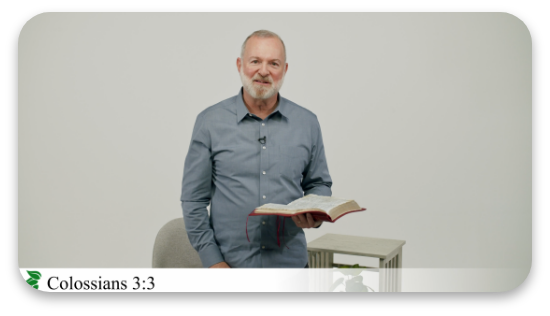
True Christian leadership does not lord over or control God’s people. In the first teaching of the Apologia series, Rev. Rico Magnelli begins with Paul’s defense before Agrippa and defines an apologia as an answer of truth in the face of accusation. He then considers Jesus Christ, the Apostle Paul, and the Apostle Peter, showing that grace-administration leadership is expressed through service, helping others’ joy, and living as an example.
Transcript
An Answer of Truth in the Face of Accusation
Well, God bless you in the name of Jesus Christ and welcome to this special leadership conference call. My name is Rico Magnelli. Please turn to Acts chapter 26.
The book of Acts, chapter 26. Here at Acts 26, the Apostle Paul is brought before Agrippa, and he has been accused of certain things, and we pick it up in verse 1. Then Agrippa said unto Paul, Thou art permitted to speak for thyself. Then Paul stretched forth the hand and answered for himself.
I think myself happy, King Agrippa, because I shall answer for myself this day, before thee touching all the things whereof I am accused of the Jews, or as we understand it, more accurately, the Judeans. The words answer and answered are a Greek word, apologaiomai. This is in its verb form, and this Greek word, one way of understanding it, is an answer of truth in the face of accusation.
And how wonderful it is that the Apostle Paul is given this opportunity to answer in the face of these accusations. And those that were accusing him are the religious leaders of the day. These are individuals steeped in the law and works, and they were accusing the Apostle Paul of various and sundry things.
And an apologia, as I said, is an answer of truth in the face of accusation. These accusations are false. Why would somebody do something like that? Well, we’ll get into that a little bit.
People Are Known by Their Fruit
Now, no one is perfect, we all know this, but the Word says in Matthew 12 33, “…Either make the tree good, and his fruit good, or else make the tree corrupt, and his fruit corrupt. For the tree is known by his fruit.” Sure, trees are known by their fruit. I mean, that’s pretty obvious.
It’s not difficult to understand. Well, so are people. People are known by their fruit.
And that is one of the great keys to understanding what goes on in a situation, because sometimes we see things that don’t seem to line up. But if we dig deep enough, we can, and sometimes it takes a little bit of time, but the fruit will show itself, good or bad. And we accept the responsibility for the fruit of our own lives.
I have no problem with that before God. I’m very comfortable in my own skin. Galatians 6 says, verse 7, “…Be not deceived, God is not mocked.
For whatsoever man soweth, that shall he also reap. For he that soweth to his flesh shall all of the flesh reap corruption. But he that soweth to the Spirit shall the Spirit reap life everlasting.
True Leadership Does Not Lord Over God’s People
And let us not be weary in well-doing, for in due seizing we shall reap, if we faint not.” Absolutely. Sometimes it takes a little time and that’s okay. I want to look at three leaders, Jesus Christ, the Apostle Paul, and the Apostle Peter, and I have a very specific reason why I want to look at them in this sharing.
Each one denounced a practice of leadership lording over God’s people, and we’ll read it right from the word. I’m not going to read into it, but that’s what we might call top-down leadership, where someone imposes one’s will upon another. That is not grace administration leadership.
It’s not. Now sometimes all leaders, and I have been, you know, I’m sure I’ve crossed the line here at times too, where we were frustrated or we you know, we’re tired or we make a mistake and we, you know, we try to impose our will on somebody. Sure, that definitely happens.
I mean, parents know what I’m talking about. That sometimes happens. But that’s not the pattern that’s set for us in the grace administration.
Jesus Christ contrasts this lording over with service. That’s the answer he gave, service. That’s the right thing to do.
The Apostle Paul, he contrasts lording over God’s people with being a helper of their joy. That’s the right thing to do. So we’ve got service from Jesus Christ.
We’ve got being a helper of others joy, and then the Apostle Peter, he contrasts being lords over God’s people with being an example, being an example. And I think in every one of these categories, again, not perfectly, I’m very clear on that, we have been exemplary in service, in helpers of people’s joy, and being an example. Look at Luke 22, please.
Jesus Christ: Leadership Through Service
Luke 22. Luke chapter 22. Now, being lords over people is done in the world all the time.
That is the way that they function. They have a top-down leadership corporate ladder, and anyone who’s worked in the world understands this, even at the local level. Yet Jesus Christ, on the night he instituted the bread and wine, to set in remembrance his soon-to-be-broken-body-and-shed-blood, he handled this leadership truth.
And again, like I mentioned, he gave the right perspective, which is service. Let’s read it here. Luke 22, in the verse 25, and he, Jesus, said unto them, the kings of the Gentiles, so that’s the leadership of the Gentiles, means the people.
Remember, there’s three groups of people, Gentiles, Judeans, and now the Church of God, and our administration, exercise lordship over them, and they that exercise authority upon them are called benefactors. Interesting. Look at the context here.
Look at verse 24. And there was also a strife among them, talking about his leadership, that were with him the night he instituted the communion. Which of them should be accounted the greatest? So they’re arguing amongst themselves, who is the greatest? Meaning somebody is above somebody else, right? Sure, who’s the greatest? That’s where he said, the kings of the Gentiles exercise lordship over them, and they that exercise authority upon them are called benefactors.
But ye shall not be so. I mean, it couldn’t be any pointer, that ye shall not be so. But he that is greatest among you, let him be as the younger, and he that is chief, as he that does what? Serve.
For whether it is greater he that sitteth at meat, or he that serveth, is not he that sitteth at meat, that I am among you as he that serveth. He was setting the example. He was setting the example as a servant.
Because he told them as a leadership group, do not do this. No one over anyone else. Now I’ll explain what I mean by that.
But this dispute among the apostles, who is the greatest? This is totally the world. This is totally, it’s not, it’s not what Jesus Christ taught. The world does this with everything.
Olympics, you know, who’s the greatest Olympian? The World Series, who’s the greatest baseball team in a particular year? Who won the Super Bowl? Who’s the greatest football team? The Oscars, oh my gosh. The best movie, the best actor, the best screenplay. It’s the best, the best, the best, the best.
That’s not the way it’s supposed to be in leadership. Wow, what a wake-up call. This is the way of the world.
That’s right. When this happens, it causes problems. The words exercise lordship over, the words exercise lordship over, verse 25, it’s kuryu-a or kuryu-o.
Kuryu-o, in the Greek. It means to be lord over any person or any thing. To be lord over any person or any thing.
Wow. That’s interesting. See, things are to be used.
People are to be loved, and we can never, I mean never, mix up the two. When we mix up the two, we’re off the word. Things are to be used, people are to be loved.
People are, God’s people are so precious to him. I use my table, I use my my car, I use the washing machine, and if it breaks down, I throw it away. We don’t throw away people.
The Word and People Must Come Before the Corporate Structure
Now one way of applying this in a way is looking at the ministry has two basic sides. It has a corporate side, and it has a biblical side. How do you reconcile the two? Well, we live in our day and time in our culture, and we have to reconcile it, and it’s not an easy thing.
Anybody who’s to try to reconcile all the all the parts to that, it’s a challenge. The dominant mechanism and function of the corporate side of the ministry, from my perspective, is for the stewardship of the physicals. That’s right, the physicals.
And must always be second to the biblical side of the ministry, the Word and the people. The Word, but the Word must always be first. That is not an easy line to walk at times, because of the culture in which we live, but it is available.
And this is a challenge, and I believe it’s a great key to understand what goes on. The Word has not been first. Therefore, God has not been first.
That’s idolatry. So as a result, what happens is people can be treated poorly, causing hurt and confusion. When people are treated as if they are physical things, when they’re treated as if they are physical things that can be manipulated, used, discarded, that’s a worldly influence.
When there’s an imbalance exists with top-down leadership approach rather than an inclusive, balanced, biblical approach among leadership, there’s a problem. And consequently, there’s a disconnect. Mutual believing and spiritual unity gets interrupted.
That’s exactly what Jesus Christ warned against. Now, we have been accused of not endeavoring to keep the unity of the Spirit and the bond of peace, versus one through three of Ephesians. And anyone who has been involved can tell you the same thing, is, along with my wife, we’ve endeavored to build a team environment.
The team environment is like in an Ephesians 4.16 atmosphere, where the whole body fitly joined together and compacted by that which every joint supplieth, according to the effectual working in the measure of every part, maketh increase of the body unto the edifying of itself in love. Now, did we do it perfectly? Sure, I know. No one does.
Ephesians 4: Every Part Supplies
Look at Ephesians 4, please. Ephesians 4. This is probably the best model in terms of the principles involved for leadership to be enacted. A pyramid approach, where it’s pointy at the top and that the base is big, where all the authority and decision-making is at the top, doesn’t work the best, in the sense that incorporating more of a mystery approach gets better results.
But yet, there are times when you need to have that type of functioning. But oftentimes, it’s more in an emergency situation, not in day-by-day living. But here in Ephesians 4, let’s see, says in verse 11, And he gave some apostles and some prophets and some evangelists and some pastors and teachers.
I read five different ministries there. Five. For the perfecting of the saints, for the work of the ministry, for the edifying of the body of Christ, do we all come in the unity of the faith, that’s the family faith, and of the knowledge of the Son of God, unto a perfect man, unto the measure of the stature of the fullness of Christ, that we henceforth be no more children, children spiritually, not in age, tossed to and fro and carried about with every wind of doctrine, by the slight of men and cunning craftiness whereby they lie in wait to deceive.
Sure, that’s not what God wants. But speaking the truth in love may grow up in into him in all things, which is the head of Christ, from whom the whole body, whole body means whole body, fitly joined together and compacted by just a few joints that supply. You know that’s not what it says.
By that which every joint supply of, according to the effectual working in the measure of every part, make it increase of the body unto the edifying of itself in love. That’s why it’s so important to build a team in whatever spiritual assignment and responsibility people have, because it reflects more of the mystery. And because there has to be a lot of listening, there has to be a lot of working together, and you know, we have to work hard at it.
It’s the vehicle that helps us move the word, provides an organizational structure to facilitate communication and steward and direct resources. So we don’t want to throw out the baby with the bathwater. That’s not it.
Paul: Helpers of Your Joy
But let’s get it on the word, 2nd Corinthians, please, 2nd Corinthians. So we’re going to follow this dominion over concept, learning over, because Jesus Christ said the answer was service. Here Paul states in a kind of a different way in 2nd Corinthians.
2nd Corinthians chapter 1, verse 24, not for that we, Paul, Silas, and Timothy, have dominion over your what? Believing, but are helpers of your joy, for by believing you stand. The leadership are saying we don’t have dominion over your believing, but in contrast are helpers of your joy. The dominion over your believing, that word, those words have dominion over, it’s the same word, according to you, to be lord over any person or anything.
We’re not, we don’t have dominion over. What are we supposed to do? Be helpers of your joy. Helpers of your joy.
See, this is where real understanding of free will comes into play for us. Dominion over others is about control. It’s about control.
You control things. I control my car. I control the lights in my room.
I control the thermostat, but not people. There’s nothing wrong with being in charge of yourself and a situation. Jesus Christ was a master.
He was in charge of himself and he was in charge of every situation. The Gospels are clear. He was the master of the situation, but leaders are not in, are not authorized to be in control of people.
They don’t have dominion over their believing. That’s important. I love this quote from Thomas Jefferson.
It’s one of my favorite quotes from him. Upon the altar of God, I pledge eternal hostility against every form of tyranny over the mind of man. Upon the altar of God, I pledge eternal hostility against every form of tyranny over the mind of man.
Free will is something very interesting to work with. Because as a leader, we love people. Into loving the word, into loving themselves, often.
Here in Corinthians, it’s talking about not lording over the believing of others. And lording over their believing is not how grace administration leaders function. Rather, we teach how to believe the word in order to help others have joy in their life and stand unmovable in their believing of the word.
Joy is an encouraging fruit and indicates quality of life. We want quality and stability in the lives of God’s people. Quality and stability in the lives of God’s people.
Control, Isolation, and the Need for Free Will
It’s not about control. Please turn to Galatians. Galatians chapter 4, verse 16.
Am I therefore become your enemy because I tell you the truth? Am I therefore become your enemy because I tell you the truth? That’s what Paul is saying to the Galatians. I’m telling you the truth. Does that mean that I’m your enemy? No.
We’re supposed to speak the truth. Then it says, they zealously affect you, but not well. Yea, they would exclude you.
The text is us. That you might affect them. Now this is an awkward translation.
But I have a translation that I’d like to read. They, who trouble and pervert the gospel, are zealous for your allegiance, but not in a good sense. No, they desire to isolate and control you so that you are zealous for their beliefs only.
That’s control. And it’s usually done through intimidation and fear. That’s control.
And people do not need bars to have prisons. Back to 2 Corinthians chapter 1. Please. Verse 24 of 2 Corinthians chapter 1. We started there.
Not for that we have dominion over your believing, but are helpers of your joy. For by believing you stand. So Paul is contrasting between having dominion over believing with helpers of your joy.
See, the temptation is to fall into having dominion over believing because we maybe have positions of authority. That’s a wrong approach. We must win the heart of people one by one from the youngest to the oldest, from the least experienced to the most seasoned believer.
We win people on our team so we can all work together and move the word. What we see in this verse, again, is the service of leadership. How Paul worked with people, not controlled them.
And, again, the control isn’t physical. You isolate people off usually through intimidation and fear. The calling and the authority of his ministries, Paul, never left.
But yet look at how he’s working with them as helpers of their joy. The word helpers is very interesting. It’s the Greek word sunergos.
S-U-N-E-R-G-O-S. Many of you are familiar with this. It’s translated helpers, work fellow, laborers together with God, fellow helper, companion in labor, fellow workers.
And I love the way E.W. Bullinger, in his lexicon, defines it. He says working together in conjunction with. That is how Robin and I have worked with people, or endeavored to anyway.
Peter: Examples to the Flock
To work with, in conjunction with. To labor with them, not against them. Look at 1 Peter, please.
We’ve looked at Jesus Christ. We’ve looked at the Apostle Paul. Let’s look at Peter.
Remember, things are to be used. People are to be loved. Not the other way around.
1 Peter. 1 Peter chapter 5. Here in this section on leadership, in the context of the crown of glory, one of the rewards, one of the five great categories of rewards, this one given to leadership, is the truth not to be a lord over God’s heritage. Why? Because it’s so important.
We want to be helpers of their joy. We want to be servants. We want to be examples, as we’ll see right here.
1 Peter 5, verse 1. The elders which are among you, Peter wrote, I exhort, who am also an elder and a witness of the sufferings of Christ, and also a partaker of the glory that shall be revealed. So he’s a partaker of the glory that shall be revealed. Feed the flock of God, which we know is a figure of speech.
God’s people aren’t sheep. Feed the flock of God, which is among you, locally, taking the oversight thereof, not by constraint, but willingly, not for threat to the worker, not for money, but of a ready mind, neither, here it is, as being lords over God’s heritage, but, but, but, in contrast, being examples to the flock. Peter is saying here that the leadership are not to be lords over, and here it’s the same word, but it also has the preposition in front of it.
Sometimes in the Greek, what the Greek does is it takes a preposition, like on, or to, and then it adds it to another word, and it becomes what’s called a compound word. You put two words together, it’s called a compound word. Here’s a compound word.
It’s the word kata kuri uo. It’s the kuri uo with kata, the preposition in front. So we’re not supposed to be lords against God’s heritage.
That’s pretty powerful. But in contrast, we’re to be examples. The word in samples is just King James English.
It means an example, a type, like a typewriter makes an impact on a piece of paper. Some of us still remember what a typewriter is. And samples to the flock.
Authority Comes From God
Look at Romans 13, please. So we’ve seen, with Jesus Christ, the Apostle Paul, and now the Apostle Peter, leadership are not supposed to lord over service, helpers of their joy, working with them, and being examples. All of that’s involved.
Romans chapter 13. In Romans chapter 13, we have the higher powers. Verse 1, it says, let every soul be subject to the higher powers, for there is no power but of God.
The powers that are, that be are ordained of God. They are the higher powers. They’re not higher in terms of the gift ministries are up here, and we’re down below here somewhere.
That’s not it. It’s the direction from which that authority, that word power is authority, comes from. It comes from God.
It identifies the direction from which the exousia authority comes. It comes from heaven. The gift ministries are ordained of God, the higher powers.
And the higher powers do not indicate that it should be applied to an authority structure outside the charismatic gifts, or the ruling ministries, and their relationship to the believers in the body of Christ. It’s very clear that the gift ministries can and do function within ministry structure. Absolutely they do.
Provide access and influence. The more responsibility one has, the greater the access and influence. However, change does not change spiritual function in the body of Christ.
What affects spiritual functioning is love, and fear. Belief and unbelief. It does change the access and the influence you have based on that responsibility, sure.
But it doesn’t change the spiritual function. The gifts and the calling of God are without repentance. And each individual couple, family, they adapt themselves to their various locations and so forth.
If someone functions spiritually, if they have a ministry of an apostle, or a ministry of a teacher, they function whether they’re in another country, or whether they’re here in the United States. It’s up to them to function. Changes should not and cannot affect the functioning of the charismatic gifts of God’s grace.
Speak Boldly Without Fear
Because the charismatic are acts of dividing by the spirit, God himself. So, if what has been shared makes biblical sense to you, I would recommend that you speak up about it. Now again, not in a hurtful sense.
No, not at all. But let me leave you with this. 2 Timothy 1, 7 says, For God hath not given us the spirit of fear, but of power, and of love, and of a sound mind.
Fear is no way to live. It’s torment. Fear has ruined more men’s ministries than any other thing.
And I believe it. I’ve seen it. I have been afraid in my life.
And I have not spoken up and taken a stand. Now, again, taking a stand does not mean that we have to be harsh. In no way.
We do it with love and tenderness, but we’re firm. May Ephesians 6.19 and 6.20 be spoken of for each of us, for every one of us. And I’ll read them to you.
And for me, that utterance may be given unto me, that I may open my mouth boldly to make known the mystery of the gospel, for which I am an ambassador in bonds, that therein I may speak boldly as I ought to speak. Dear Heavenly Father, thank you for the time that we’ve had and for your wonderful grace and mercy and peace. And Father, thank you for your wisdom, for your solutions and your direction.
And may we each walk more boldly and more confidently on the truth of your word with great love and tenderness in the days, weeks, months, and years ahead. And for prospering our way in the name of Jesus Christ. Amen.
God bless you.
Key Takeaways
- An apologia is an answer of truth in the face of accusation, not an excuse or rationalization.
- Jesus Christ rejected leadership that lords over people and presented service as the proper pattern.
- Paul described spiritual leaders as helpers of believers’ joy rather than controllers of their believing.
- Peter instructed elders to lead willingly and by example, not as lords over God’s heritage.
- Organizational structures should steward physical needs while remaining subordinate to God’s Word and the care of people.
Frequently Asked Questions
What does apologia mean in this teaching?
It means an answer of truth in the face of accusation rather than an excuse, admission of guilt, or rationalization.
What pattern of Christian leadership does Jesus Christ establish?
Jesus Christ establishes leadership through service rather than lording over, controlling, or using people.
How do Paul and Peter describe healthy spiritual leadership?
Paul describes leaders as helpers of believers’ joy, while Peter instructs leaders to be willing examples to the flock.
Scripture References
- Acts 26:1–2
- Matthew 12:33
- Galatians 6:7–9
- Luke 22:24–27
- Ephesians 4:1–16
- 2 Corinthians 1:24
- Galatians 4:16–17
- 1 Peter 5:1–4
- Romans 13:1–5
- 2 Timothy 1:7
- Ephesians 6:19–20
Verification note: This page was prepared from a machine-generated transcript. Please check names, Greek terms, Scripture wording, verse references, and the intended Bible translation against the original audio before publication.