Overview
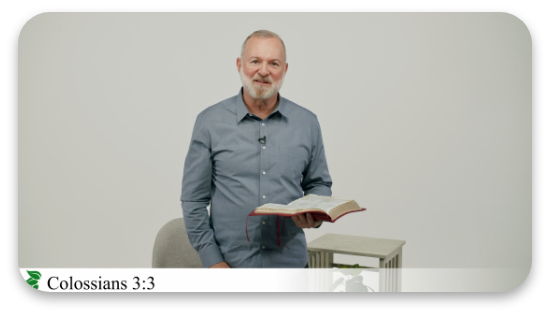
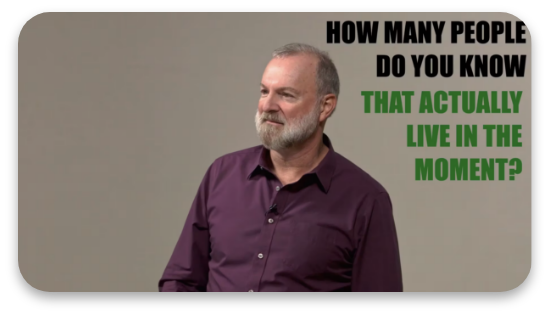
Rev. Rico Magnelli opens the Sonship Conference with an overview of the believer’s identity in Christ. He contrasts the heritage received through Adam with the new life, eternal inheritance, sonship, righteousness, and sufficiency made available through Jesus Christ.
Transcript
Our Identity in Christ
God bless your hearts, Matthew chapter 10 please. Let's get into our topic. I'm going to give an overview of the topic and not handle each specific one in depth.
That's going to be handled by our teachers later, but let's do an overview of our identity in Christ, Matthew chapter 10. A lot of people identify with many things in this life, and if you look deep enough you'll find out that what they identify with is where their sufficiency comes from. That's right.
Jesus Christ's achievement, his achievement, not our achievement, his achievement means our salvation and potential, both, our salvation and potential, because we can do the works of Jesus Christ. That means that's grace, unmerited divine favor, not works. If it was works then it would be our achievement.
Our identity in Christ is very significant, and really it gets to the very heart of who we are as sons of the living God. In Matthew chapter 10, in verse 39, is this verse, Jesus speaking, He that findeth his life shall what? Lose it. And he that loseth his life for my sake shall find it.
There's a saying that the world has promulgated for thousands of years, know thyself. The great philosophers in Greek philosophy spent years and years contemplating this truth, know thyself. It's been a lifelong pursuit.
The truth really is that no one really discovers who they are until they know Jesus Christ. Once you discover Jesus Christ, the purity of it, the purity of Jesus Christ, then you find out who you really are. That's the depth of it.
That's right. We find our identity in Christ by losing our heritage in Adam. That's our old nature.
The old nature is what your heritage in Adam is, and the inheritance is death. So Jesus Christ is saying here in verse 39, He that findeth his life shall lose it, and he that loseth his life for my sake shall find it. In other words, we lose Adam and the sin nature, and that's when we really find Christ.
Your old man nature you got from Adam, and the only thing that's at the end of that road is death. That's it. There's nothing else.
But yet people, look at Romans chapter 6, please. Yet people will spend their entire life trying to clean up that old man. You know, give him a PhD, make millions of dollars, get a house on the beach.
All those things aren't necessarily, nothing wrong with it. The problem is, is that if you find your identity in it, if you find your identity in your career, if you find your identity in relationships, those are all secondary, tertiary. Where we find our identity is knowing who is in you.
It's Christ in you. That's right. Romans chapter 6. That's where we want to find our identity.
You know, how you think of yourself each day determines so much of how your day is going to go. A lot of stuff's going to hit you and me. You know it.
You live in the world. I don't need to tell you that. You know that.
You go to school. You know what it's like. But how you think of yourself, not the problem, how you think of yourself determines a lot of what happens.
If it's Christ in you, then you're going to be more than a conqueror. Romans chapter 6, verse 4, therefore, here's our theme verse that's on your booklet. We are.
The text is we were. We were buried with him by baptism into death. Romans 6, 4. That like as Christ was raised up from the dead by the glory of the Father, even so we also should what? Walk in newness of life.
Walk is a Hebrew way of speaking. Which just means how one conducts one's life. We are to walk in newness of life.
Walking in Newness of Life
That means every day, every moment, not just on Sunday or on the weekend or when you have your birthday and everybody's giving you presents and you're all happy. There's nothing wrong with the birthday. But you see, we're to walk in newness of life.
And that newness means it comes from a word that means fresh and unused and unworn. Have you ever had a new item that was packaged? Like brand new. It was packaged.
And then you open it up and kind of smell it. It's kind of cool. I used to do that with my baseball glove when I was little.
When I got a new glove, I loved to smell that leather. Ah, just so cool. This is a boy thing, so some of you may not relate.
I used to do that with my sneakers too. Not after I wore them, when they were new. But when I was growing up, there was just basically three types of sneakers.
You had Converse All-Star, you had Pro Keds, and you had Pumas. I couldn't afford the Pumas, and I could afford the Converse. They were $9.99. And I always got a penny back.
And that's when I smelled those sneakers. They're just, ah, just cool. Well, this newness of life is fresh every day.
It's like you just take it out of the package. When you put on the new man, when you and I renew our minds, which means you put the Word of God in your mind, not what people say about it, what the Word says, and then act accordingly. Do you know what? It's fresh every moment.
Every time. It's fresh. It's like you open up the package.
You can do it 10 times a day if you want to, 20, 30, 40, unlimited times. Because it's walking in what? Newness of life. We got to put the old man behind us.
Stop negotiating with your old man nature. Stop trying to convert him. Stop trying to figure him out.
Whenever you're bummed out and you're out of fellowship, that means you're listening to your old man. That's right. It's good to get honest about it, too.
See, our old man is the heritage in Adam. And death is the inheritance. Our heritage in Jesus Christ is Christ in you, the treasure in earthen vessels.
And what the inheritance is, is eternal life. Do you know you have eternal life in you right now? Do you know that every person in this room that's born again has eternal life abiding within them right now? That spirit that's within you is eternal life. And people spend so much time concerned about the silliest things.
Has anybody ever done that? There's three or four people that are really honest. You know you've done that. I've done it.
We've all done it. Come on. We spend an inordinate amount of time on thinking about things that make no sense and waste our time.
See, we got to think about what God has brought in Christ for us. Look at verse 5. For if we've been planted together in the likeness of his death, we shall be also in the likeness of his resurrection. See, a lot of Christian believers don't talk about the resurrection.
That's where the power is. Do you know when you put the name of Jesus Christ together, now you've got the full package? If you talk in the name of Jesus or you pray in the name of Jesus, you only have one aspect of what was accomplished. Jesus refers to he who was humiliated, he who was crucified, which he did.
And we must understand and accept that reality, that our sins have been washed away in his death. But what about the resurrection? That's where the power is. That's where you bring in the title, Christ.
Remember, Christ is not his last name. Mary Christ, Joseph Christ. Christ is his title.
He is the anointed one, the Messiah. He is Jesus the Christ. There isn't like 50 of them.
You know, you look in the phone book under Christ and, you know, which one do you want? Which savior? I'll take Jesus. No, there's only one. Jesus the Christ.
See? And then you put the whole package together. When we understand what he was crucified for, that we were crucified with him, and that we were raised with him, that's why we use the power in the name of Jesus Christ. That's right.
That's where the power is. Because the resurrection conquered what? Death. That's it.
That's the ultimate circumstance. Look at verse 6. Knowing this. Knowing means what? Knowing means what? Knowing means knowing.
I'm not trying to trick you. Knowing means knowing. It doesn't mean, let's doubt, let's debate, let's have a council.
Let's ask my best friend. Let's get on Facebook and find out. Knowing.
No, it says knowing. If God says knowing, guess what he means? Knowing. I'll help you.
Knowing. Knowing this. That our old what? Is crucified with him, that the body of sin might be destroyed, that henceforth we should not serve sin anymore.
Because our old man was crucified with him. He was crucified with him. Why? Try to dress him up.
Put a tuxedo on him. Take him out to dinner. I speak figuratively, you understand.
Okay. For he that is dead is freed from what? See, once we understand that our old man was crucified, the old man came from who? Adam. Once we understand that he was crucified with Christ, the sin problem's over.
The Old Man Crucified with Christ
Now we can walk in newness of life. What a great day you're going to have. Why are you so joyful? I'm walking in newness of life.
Let me tell you about it. Verse 8. Now if we be dead with Christ, we believe that we shall also what? Live with him. See, they go hand in hand.
That's why it's Jesus Christ. Look at Philippians chapter 3. Please. Romans, Corinthians, Galatians, Ephesians, Philippians chapter 3. See, I know that these things are truths that we understand, many of us.
But see, when the depth lives within us, when the depth of this lives within us, do you know what happens? We walk in newness of life. We have a great day. You put a couple of great days together, guess what? You got a great what? Week.
Couple of great weeks together, you got a great month. Couple of great months together, you got a great year. Then a great life.
What a terrific perspective. Philippians chapter 3. The apostle Paul figured this out. Look.
Philippians chapter 3. Verse 8. He said, yea doubtless. So there's no doubt about this. And I count all things but loss for the excellency, the excellency of the knowledge of who? Christ Jesus my Lord.
For the excellency of the knowledge of Christ Jesus my Lord. Whenever the Bible puts Christ in front of Jesus, it's emphasizing the resurrected, glorified one that was once crucified. Whenever it has Jesus in front of Christ, it's emphasizing the crucified, humiliated one that was then glorified.
The word is that accurate, that precise. That's right. My Lord, for whom I've suffered the loss of all things, and you count them but? Okay, that's doo-doo.
There's lots of other words we can use, but this is a family program. That I may win who? That's right. See, it doesn't mean that you forget your name.
Or your phone number. I still remember the phone number, the house that I grew up in. It doesn't mean you forget all that, or your education, or your background.
It means that they are subservient in your identity to who you are. You're not a carpenter that happens to be a son of God. You're a son of God.
And whatever you do, you do. Do it heartily. Enjoy it.
See, it's our identity in Christ. Because where we have our identity is where we have our sufficiency. The depth of the word, the more we understand, the more this just continues to reveal itself.
Look at 2 Corinthians, please. 2 Corinthians chapter 3. See, the Apostle Paul figured this out. The Apostle Paul figured it out.
He counted all things but done. That he may win Christ, meaning the knowledge of it. And let the knowledge of Christ in you really reign in his heart.
That's why we have to go to this word. It's not my opinion or yours. You might have a great opinion on certain topics.
You may. And I might have a good opinion on certain topics. But when it comes to the Bible, it's not an opinion subject.
What does it say? Now we're talking. 2 Corinthians chapter 3, please. These are all familiar verses to us.
We're setting our theme here. 2 Corinthians chapter 3. In verse 4. And such trust have we through my education to God. Oh, I'm sorry.
And such trust have we through my best friend, who really is a good person. And such trust I have through my grandmother, who raised me. Those are all wonderful realities, perhaps.
But it doesn't say that. It says, and such trust have we through who? Christ! To God's word. Christ is the way, the truth, and the life.
He is the means by which God brings abundance and power and quality of life to you and me. He is the way to get to you and me that God decided to institute. Watch this.
Remember, Christ is in you, according to Colossians 1. Not that we are sufficient of ourselves to think anything as of ourselves, but our sufficiency is of God. Our sufficiency is of God. You know, if you're asking yourself the question, how do I know who I identify with? What do you talk about every day? What comes out of your mouth? I'm talking to the young people.
I'm talking to people that are seasoned in the word. It makes no difference. Sorry, no one gets away.
No one kind of reaches the state of, I'm now, you know, I don't need whatever. I reach a state of, I don't know what, nirvana? Some fancy word. See, it doesn't matter.
Because before God, we're all in Christ Jesus, and there's no respecter of persons. Whatever you think about during the day and throughout the day will start to clue you in on where your sufficiency is. Who is your identity? And that's very important.
It's got to be Christ in you. The first thing is we are sons of the living God. Beloved, now are we what? That has got to be first.
Then everything else pans out from there. I'm a husband, but that's not first. I'm a father, that's not first.
I'm a minister, but that's not first either. I, you know, we work at a job managing an apartment. That's not who I am.
Sufficiency in God Through Christ
See, it's Christ in you. That's the primary. And look at Colossians, please.
And that's where you'll find your sufficiency. And where you find your sufficiency ties into everything. See, because if your sufficiency is in God and my sufficiency is in God through Christ, we're going to get along great.
But if your sufficiency is in something else, then the unity is going to be broken. Because the key to that unity spiritually is that every believer makes God their sufficiency through Christ. Deep stuff.
Colossians chapter 3, verse 1. If ye then be risen with Christ, seek those things which are above, where Christ sitteth on the right hand of God. Well, how can I do that? That's supposed to be heaven. He's talking about our hearts and minds into the truth of what Jesus Christ accomplished.
Look at verse 2. Set your affections or thoughts on things above. That's talking about in heaven. Not on things on the earth.
So it sets a contrast. For ye are dead. There's not a lot of things you tell people usually.
Be a good conversation starter. Do you know that you're dead? What? I didn't write it, but let me show you. You're dead.
But let me explain. That means your old man is dead. Remember he was crucified with Christ? And then you can explain it to people.
For ye are dead, and your life is hid with who? In God. And when Christ who is our life shall appear, there it says it the second time, that he is our life, then shall you also appear with him in glory. That's the return of Christ.
See, our identity in Christ is the pivotal point that the adversary is going to fight you on tooth and nail. He wants you to invest in who you are based on what you do. He wants you to invest your thoughts and hearts on who you are based on where you came from.
I told somebody today, I was talking to some folks, I said I was born in Argentina. I was. I was born in Argentina.
But that doesn't mean that's who I am. Do you understand? It's just a plot of land somewhere down in South America. Everything is superseded by Christ.
Everything. And I mean everything. Because that's the only thing that's going to make it into eternity, is the eternal life that you have abiding within you, and anything that you and I did in love.
That's what's going to make it into eternity. So if you want to decide what's really important, well, ask yourself, well, is this going to make it into eternity? Well, then maybe it's not that important. My attitude toward it is, though, because what we do in love does make a difference.
So how do we identify with Christ? Well, there's five basic ways that can help us. And they are justification, righteousness, redemption, sanctification, and ministry of reconciliation. Look at Romans chapter 4. Again, I'm touching on these briefly to give you an overview, and then our wonderful teachers will handle these in specifics.
Because it's easy to say, well, it's Christ in you, it's Christ in you. But how does that help us? And that's what we're going to find out. How it helps us on the day by day.
So we can walk dynamically. We can walk in newness of life. We can understand what it means when you open up that window on a beautiful spring morning, and that fresh air comes in.
Do you know life can be like that every day? Every day. Romans chapter 4, please. Romans chapter 4, verse 24.
But for us also, to whom it shall be imputed, if we believe on him that raised up Jesus our Lord from the dead, which he did, who was delivered, verse 25, for our offenses, and raised again for our what? Our justification. And justification is God's legal decision to acquit man of guilt and sin. He acquits you.
He hits the gavel. Free. And declares you acceptable to him.
Some people feel that they're unworthy. They spend their whole life thinking that they're unworthy to come before the presence of God. Well, that's not what the Word says.
That's what the world says, and sometimes what religion says, but it's not what the Word says. See, we live judgment-free. Judgment-free.
And that judgment-free is so key, because living judgment-free, and we'll look at it later, allows you and I to manifest a more-than-a-conqueror mindset. If you want to find somebody that has a more-than-a-conqueror mindset, you will find, if you talk with them long enough, that they live judgment-free. They just don't have it.
They don't judge themselves. They don't judge other people. They just don't.
Because God already judged. And if God judges, that's it. Look at 2 Corinthians 5. So we're going to look at justification.
Sonship, Righteousness, and Acceptance
We're also going to look at righteousness. How'd you like to be right all the time? Does anyone like to be right? I see some nodding heads. They're not sure.
How'd you like to be right all the time? Oh, there's one hand. Thank you. Well, how about being right before God all the time? Forget men.
I'm talking about God. He's the one that really counts. How'd you like to be right before Him all the time? Well, that's righteousness.
This verse changed my life. 2 Corinthians 5. I mean, it changed my life. I was a young man studying the Bible, and I read this verse that I'm going to read to you.
I read this verse, and I couldn't sit in my chair anymore. I started to become excited. I might surprise you.
But I was very excited about it. I was. I actually got out of my chair, and I walked up and down the street and was… I know I'm not saying you should do this.
I started screaming. I did. And I was told to not do that.
And so I went into the woods. And that's where I screamed. I was so delivered by this verse, I cannot tell you.
It changed my life. Because I finally understood. Verse 21.
For He, God, hath made Him, Jesus Christ, to be sin for us, who knew no sin, that we might be made what? The righteousness of God in Him. How righteous is God? That's what I mean. You can be as right as God.
This changed my life. I couldn't believe it. I finally understood what grace was.
Unmerited divine favor. It's not what I do or don't do. It's what Jesus Christ accomplished.
I'm never going to measure up to what people want from me. It's ridiculous. We'll get into more of that later.
I won't get started. But we live in the presence of God. That's… We're right before Him.
You know, when Adam and Eve were no longer right with God, the first thing they do is they hide. That's what happens. Psalm 68, verse 3 says, But let the righteous be glad, let them rejoice before the face of God, yea, let them exceedingly rejoice.
So, to manifest our righteousness, there's great joy in rejoicing. Look at Colossians. Again, this is just an overview.
Just a whet your whistle. The great truths that will be taught to us. Colossians chapter 1, let's look at redemption.
Redemption. Redemption means the releasing upon receipt of a ransom. Redemption.
Colossians chapter 1. Colossians chapter 1, verse 13. Who have delivered us, which really means rescued us, from the power of darkness and have translated us into the kingdom of His dear Son. Really, it's the kingdom of God by His dear Son.
Or the Son of His love, is really the way it should be read. In whom we have redemption. Redemption.
Translated into the Kingdom of God’s Son
Through His blood, even the forgiveness or the remission of sins. See, we've been translated. That means we've been moved from one place to another.
We've been moved from the adversary's kingdom on this earth to the kingdom of heaven. You know, right now you're seated at the right hand of the throne of God. I know physically you're not there.
I understand that. I do. Spiritually though, you're there.
So am I. Must be a pretty big chair. But you're seated at the right hand of the throne of God. That's manifesting your redemption.
That you're no longer under the authority of the adversary. You're no longer under the authority. But yet people, you know, like I've used the illustration before.
You know, people will care more about their sandwich and shoo the fly away so it doesn't land on their sandwich than it would do for their redemption. You know? You fight for what you value. You want to know something about you? What do you fight for? I'll tell you a lot about you.
What do you fight for? You fought to be here. That says a lot about you. That's good.
These are, you know, awakening moments. Let my people go, God told Pharaoh. That's redemption.
Let my people go. Jesus Christ did it all. Look at John 10.
We're also going to look at sanctification. Excuse me. Sanctification.
Sanctification means to be set apart. And there's so many angles to hit this from. So there isn't just one way to hit these topics.
But remember, why we're doing this is because it helps us connect with our identity in Christ. These are things that were accomplished for us as sons of God. And, what did I say, Matthew? Yes.
No, John. Thank you. Keep me straight.
Help me. Yeah, John chapter 10. Look at this verse.
Say ye of him, Jesus Christ saying, whom the Father has sanctified, and what? Oh, 36. See, I really do need your help. It's in my notes and I didn't even say it.
John chapter 10, verse 36. It says, The Father has sanctified. Say ye of him, whom the Father has sanctified, and sent into the world.
Thou blasphemous, because I said I am the Son of God. He sanctified Jesus Christ and he sent him into the world. That's part of how we manifest our sanctification.
Not run and hide in a cave somewhere until the return of Christ. But we do not mix ourselves in fear or confusion of the world and we go into the valley of human need. Because we're sanctified, we're set apart.
And finally, look at 2 Corinthians 5. We're going to hit the ministry of reconciliation. And again, this is just, like I said, an overview. 2 Corinthians.
We'll close there. I'm giving the signal. I'm setting up the smoke signal.
I'm going to close. This means something to somebody somewhere. Believe me.
It may not mean something to you, but it means something to somebody somewhere. I think they're back there. 2 Corinthians 5. Verse 18.
And all things are of God, who hath reconciled us to himself by Jesus Christ, and hath given to us the ministry of reconciliation, to wit, that God was in Christ, reconciling the world unto himself, not imputing their trespasses unto them. I love that. He didn't come here to tell everybody how bad they were.
No. And hath committed unto us the word of reconciliation. He's put it in us.
He's put that word in us, because we have a treasure in earthen vessels, and that treasure is the light of the knowledge of the glory of God in the face of Jesus Christ. It's Christ in you and the knowledge of it. Deep, deep treasure.
Key Takeaways
- A believer’s primary identity is found in Christ rather than occupation, background, possessions, or relationships.
- The old man inherited through Adam was crucified with Christ so believers can walk in newness of life.
- Christ in the believer is the basis for spiritual sufficiency, unity, power, and an eternal inheritance.
- Sonship and righteousness are received through Christ rather than earned through human achievement.
- Renewing the mind to God’s Word helps believers live consistently with who they are in Christ.
Frequently Asked Questions
What is the central message of the Sonship Conference overview?
The teaching presents the believer’s identity in Christ as the foundation for newness of life, spiritual sufficiency, sonship, righteousness, and an eternal inheritance.
What does it mean to walk in newness of life?
It means putting off the old identity inherited through Adam and living from the fresh spiritual life and ability made available through the death and resurrection of Jesus Christ.
Where does a believer’s sufficiency come from?
The teaching emphasizes that a believer’s sufficiency comes from God through Christ, not from personal achievement, background, occupation, possessions, or human approval.
Scripture References
Matthew 10:39; Romans 6:4-8; Philippians 3:8-10; 2 Corinthians 3:4-5; Colossians 3:1-4; 1 John 3:1-2; Colossians 1:12-14
This text was prepared from the source transcript. Please verify scripture references against your own Bible.