Overview
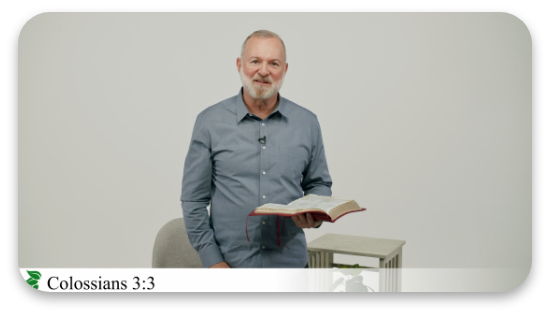
Temperance is the ninth fruit of the Spirit, and it means grace-inspired, Spirit-enabled self-control in a sphere of mastery, not human self-discipline. In this first of three parts, Rev. Rico Magnelli opens Galatians 5 and shows that temperance is spiritual: it is God-inspired restraint over the desires, appetites, emotions and habits that would otherwise rule us. Isaiah 58 rules out abstinence for abstinence’s sake, and Paul’s four uses of “all things are lawful” in 1 Corinthians press two moment-by-moment questions on every believer: is this profitable right now, and is it starting to control me?
Transcript
Temperance as the Ninth Fruit of the Spirit
Please turn to Galatians chapter 5. We want to talk about temperance and this will be part one. Temperance is our guard against worldly influences and areas where we are challenged that could potentially dominate us, if allowed. Practically, it serves as that safeguard against temptation while endorsing a Christ-like character. It’s like having guardrails on our journey to keep us in the middle of the road. It is listed as the ninth fruit of the Spirit, so it completes the list. As we get into these details, you’ll see its amazing application and depth that God has provided for us as a fruit of the Spirit.
Why Temperance Is Spirit-Enabled and Not Self-Discipline
Of course, the fruit of the Spirit listed in Galatians 5 is set in contrast to the works of the flesh. Here in Galatians chapter 5, verse 23, it says, So the fruit of the Spirit is above and beyond any law. Temperance can be understood as self-control in a sphere of mastery. It certainly guards us from the work of the flesh. But the first thing that we want to know is that it’s from the Spirit. So it’s not simply bodily or mental discipline. This is where a lot of religious people go.
And there are religions, there are groups that are dedicated to this type of approach to spiritual matters. Self-control is grace-inspired and Spirit-enabled. It is grace-inspired and Spirit-enabled dominion over desires and habits that can rule us if go unchecked. Now, these can be very specific to you or to me. And then there’s certainly ones that overlap that might touch us all. But the point here to understand is that it is God-inspired restraint, not self-help, not mental discipline or physical discipline in and of itself. It’s actually rooted, we’re going to see, in faith.
Human Asceticism and the Trap of Discipline for Discipline’s Sake
Look at Isaiah 58, please. Often religious people fall into the trap of human asceticism. It’s just a fancy word. It means the lifestyle of abstinence through self-discipline, like self-imposed poverty and simple living and often for the purpose of pursuing spiritual goals. And in and of themselves, those things are not wrong, but motive has a lot to do with it. To give us some understanding, the whole topic of fasting could be helpful to us. But God is very clear when it comes to fasting. He’s not after the discipline for discipline’s sake.
What Isaiah 58 Says About the Fast God Chooses
He’s after something else. And remember, it’s a fruit of the Spirit, not a fruit of our labor or our discipline. Isaiah 58 handles the whole topic of fasting. And let’s see what it says in these two verses to help us. Isaiah 58, verse 5, it is such a fast that I have chosen, God says, a day for man to afflict his soul. Is it to bow down his head as a bull rush and to spread sackcloth and ashes under him? Wilt thou call this a fast and an acceptable day to the Lord?
God says, that’s not really what I’m after. Look at verse 6, is not this the fast that I have chosen, God says, to loose the bands of wickedness, to undo the heavy burdens and to let the oppressed go free and that you break every yoke. Wow. Look at the benefit of God-inspired restraint. Abstinence for the wrong reason is not what God has in mind for you and for me. That’s the religious route. Some of us have more of that background than others. And you’ve got to figure that out. Like true fasting, temperance produces only good in our lives.
Like loosening what may have a hold on us. Removing unnecessary burdens and bondage of all sorts and disband any negative involvements. See, these are things that God can show us.
Why Temperance Is Required for Leaders
Temperance would almost be in the category of required for leaders. When a leader doesn’t exercise restraint, it affects more people than just themselves. And when it comes to believers, it’s absolutely encouraged. Now this could be in the topic of appetites of all kinds, emotions which can tend to rule us. We allow them attitudes towards ourselves, people, even self-indulgent aspects of life that introduce more worldly influence than maybe is best for us, that work against our spiritual balance and sobriety.
But all along, it’s not a matter of discipline. It’s a matter of God-inspired restraint because it’s a spiritual fruit.
Paul Addresses the Carnal Corinthian Church
Look at 1 Corinthians, please. Now the Corinthian church, as you well know, was a carnal church, a carnal Christian church. And they had fallen prey to such things as we’re talking about. They were born again with the Spirit of God living in them, but they were living as if they were worldly people. They were living in worldly ways. And Paul has to address this topic, and it’s just fantastic. We’ll start here in chapter 6 of 1 Corinthians.
All Things Are Lawful but Not Expedient: 1 Corinthians 6:12
In the context of worldly influences and appetites, which began to distort the proper priorities and judgment of the Corinthian church, Paul had to address this. And we’ll see this first in 1 Corinthians, chapter 6, verse 12. All things are lawful unto me, Paul writes, but all things are not expedient. All things are lawful for me, but I will not be brought under the power of any. Wow. That is an amazing affirmation. Amazing. Now you see the word lawful there. In the verses we’re going to cover, it’s going to come up four times.
What the Words Lawful and Expedient Actually Mean
Here it’s twice. It means permitted or allowable. And all of these concepts are in the present moment, meaning they’re present and continuous verbs. Paul is saying in the moment it’s allowable to me. It’s permitted for me, but it may not be expedient. And expedient means to bring together or what’s profitable or advantageous. And again, it’s what’s in the moment. Let me give you an illustration. When you’re moving physical items, sometimes you have too many to carry. So typically what happens is you take them in stages because carrying them all at once is not profitable.
Often what happens is you drop something. Does that make sense? That’s what this word is saying. What’s profitable in the moment that can be honestly handled and is profitable? Now I can do a lot of things. I am permitted. I can do it, but is it profitable in the moment? Then it says, all things are lawful for me, but I will not be brought under the power of any. Here’s the second time this word lawful is used, and it means permitted or allowable. And it’s in the same present continuous grammatical construction.
In the moment, I can do it. Yes. But he says, in sharp contrast, I will not be brought under the power of any. In other words, I will not let it rule me.
Two Questions to Ask About Anything You Allow
So there’s two questions here. Is what we’re allowing bring the right profit in the moment? And number two, are you being controlled by it? And no one can answer that for you. You got to answer that yourself. Now you can have people help. We all can have help.
Striving for the Mastery in 1 Corinthians 9:25
Look at 1 Corinthians 9. We’re going to stay in the same book because they are all found in here. Interesting. 1 Corinthians chapter 9. We’re looking at temperance and it’s spiritual. It’s not about self-discipline and abstinence and restraint for any other reason other than it’s God inspired. And it’s going to help us. It’s going to guard us from veering off the road. Paul says, hey, it’s okay for me to do this, but will it control me? Is it the right thing right now? Good question. 1 Corinthians chapter 9. Look at this one. Here is the verb form of temperate. It’s the verb form. And 1 Corinthians 9, verse 25. And every man that’s striving for the mastery is temperate in all things.
Now they do it to obtain a corruptible crown, but we an incorruptible. That’s what I’m talking about. It’s not the physical discipline for something worldly or temporal. It’s a spiritual inspired restraint.
Disqualified from the Competition, Not from Eternal Life
I therefore so run not as uncertainly, so fight I, not as one that beateth the air, but I keep under my body and bring it into subjection, lest that by any means when I have preached to others I myself should be a castaway. What that’s talking about is that he could become disqualified from the competition. He still has eternal life, of course, but he would be disqualified because he didn’t exercise temperance when he needed to.
Does It Edify? Temperance in 1 Corinthians 10:23
And look at 1 Corinthians. We’ll go to chapter 10. See, in this 1 Corinthians 10, the context is idols. And the question is, does it edify? Sometimes we allow ourselves to fly off the handle. We’ve all done it, right? But does it edify? That’s where we have to exercise restraint in those types of attitudes and emotions. So it’s not just appetites physically. It’s also appetites emotionally. What we consume in 1 Corinthians chapter 10 in verse 23. Here’s the third and the fourth time this phrase comes up. All things are lawful for me, but all things are not expedient.
All things are lawful for me, but all things edify not. Four times he says, all things are permitted and allowable. He said it twice in verse 12 of chapter 6. He’s saying it twice in verse 23 of chapter 10. So it’s permissible. It’s allowable. I can do it. Sure I can. But is it expedient? Again, it’s the same word that it’s like bringing things together that are profitable and advantageous in the moment. All of these verbs are present tense. So it is a moment by moment decision. And then it says, all things are lawful for me, but all things edify not.
Temperance Guards Appetites Both Physical and Emotional
Does it build this relationship? Am I building a Christ-like example for someone? Or am I demonstrating a Christ-like example for someone? Temperance is so important and it touches every aspect of our lives. Our appetites, both physically and mentally, are touched by this. And the key to understand is, it’s not physical or mental discipline in and of itself. It’s actually we pursue the mastery for an incorruptible crown. We’re doing it for spiritual reasons. That’s what’s holding us back. The world will want to infiltrate your life and get you to go beyond the guardrail.
What Comes Next: Temperance as Moral and Evangelical
And that’s where temperance comes in. That spiritual restraint inspired by God that keeps us safe and prospering and moving forward with the things that He would have us to do. So this is the first installment. Temperance is spiritual. We’re going to look at temperance as moral and we’re also going to look at temperance is evangelical. So thanks for listening.
Key Takeaways
- Temperance is the ninth fruit of the Spirit in Galatians 5, and it completes the list.
- It is grace-inspired and Spirit-enabled dominion over desires and habits, not self-help, mental discipline or physical discipline.
- Isaiah 58 shows God is not after sackcloth and ashes, but a fast that looses the bands of wickedness and lets the oppressed go free.
- Paul says “all things are lawful” four times, twice in 1 Corinthians 6:12 and twice in 1 Corinthians 10:23, and every verb is present tense, making temperance a moment-by-moment decision.
- The two questions are whether a thing is profitable right now and whether it is starting to control you, and no one else can answer them for you.
- Temperance covers emotional appetites and attitudes as well as physical ones, and a leader’s lack of restraint affects more people than himself.
Frequently Asked Questions
What does temperance mean as a fruit of the Spirit?
Temperance is self-control in a sphere of mastery, and it is listed in Galatians 5 as the ninth fruit of the Spirit, completing the list. Rico Magnelli describes it as grace-inspired and Spirit-enabled dominion over the desires and habits that would rule us if left unchecked. It is God-inspired restraint rather than self-help, and it works like guardrails that keep a believer in the middle of the road.
Is temperance the same as fasting or self-discipline?
No. Religious people often fall into human asceticism, the lifestyle of abstinence through self-discipline. In Isaiah 58 God rejects a fast of a bowed head, sackcloth and ashes, and chooses instead the fast that looses the bands of wickedness, undoes the heavy burdens, lets the oppressed go free and breaks every yoke. Temperance is a fruit of the Spirit, not a fruit of our labor or our discipline.
What did Paul mean by all things are lawful but not expedient?
Lawful means permitted or allowable, and Paul uses the phrase four times, twice in 1 Corinthians 6:12 and twice in 1 Corinthians 10:23. Expedient means to bring together, what is profitable or advantageous in the moment. Because all the verbs are present and continuous, the decision is moment by moment, and it leaves two questions: is this profitable right now, and am I being brought under its power?
Scripture References
Galatians 5:23; Isaiah 58:5; Isaiah 58:6; 1 Corinthians 6:12; 1 Corinthians 9:25-27; 1 Corinthians 10:23
This text was prepared from the teaching audio. Please verify scripture references against your own Bible.