Overview
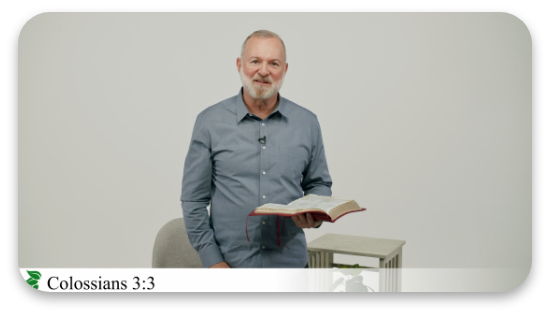
Rev. Rico Magnelli examines “Tenderhearted” through Mark 6, Mark 3, Matthew 19, 1 Peter 3, showing how world, heart, life shape a believer’s relationship with God, daily choices, and service to others.
Transcript
Understanding Tenderhearted
Please turn to Ephesians chapter four. We want to talk about being tender hearted. One of the things that I have seen over the years in my life personally is the more that the word lives within us, the more tender hearted we become.
And that first, that tender heartedness is to God, and then it’s manifest to one another. And then the more that the world lives within us, the harder our hearts become. It’s interesting.
When I say the world, I’m talking about the purposes, agendas and expectations that Satan moves spiritually and how he captivates and corrupts a portion of humanity. The more that the world lives within us, the harder we become. And it’s a great way to gauge things.
I know for me it is. I’ve become more and more tender hearted and compassionate in the Lord. Here in Ephesians chapter four, in verse 32, it says, and be ye kind one to another are mutually, reciprocally tender hearted, forgiving one another even as God for Christ’s sake has forgiven you.
And this word tender hearted is describing us. It’s an adjective. It’s a way that we can describe ourselves.
We are tender hearted people. Why this is so important is because the way that the world works is in the exact opposite. And let’s read it here in the context.
Look at the same chapter. Look at verse 17 of chapter four. This I say therefore and testify in the Lord that you henceforth walk not as other Gentiles walk in the vanity of their mind.
Now, the Gentiles is referring to the nations. At this point, you’ve got Christianity, the family of God, and then you’ve got the nations of the world, the people. And they walk in the vanity of their mind, the emptiness of their mind, having the understanding darkened, being alienated from the life of God through the ignorance that is in them because of the blindness of their heart.
The word blindness is hardness because of the hardness of their heart. It becomes dry. It becomes brittle.
It no longer is flexible and malleable to meet needs. It’s very rigid. Verse 19, who being past feeling have given themselves over until lasciviousness to work all on cleanness and greediness.
The Biblical Foundation
But, but ye have not so learned Christ. How beautiful. We have not so learned Christ.
We live in the world, but that’s not who teaches us. We don’t take our moral cues from the world. We have learned Christ.
And then it says, if so be that you have heard Him and have been taught by Him as the truth is in Jesus. You have really heard about Him. You didn’t actually directly teach us.
And we’ve been taught in Him, meaning in the center of the teaching is Jesus Christ. Because the truth is in Jesus. When you put Jesus and Christ together, when you put the name and the title together, that encapsulates the entire Christian curriculum in a nutshell.
When you put that name with understanding, the man Jesus of Nazareth, who was subject to temptation like we are yet without sin and offered his life freely. And then God raised Him from the dead and basically established Him as the Christ, the Messiah. And in that name and title, we have basically the entire Christian curriculum encapsulated.
See, we have not learned from the world because what ends up happening is we get hard-hearted. Look at Exodus chapter four. The more that the word of Christ dwells within us, the further away we get to the loyalties, the priorities, the purposes, the agendas that people try to have you and I follow.
We’re very familiar with this record. The children of Israel were in bondage, in captivity in Egypt. God sends Moses to deliver the children of Israel out of Egypt.
And in Exodus chapter four, verse 21, it says, And the Lord said unto Moses, When thou goest to return into Egypt, see that thou do all those wonders before Pharaoh. He was going to demonstrate God’s power, Moses was, which I put in thine hand. But I will harden his heart that he shall not let the people go.
Now, God didn’t actually harden Pharaoh’s heart. Oftentimes, certain Hebrew verbs communicate the allowing of something, not actually the doing of something. God allowed Pharaoh’s heart to be hardened, despite all the wonders and all the wonderful things that God did to demonstrate that he was behind Moses.
Examples and Spiritual Lessons
And Pharaoh is, in this situation, the epitome of a worldly man, the epitome of hard-heartedness. Look at chapter seven, please. In chapter seven, we see it again.
It’s in many of these verses in these chapters. I’m just picking out a few. It says in verse three of chapter seven, And I will harden Pharaoh’s heart, meaning God allowed Pharaoh his heart to be hardened, and multiply my signs and my wonders in the land of Egypt.
Despite all the demonstration of God’s power and deliverance, all Pharaoh did was get harder and harder. One of the ways to understand hard-heartedness is stubborn, is being stubborn. See, when the world gets into people like Pharaoh here, the will of God is to release these people.
The will of God is to be free. He will not free them. He hardened his heart against the will of God.
The will of God is let my people go. He will not let them go. Why? Because the world is so deeply within this man.
The will of God is God’s desire and gracious plan, and he resisted it. And when people get hard-hearted, they resist the will of God. That’s right.
Not only that, one becomes blind to the obvious. Hard-heartedness can creep up on the Christian believer. And then what ends up happening is the person becomes blind to the obvious.
The signs and wonders that God was demonstrated through the ministry of Moses was so obvious, they were so clear. And yet, because of the hard-heartedness of Pharaoh, he would not yield, he would not recognize. That’s amazing.
There’s another thing that hard-heartedness does, which is the opposite of being tender-hearted. Hard-heartedness, or having a hard heart, typically has selfish agendas and uses people. If Pharaoh is not a good description of using people for his benefit, I don’t know what is.
He had two and a half million people enslaved. That’s an estimate by some scholars. How did he get to that point where he could be so insensitive, so stubborn, so resistant to the will of God, when it was so obvious because the world was in this man? He was an epitome of a Gentile, if you will.
Faith in Action
When the world gets in us, we start moving towards using people. When the world gets in us, we get stubborn against the will of God. And that’s not what we want.
Look at Mark chapter 6, please. We want to be tender-hearted. We want to be supple and soft.
Not that we’re weak, no, but we’re pliable to God’s will. We’re malleable. We can be coached by God.
And when others speak for God, we recognize it. Look at Mark chapter 6, please. In Mark chapter 6, in verse 52, for they, those that were with Jesus, considered not the miracle of the loaves, why not? For their heart was hardened.
Now, we have to pick up the context here to understand, but these are followers of Jesus. They’re with the master, and yet their heart is hardened. How did that happen? Well, let’s look back here.
Look at verse 42 of the same chapter. Jesus feeds a multitude right in front of them. He breaks the bread and distributes the fish, the five loaves and the two fishes, and he feeds a multitude.
And in verse 42, and they did all eat and were filled, and everyone saw it. They took up 12 baskets full of the fragments and of the fishes. And they that did eat of the loaves were about 5,000 men.
So that would include also women and children. So this was a larger crowd than 5,000. And straightway, he constrained his disciples to get into the ship and to go to the other side before under Bethsaida while he sent away the people.
And when he had sent them away, he departed into a mountain to pray. And when even was come, the ship was in the midst of the sea, and he alone on the land. And he saw them toiling and rowing, for the wind was contrary unto them.
And about the fourth watch of the night, he cometh unto them, walking upon the sea, and would have passed by them. But when they saw him walking upon the sea, they supposed it had been a spirit and cried out. For they all saw him and were troubled, and immediately he talked with them and saith unto them, and he went up unto them into the ship, and the wind ceased, and they were sore amazed in themselves beyond measure and wonder.
Walking in Love and Confidence
For they considered not the miracle of the loaves, for their heart was hardened. They hadn’t put it together. They hadn’t made the connection.
And so when Jesus started to demonstrate more power to them, they were frazzled in their mind. They went that this is a spirit. This is not our Lord and Savior Jesus Christ.
What hard-heartedness does to people, it distorts the things of God. How anybody could think that Jesus would be something to be afraid of is amazing. But how do people get there, hard-hearted? They don’t make the connections.
See, we may not necessarily see something like these disciples did. Jesus walking on the water to us on a boat. But how about recognizing God in an ordinary day? How about making it a habit to appreciate when you’ve had a quiet and peaceable life and all godliness and dignity? When you’ve had a day that’s quiet and peaceable and full of dignity, that perhaps God’s blessing is on your life.
Because then these types of recognition set the stage for even greater and greater illumination and understanding. When the world gets in people, they don’t see God in an ordinary day or they don’t see God. Again, I’m not saying that life has to be a star-spangled banner, you know, parade.
But like I said, how about just seeing God in a quiet and peaceful life of dignity? Look at Mark chapter 3, please. This can creep up on any of us. Because as the world gets in, the harder we get.
The more the word lives within us, the more tender-hearted we get. Just like our Father God. Mark chapter 3, verse 1. And he, Jesus, entered again into the synagogue.
And there was a man there which had a withered hand. This man had a knee physically. And they watched him in this synagogue, the religious leaders, whether he would heal him on the Sabbath day that they might accuse him.
Accusation is part of being hard-hearted. We’ll see this. They weren’t interested in helping the individual.
They were interested in an agenda to trap Jesus. All these private agendas and all these different things, that doesn’t come from God. And he says unto the man which had the withered hand stand forth or stand up, be noted.
Applying the Teaching in Daily Life
And he says unto them, the religious people, is it lawful to do good on the Sabbath days or to do evil, to save life or to kill, but they held their peace. They didn’t want to answer. And when he looked round about on them with anger, he was not happy.
There’s not too many places where you see this, but this is one of them. Being grieved, it really hurt him. It was grieving to him for the hardness of their hearts.
He said unto the man, stretch forth thine hand, and he stretched it out, and his hand was restored whole as the other. And the Pharisees, those that were accusing him, went forth and straightway took counsel with the Herodians, that’s the political arm, against him, against Jesus, how they might destroy him. You see what hard-heartedness does? We have not learned Christ like this because the truth is in Jesus Christ.
We become more and more tender-hearted, just like our heavenly Father. And that’s why we’re guarding against the world and its influences. Look at Matthew 19.
When the world gets involved in anything that God does, they dilute it, distort it, pervert it. They change it, and sometimes they change it so much that you can’t even recognize it anymore. Here, Jesus Christ is addressing marriage.
Matthew 19, verse 3. The Pharisees also came unto him, tempting him. Again, they’re attempting him, they’re trying to trap him. And saying unto him, is it lawful for a man to put away his wife for every cause? They weren’t really interested in an answer.
They’re trying to catch Jesus. Now, again, this should not be taken as a criticism or a condemnation of anybody that’s been in these challenging situations in relationships. That’s not my point, and that’s not what Jesus Christ is teaching here.
But watch what he says. And he answered and said unto them, have ye not read that he which made them at the beginning made them male and female? Pretty clear, male and female. And said, for this cause shall a man leave father and mother and shall cleave to his wife.
And they twain, the two, shall be one flesh. Wherefore, they are no more twain or two but one flesh. What therefore God have joined together, let no man put asunder.
A Life Shaped by God’s Word
They say unto him, why did Moses then command to give a writing of divorcement and to put her away? Watch this. He saith unto them, Moses, because of the hardness of your hearts, suffered you to put away your wives. But from the beginning, it was not so.
Even a great institution that God initiated back in Genesis, where a man and woman could be one flesh, as hard-heartedness gets in, people suffer. That’s not God’s will. And let’s close in 1 Peter.
Our heart is to be more and more tender-hearted, where we have great compassion and mercy and deep, deep recognition of God’s love and care for us, so we can also have that for others. 1 Peter chapter 3. In 1 Peter chapter 3 verse 8. Finally, be ye all of one mind, having compassion one of another. Love as brethren, be pitiful.
Pitiful means tender-hearted. It’s the same word as in Ephesians 4. Tender-hearted, be courteous. Not rendering evil for evils.
This is what the world does. When someone does something evil to you, you’ve got to respond in kind with evil. That’s not God’s way.
That’s the world. Not rendering evil for evil, or railing for railing. But contrary-wise, blessing.
Knowing that you are there unto called, that you should inherit a blessing. For he that will love life, I love this, he that will love life, the life of God that he wants to provide for us, and see good days. Let him refrain his tongue from evil, and his lips that they speak no guile.
Let him eschew, really find evil distasteful, eschew evil, and do good, and let him seek peace, and ensue it. How beautiful this truly is. As we continue in our journey in this walk, in Newness of Life, we must always guard against the things of the world, the purposes, the agendas, the campaigns that start to crowd the word away in our hearts, and we can recognize it if we start getting harder.
We should become more tender. Again, it’s not a personality thing. It has nothing to do with speaking softly.
It has more to do with being tenderhearted in the inward vowels or the inward parts of your heart, first towards God and then one toward another. This is a great truth for us to recognize and be aware of and to keep our hearts with all diligence for out of it comeeth the issues of life. That’s what I wanted to share on tenderheartedness.
Key Takeaways
- See, we have not learned from the world because what ends up happening is we get hard-hearted.
- And Pharaoh is, in this situation, the epitome of a worldly man, the epitome of hard-heartedness.
- And yet, because of the hard-heartedness of Pharaoh, he would not yield, he would not recognize.
- One of the ways to understand hard-heartedness is stubborn, is being stubborn.
- See, when the world gets into people like Pharaoh here, the will of God is to release these people.
Frequently Asked Questions
What is the main message of “Tenderhearted”?
Rev. Rico Magnelli examines “Tenderhearted” through Mark 6, Mark 3, Matthew 19, 1 Peter 3, showing how world, heart, life shape a believer’s relationship with God, daily choices, and service to others.
Which scriptures are central to this teaching?
The teaching draws especially from Mark 6, Mark 3, Matthew 19, 1 Peter 3, Ephesians 4.
How can believers apply this teaching?
Believers can receive the truth presented, verify it in Scripture, and put it into practice with faith, humility, love, and consistent action.
Scripture References
Mark 6; Mark 3; Matthew 19; 1 Peter 3; Ephesians 4
This text was prepared from the teaching audio or source document. Please verify scripture references against your own Bible.