Overview
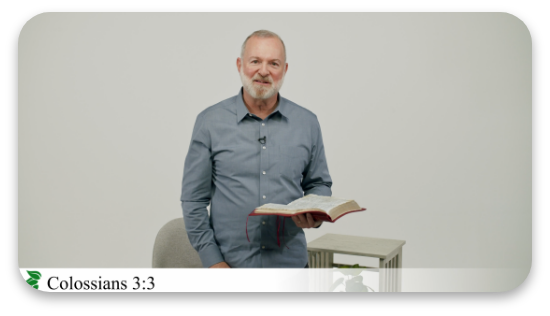
The God of all creation is the point of creation: nature is not about nature, it is about the author, the originator, the source, and its one eternal message is I am here. In this closing session of the Montana creation series, Rev. Rico Magnelli takes Romans 1:20 as his theme verse and works out from it through Romans 11:36, Jeremiah 33, 1 Chronicles 29, Acts 14 and 17, Job and Matthew 6. Along the way he sets the bacterial flagellum, the Goldilocks position of the earth, the moon and sun, the carbon cycle and the water cycle beside the names Elohim and Jehovah, and argues that nature is a witness of God’s commitment and his direction, and that its purpose is a relationship with him.
Transcript
Nature Is Man’s Home for Living and Man’s Classroom for Learning
Thank you. Thank you all very much. What a privilege it is to be here and I wanna thank Ted and Ramona and Kurt and Loretta and all the wonderful believers in Montana. On behalf of all the teachers, the work that you put into this event is measured in the love that comes out of it. So there’s a lot of love here and believing that a lot of love comes out of it. And this is a good thing. We turn to Romans chapter one. Nature from the soil to the heavens is both man’s home for living and man’s classroom for learning. The witness of and the order of God’s majestic hand touches all things, touches all things.
Viewed from within and viewed from without. The God of all nature is what we will consider. And learning about nature together is to discover together the God of all nature. And his eternal message that reverberates back from the backdrop, the canopy of infinite wisdom, which is I am here, I am here. Nature points to God and God desires a relationship with us. Two words you might wanna think about are commitment and direction. Nature is a witness of his commitment. It is also a witness of his direction. Man needs both in his life.
Your life needs commitment. My life needs commitment. It also needs direction. And nature can provide that launching pad surrounding us all the time. Here in Romans chapter one in verse 20, our theme verse, it says for the invisible things of him from the creation of the world are clearly seen, being understood by the things that are made even as eternal power and Godhead so that they are without excuse. Nature is a witness without excuse.
Romans 1:20 – Why Nature Leaves the World Without Excuse
You and I never need to make an excuse for God. You never need to make an excuse for what his handiwork describes, delineates and points to ever. And the individuals that do not see that, that is their decision. And we honor that, we respect that. But that’s not my decision. And that’s not your decision. So we should never be allowed to be bullied into the corner and think that we need to make an excuse for the almighty. You and I will never make an excuse for him, ever. You see, the world is without excuse.
Academia and the intellectual sides of life endeavor to paint people into a corner. Now, I’m an educator, so I understand a little bit about education. But that should never happen to you, ever. I like the English Standard version of this. It reads for his invisible attributes, namely his eternal power and divine nature have been clearly perceived as has been taught. Ever since the creation of the world and the things that have been made, so they are without excuse. Look at Romans chapter 11, please. See, if someone was to invite you into their house, would you go into their house and ignore them? Why are we coming into God’s cathedral and ignoring him? You see, nature isn’t about nature itself. It’s about the author, the originator, the source.
And it provides an illustration every single day that he is committed to what he said. The reason why there’s grass out here, the reason why those trees are there is because in the beginning, God spoke it into being. And his eternal word cannot be diminished. It cannot be retracted. It cannot be sullied. It makes no difference what man does. God’s word stands and it is a witness. In Romans chapter 11, in verse 36, it says for him and through him and to him are all things. To him be what? Glory.
Forever, amen. To him be glory. The word glory in its etymological history actually means opinion. And then it morphed into and developed into where people had their opinion and they just kind of were vibrant about their opinion and it came to mean that which attracts attention. God’s opinion of you is glory. And we wanna bring glory to him.
Everything Begins With God and Everything Ends With God
See, because everything begins with God and ends with God. Even unbelief will eventually at one point end with God in judgment. So it makes no difference. Everything begins with God and everything ends with God. One translation reads, for from him, the amplified, and through him and to him are all things. For all things originate with him and come from him. All things live through him and all things center in him and tend to consummate and end in him. To him be glory forever. So be it.
You never need to make an excuse for him. You stand on what you know is true. Please turn to Jeremiah 33. Jeremiah 33. I love Jeremiah. He was a young prophet and no one listened to him and they really treated him very poorly. So I have a really deep appreciation for this guy. God calls him out and says, listen, start telling all these people they’re wrong. And Israel and everybody’s like, no.
But he goes through a lot of stuff. They even buried him in a vat of human dung up to his neck to try to beat submission into him, but he wouldn’t. It’s what you gotta do sometimes if you know something’s right. Ladies and gentlemen, God is right. Jesus Christ is right. In Jeremiah 33, verse 20, it says, thus says the Lord, if you can break my covenant of the day and my covenant of the night, and that there should not be day and night in their season, then may also my covenant be broken with David, my servant, that he should not have a son to reign upon his throne and with the Levites, the priests, my ministers.
God is saying, if you can break the covenant between the day and the night, if you can break it, then my promises to the individual will break too. Do you see how there’s a correlation here between what he put here in the heavens and the earth? They cannot be broken. They cannot be retracted. They cannot be diminished. They cannot be sullied. And that’s a great lesson for us to learn.
1 Chronicles 29 – David, Jehovah and the God of Covenant
1 Chronicles 29, please. 1 Chronicles 29. Generations before us witnessed creation and nature, and they’ve gone. And those that have been born again, we will see them at the return of Christ. And there’s other provisions for everyone else, but the earth still stands. It’s a testimony to his commitment that he will keep a promise to you. If you wake up tomorrow and the sun comes up, whatever he said to you, he’ll bring to pass. That’s what Jeremiah is saying. In 1 Chronicles 29, here David, a man after God’s own heart at the end of his life is preparing to turn things over to his son Solomon to build the temple.
And people are freely giving to build the temple. And he says in 1 Chronicles 29, verse nine, then the people rejoiced for that they offered willingly because with perfect heart, they offered willingly to the Lord. And David the king also rejoiced with great joy. This word Lord is the word Yehovah. And it means many of us know God and covenant relationship to that which he’s created. It’s a contractual relationship and it’s not conditional, it’s definitional, meaning he does his part, you do your part. That’s all it means. And even when you don’t do your part, guess what happens? That’s why it’s not conditional. Even when you don’t do it and I don’t do it, we mess up, it’s called mercy.
He still does his part. Did you have anything or I have anything to do with the sun coming up today? No, that’s how solid his promises are. I brought that up for a reason. Willingly to Jehovah and David the king also rejoiced with great joy. Wherefore David blessed Jehovah before all the congregation and David said, blessed be thou Jehovah, God of Israel. The word God is the word Elohim and the word Elohim always is in the plural. It’s in the plural. It’s in intensive plural in the Hebrew and what it represents is the magnitude of God himself. And it’s the word used in Genesis 1.1. Elohim barashith bara is the Hebrew.
Elohim created in the beginning. These two terms are representative of the same God, the same being, but they emphasize different characteristics. Elohim represents the omnipotence in action, the creator’s omnipotence in action. It’s an unbelievable study to learn these things. But here it says, and David’s blessed be thou Lord, God of Israel, father forever and ever. I thine, O Lord Jehovah is the greatness and the power or thine, O Lord Jehovah is the greatness and the power and the glory and the victory and the majesty for all that is in heaven, in the heaven and in the earth is thine. Thine is the kingdom, O Jehovah and thou art exalted as head above all. See, I really don’t own anything. I may, you know, this is my sweatshirt.
The Earth Is the Lord’s: Why We Really Own Nothing
And the other day, Benji was borrowing my hat. We were going to the airport and I’ve been looking for my hat and so we’re about to go to the airport and I look at this hat and I said, look at that hat. And he said, well, you haven’t been using it. I said, I’ve been looking for that hat. Really, it’s not my hat. I don’t own anything. I own my free will, I own my body and I own my gift of Holy Spirit because it was a gift to me. I own the decisions I make, but that’s about it. I know legally on paper, there’s things that we own but the earth is the Lord’s and the fullness thereof.
And that’s a great way to understand and navigate life. It says, verse 12, both riches and honor come of thee and thou reignest over all. And in thy hand is power and might. And in thy hand it is to make great and to give strength unto all. Now therefore, O Elohim, we thank thee and praise thy glorious name. But who am I and what is my people that we should be able to offer so willingly after this sort? For all things come of thee and of thine own have we given thee. See, we never give anything that God hasn’t already given us. Who gave you time? I didn’t, you didn’t. God gave us everything.
He gave us breath. This stuff you can’t see that we keep taking in called air, great stuff. He’s got it like everywhere. Great idea. Allows us to roam and do things. See, he gives us everything.
All Things Come of Thee: Strangers and Sojourners Before God
And it’s a great way of recognizing him as the God of all nature. It says, verse 15, for we are strangers before thee and sojourners as were all our fathers. Our days on the earth are as a shadow and there is none abiding. That’s right. Unless the return of Christ happens, each and every one of us will fall asleep at some point. You see? But God has made provision for that, providing eternal life unto us. Oh Lord, Jehovah, Elohim, all this store that we have prepared to build thee in house for thine holy name cometh of thine hand and is all thine own. Wow, did this guy understand some things? Very, very wealthy man, by the way. David.
David. I know also, my Elohim, that thou triest the heart and has pleasure in uprightness. As for me, as for me in the uprightness of my heart, I have willingly offered all these things and now have I seen with joy the people which are present here to offer willingly unto thee. That’s what a genuine, someone who loves God rejoices in when you see people willingly offer. Not control people, not manipulate people, not coerce people, but genuinely offer themselves because of their love for God. Oh Lord, Jehovah, God, Elohim of Abraham, Isaac, and of Jacob, our fathers, keep this forever in the imagination of the thoughts of the hearts of thy people. My prayer is the same. And prepare their heart unto what? Unto who? Thee, that is the whole purpose. Nature has no purpose if God is not involved.
Nature has no purpose. Look at Acts, please. Nature has no purpose without a relationship with God. It is a classroom, but the classroom is to teach us about the Creator, His infinite wisdom, the multiplicity of systems that are developed just for me to stand right here, for you to sit right there. There’s an infinite amount of interdependent and layered systems from the soils to the heavens that allow us to do what we’re doing right now. We understand, I don’t even have a mathematical term, how small it is that we understand the significance of it. We can identify things, but in terms of the depth of them, we do not understand. Acts 14. See, when God wants to make Himself known, often you see in the Word that the men and women of God would bring people back to something they can relate to.
Everybody can relate to nature. Everybody likes it. I didn’t even find people that say that they don’t like God, that they don’t like nature. Almost everybody likes the trees and birds or something. Right? Well, look at this. Look at this.
Acts 14 and Acts 17 – Paul Points People Back to the Living God
Acts 14. Here the apostle Paul is gonna appeal to some individuals to try to win them. And he does it beginning with nature. Verse 15. And saying, sirs, why do ye these things? Meaning they were offering sacrifices unto Paul and Barnabas as if they were gods. We also are men of like passions with you and preach unto you that you should turn from these vanities, which are emptiness, unto who? The living God. The living God. Which made what? Heaven and what? And what? And all things therein. He starts with something they can relate to.
How do you think this all came about? He’s telling them. He’s appealing to their sense of logic and honesty. Who in times past suffered all nations to walk in their own ways. Nevertheless, he left not himself without witness. And that he did good and gave us rain from heaven. Hmm, what a concept. And fruitful season, filling our hearts with food and what? See what he’s doing? He’s drawing them back to nature. He’s drawing them back to what God did, what God spoke into being. And no matter how much we study it, no matter how much we dissect the minutiae down to the cell, the organelles in the cell, their interaction one with another, all the way up to the heavens, you see perfection.
It’s a design. It’s perfection. You see him. Look at Acts 17, please. It is a witness. When we’re really honest, it’s a witness of the God of all nature. Acts 17, verse 22, Paul refers to God again and the display of nature. Verse 22, he’s among the intelligentsia of the day in Athens, all the intellectuals, all the PhDs. Verse 22, then Paul stood in the midst of Mars Hill and said, ye men of Athens, I perceive that in all things ye are too superstitious.
For as I passed by and beheld your devotions, I found an altar with this inscription to the unknown God, whom therefore you ignorantly worship. Him declare I unto you. I thought that was a good one. Watch this. God that made what? God that made what? This word world is the Greek word cosmos, where we get the cosmos. Cosmos, and it has three basic meanings in the Bible.
Depends on the context. It could mean the ordered universe. It could mean the inhabitants that live in the ordered universe, or it could mean the corrupted inhabitants that Satan has corrupted in the ordered universe. And it depends on the context. Same word. And all things therein, seeing that he is the Lord of heaven and earth, dwelleth not in temples made with hands.
Irreducible Complexity and the Bacterial Flagellum
Absolutely not. We learned a little bit about natural selection and how it’s purported that in evolution that creatures develop an advantage over other creatures in small increments over time. See, that cannot be. If people are honest and the scientists get honest, you realize that cannot be. A simple example was mentioned, irreducible complexity. Meaning you can’t reduce something to a point where the interrelated parts don’t function together as a system. God puts together systems. We heard about patterns. We heard about systems.
Here’s an example for you. What’s called a bacteria flagellum. A bacteria flagellum is, bacteria are like one-celled creatures, single-celled creatures. And they look like this. And then they have a little, like a tail at the end. Now this tail in bacteria, and there isn’t a number to identify how many bacteria there are, right? Well, this bacteria flagellum basically has 40 different moving parts independent of each other that all have to work in sync together in order to move this little creature.
This little tail can move to speeds of up to one, what is it? I have to check myself, 100,000 RPM. 100,000 RPM, and it can stop on a dime and go in the other direction. 100,000 RPM, there’s no engine in existence that can do 100,000 RPM, stop on a dime, and go the other way. And yet there’s billions and trillions and quadrillion things of these things. All 40 parts have to work together. That’s the God of order.
The Goldilocks Planet, Jupiter and the Moon: Designed So We Could See
Make sense? How about the celestial? This was referred to a little bit as well. In the celestial heavens, the Earth is, we heard about the, it’s like the Goldilocks planet and the Goldilocks arrangement, meaning that it’s in the perfect situation for life. Scientists have identified about 20 different components that need to be present for life to be on a planet, about 20. They’re like puzzle pieces and they all have to fit. You take out one, no life. They put a statistic to it about, they say out of every 10 planets, maybe every one out of every 10 has one puzzle piece, has one puzzle piece. Now, for all these pieces to be together, to come together, it would be one in quadrillion, which I’ll do it up here, how about that? One with one, two, three, one, two, three, one, two, three, one, two, three, three, six, nine, 12. Oh, one more. So when people say, well, there’s billions of stars and planets out there, tell them that number.
Do you see, all these pieces have to be together because he’s the God of order. Some of these are like location, where the Earth is situated. It’s about 93 million miles average from the sun. Any closer, we’d burn. Any further away, we would freeze. We’ve learned that. It’s in a perfect habitable zone, they call it. Not only that, we’re in a giant spiral galaxy. The Milky Way galaxy is a spiral galaxy with arms that are like this.
We’re in one of the areas that allows us to see far away. If we were in one of the arms, we would be clouded by space dust. We wouldn’t be able to see. Remember, it’s a classroom. We’re not in the center of the galaxy, we’re on one of the outer arms, in between where there’s open space. It’s kind of like we’re in a window in the galaxy. We’re not staring at a wall. God put us in a window so we could see. And I’ll share with you why that’s so significant.
We learned about the larger planets, how Jupiter, which often is referred to as our big brother, and it’s interesting because Jesus Christ is associated with the planet Jupiter, how it takes the hits on those, the objects that move into our galaxy and could damage the Earth. We’re orbiting the right star, the moon. It’s perfect size. You know, the moon is 400 times smaller than the sun, 400. It’s also 400 times further away. So from Earth, the moon and the sun are about the exact same size. Why is that so interesting? Because God wanted us to learn something. When there’s a lunar eclipse, when there’s a lunar eclipse, the moon gets in front of the sun and blocks the light that’s so brilliant you can’t see and allows us to see the atmosphere of the sun. One of the things we see is the chromosphere of the sun.
It allows us to identify the different elements and their heat signatures. Why is that so significant? Because then we can look at other stars and identify what they’re made of. The only way we could do that is because the sun is blocked by the moon. In its perfect size, we can see the chromosphere of the sun and identify the different elements and their heat signatures and then apply that knowledge as we look out to the stars. Who put that together? This is such a fraction of all the elements that are necessary for life to be on a planet. How about tectonic plates? The Earth’s crust is about 40 to 30 miles thick and it kind of moves on molten lava.
Tectonic Plates, the Carbon Cycle and the Ozone Layer
Lava and its iron core. And these tectonic plates are so important because they are part of what’s called the carbon cycle that release carbon back into the atmosphere. It’s a whole process that God designed. And that carbon cycle helps to regulate the temperature of the Earth. That’s why there’s no such thing in true science as global warming. Why? Because the Earth will regulate itself. It will return back to the cycles that God set up. Fantastic. And there is no, ah, I won’t go there.
Okay, there’s no such thing as, there’s no such thing as the ozone layer being holes in the ozone layer. You ever hear that? That’s a bunch of baloney. What happens over the poles is the molecules are frozen by the Arctic temperatures. They slow down, molecules slow down. So it just thins a little bit. So during the winter months over the poles, the ozone layer, which is O3, which helps to block the radiation from the sun, those molecules slow down like you ever put a fly in a refrigerator? He doesn’t fly around, right? He slows down. Molecules do the same thing. They slow down. So then what happens is it just thins a little bit.
And they say it’s a hole. It’s not a hole. And then a couple of months later, the temperature comes back and they go right back to where it was. But they won’t tell you that. I used to teach biology in high school. I liked teaching that.
The Water Cycle and the Lesson of Cause and Effect
How about liquid water? Well, liquid water is one of those components. Ever thought of the water cycle? What a great idea this was. You know, you need moisture, right, around the world, and you gotta move it around. But you can’t have these big buckets. So God doesn’t walk around with big buckets of water. So he decides, well, I’ll change water into like a mist, a vapor, and then I’ll float it around. And where do I keep it? I’ll put it in these big billowy things and I’ll move it around the earth where it needs to go. And then when it comes down, it goes back into the ground and then it goes into the oceans and then it evaporates back and it’s a whole big cycle. It’s like recycling the water system.
Fantastic, what a concept. See, one of the great lessons that we learn from nature is cause and effect. It’s a great way to teach children. You have a little plant and you plant a seed and then the children can see the thing grow. Cause and effect, cause and effect. There is a cause to every effect. And the cause to nature is God. The effect is what we see. Cause and effect helps us to, really, cause and effect is one of the building blocks of understanding anything.
Anything is cause and effect. Because you start putting concepts together. Oh, how did this get there? Oh, that’s the origin of it. Boom, that’s how you start to begin to understand things, cause and effect. The other thing that nature teaches us is nature is what it is. There’s no hypocrisy in nature.
There Is No Hypocrisy in Nature
Have you ever noticed that a tree doesn’t try to be a squirrel? And the squirrel doesn’t jump out as a lion and try to be a lion. The squirrel does the squirrel thing. The lion does the lion thing. The tree does the tree thing. We are surrounded with a genuine illustration. Why is that important? Because people usually aren’t like that. People try to put on a false face or they try to put something in front of them. You got nothing to be ashamed of. You got Christ in you, the hope of glory.
You see? Just be yourself. If you wanna understand nature, start being yourself. Nature does not lie. Nature has no hypocrisy in it. What a lesson. Now, nature can be violent and it can be peaceful. Nature can be destructive, but it also can be restorative. But it’s never hypocritical. It is what it is.
And it’s probably one of the most significant lessons of nature to man as a classroom. It does not pretend to be anything other than what it is. But yet within its amazing interdependent systems, it can handle a violent issue. We have violent issues sometimes in our lives. We have little emotional earthquakes. But yet it finds its restorative balance again. And it begins to grow again. Like Mount St. Helens is a great example. Nature as a whole is the ultimate example of life.
The Laws of Nature and of Nature’s God: 1776 and Social Darwinism
It’s to be enjoyed but respected, stewarded but utilized. It sets the groundwork for social contracts among men. He is the God of nature. Because amidst all the variety, somehow it works. Why? Because there’s an origin, a design to it. The founding fathers of the United States understood this very well. That’s why they said in the key document that set in motion the greatest nation on this earth, they penned these words in 1776. Quote, when in the course of human events, it becomes necessary for one people to dissolve the political bonds which have connected them with another and to assume among the powers of the earth the separate and equal station to which the laws of nature and of nature’s God entitle them. Where do they receive their authority? God.
That’s where they got the idea. Guys like Locke, philosophers like them helped to inspire them. But see, that’s very important. Because if you want to wreck a social contract, you’ve got to get rid of pure science. Nature has a healing and restorative quality, as we’ve learned. It’s only when ignorance and abuse and short-sightedness that we read into it, it becomes deceptive. Darwin is a good example. We learned a little bit about Darwin. See, what had happened is in Darwinian science, which isn’t really science, the natural selection developed creatures with certain advantages over others.
That concept was taken and applied to what’s called Darwinian socialism, or social Darwinism, maybe that’s a better way to put it. Many of you have never heard it. Who’s ever heard of social Darwinism? They took what he did and then applied it to the social contract of man. And you know what that is? Is that man is always evolving, and one day, man will evolve into the perfect person, or into God. That’s what social Darwinism. For you educators, you know exactly what I’m talking about.
When the Bible was removed from the great institutions of learning like Yale and Harvard and so forth, it was replaced by experts who then interpreted truth for us. The Bible no longer was truth. This happened in the mid-1800s. And what that happened is that everything became relative. So you have your truth, you’ve got your truth, I’ve got 10 experts that back up my truth, and the Bible was no longer the standard any longer. That cannot be.
Job 1 – Respecting Elohim Without a Relationship With Jehovah
Look at Job chapter one, please. The Bible is truth. And Job chapter one. Job, many scholars believe was the first book ever penned, probably by Moses. It doesn’t identify the first events that happened, but the lessons in there are just astounding. And one of the great lessons in the book of Job, it displays the drama of good versus evil, and one man’s journey from respecting Elohim, the creator, to having a relationship with Jehovah. Job chapter one, verse one. There was a man in the land of Uz whose name was Job, and that man was perfect and upright, and one that feared or respected Elohim and eschewed or turned aside from evil. He respected Elohim.
Many people are right here in this verse. Many people, they respect, they know God. There is a God, yeah. They look at nature. They kind of got an idea. Yeah, I think there’s a God. They respect God. They respect Elohim, but they don’t have a relationship with God, and that’s what the word Jehovah actually represents. Many people are in this position.
That’s where Romans one begins. For people to recognize, we read it, verse 20, remember? That the things that are seen have a witness of the power that’s behind it. That’s where most people are, and maybe some, unfortunately, that’s where most people will remain by their choice. Look at verse seven. There’s a dialogue that happens between the devil, Satan, and God, but I want you to pay close attention to this because this is very significant. Job chapter one, verse seven, and the Lord, and the Lord here is Jehovah, God and covenant relationship. So he had a relationship with the adversary. Said unto Satan, Whence comest thou? Then Satan answered the Lord, Jehovah, and said, From moving to and fro in the earth and from walking up and down in it. And the Lord, Jehovah, said unto Satan, Hast thou considered my servant Job? That there is none like him in the earth, and a perfect and upright man.
Watch this, one that respected who? He’s talking about himself, but yet he’s using that term Elohim because God knew that all Job knew was the creation and that there’s a creator. He didn’t have a relationship with him yet. And escheweth evil, watch this, and the devil’s gonna confirm it. Then Satan answered the Lord, Jehovah, and said, Does Job respect Elohim for naught? He knew it. Look at Job 12. Why is this so important? Because this is the first book ever written.
Job 12, Job 38 and Job 42 – Ask the Beasts and They Shall Teach Thee
What does God really want out of nature for us? Certainly to enjoy it. Tons of things we can learn and develop, but what he’s trying to point us to is him. Don’t stop at nature, him, God. Job 12, this was read earlier, verse seven. But ask now the beasts, and they shall teach thee, and the fowls, or the birds of the air, and they shall teach thee. Or speak to the earth, and it shall teach thee, and the fishes of the sea shall declare unto thee, who knoweth not all these, that in the hand of Jehovah hath wrought this, in whose hand is the soul of every man, and every living thing, and the breath of all mankind. Job knew of Jehovah, he knew, but he didn’t have a personal relationship with him. He did not have a personal relationship with him. Look at Job 38.
Job goes through some pretty difficult, challenging times. He was in the wilderness, as we learned. He was definitely in the wilderness in his soul. But God comes to his rescue. Job 38, after some friends try to help him, and they really can’t help him, God gets involved directly. In Job 38, verse one, then the Lord Jehovah answered Job out of the whirlwind and said, this is the first time in the book of Job it’s recorded that God is talking to him, and he doesn’t come to him as Elohim, comes to him as who? Jehovah. What we learn is in chapters 38 to 41, is that God teaches him, and you can read it yourself. He teaches him about the foundations of the earth. He teaches him about the morning stars that sang together.
He teaches him about light, darkness, treasures of the snow and hail, wind, rain, the lion, goats, deer, wild ass, wild bulls, peacocks, horses, locusts, the hawk, eagle. Then he finally gets to man, and the end, he teaches him about the devil. Look at the progression. It’s incredible. He starts him out with what he can understand and what he can see, and he brings them to an understanding of, a great understanding of life. And now, after all that understanding, nature’s God is revealed to him. Look at what it says in Job 42. Look at Job 42, verse one. Then Job answered the Lord Jehovah, and said, I know that thou canst do everything.
And that no thought can be withholding from me. Who is he that hideth counsel without knowledge? Therefore have I uttered that I understood not things too wonderful for me, which I know not. And that’s really the depth of this interdependent system we call the heavens and the earth, nature. Now look at verse five. I have what? I heard about Jehovah. I heard about you.
By the hearing of the ear, but now what? And the eyes referring to the understanding of the soul. He now understood. He now understood. And what got him there? God took him all the way through the progression of the interdependent systems of the heavens all the way to the devil himself. Wow. Unbelievable.
James 5 – The End of the Lord Was a Relationship With Him
Look at James five. What was God’s intent with Job? He wanted him to have a relationship with him. James five, verse 11. Behold, we count them happy, which endure. You have heard of the patience of Job or endurance, and I’ve seen the end of the Lord that the Lord is very pitiful or compassionate and of tender mercy. The word end here means the arrival of something complete or perfect or new. It’s not the end of something. It’s the arrival of something completely new. And what Job had was now a relationship with Jehovah.
That’s what God wanted all along. Put that in the context of the first book ever written. What does God really want out of our understanding of nature? What does he really, really want? Yeah, he wants a relationship with you. And he is compassionate. His tender mercy, he will work with you day in, day out, second, moment, hour, week, however long it takes. However long it takes.
Look at those trees. They are the manifestation of what was spoken all those years and years and years ago. They’re magnificent, but they remind us of the source. They remind us of the God of all nature. They remind us of him who initiated all our well-being. And let’s close in Matthew 6. Jesus Christ is the ultimate expression of his direction.
Matthew 6 – Behold the Fowls of the Air and Consider the Lilies
He is the ultimate expression of his commitment to man. Jesus Christ committed his entire life to God’s plan. And God said, I’m gonna apply what you did to all men. Matthew chapter six, look at the lesson here. In verse 25, Jesus speaks. Therefore I say unto you, take no thought for your life. What shall you eat or what shall you drink? Nor yet your body, what you shall put on, is not the life more than meat and the body more than raiment. Now the master is gonna teach us from a physical illustration, a spiritual truth. Behold the fowls, or as we learned, the birds of the air.
In other words, pay attention to them, look at them, not just necessarily scientifically, but look. Behold the fowls of the air, for they sow not, neither do they reap, nor gather into barns, yet your heavenly father feedeth them. Are you not much better than they? That’s a good question to ask yourself when you’re in the challenging situation. Look outside, look at a plant, look at a tree, look at a bird, and ask yourself, are you better than that? In your father’s eyes, you are a treasure. You are his child. And that’s the way we should think. Because he assigned that to us, not because we assign it to ourselves. This is the master speaking, this is him teaching God’s people. Look, he doesn’t stop there.
And why take ye thought for raiment? Consider the lilies of the field. So he uses the animals, and now he’s using the plants. How they grow, they toil not, neither do they spin. And yet I say unto you that even Solomon in all his glory was not arrayed like one of these. All the sparkle and all the glitter of life that people can produce on the internet, on social media, in Hollywood, in everything combined cannot be compared to one flower. That’s truth. Now maybe we’re not there in our minds yet. I get it. That’s truth.
That will set you free. It’s not that we’re critical. We’re just speaking what the word says. Wherefore, if God so clothed the grass of the field, which today is, and tomorrow is cast into the oven, shall he not much more clothe you, O ye of little faith? Faith is to believe God. Therefore take no thought, saying, what shall we eat, or what shall we drink, or wherewithal shall we be clothed? We need to pay attention to these things. Look at all the work that was done in this event in order to have us eat and drink, take a nice hot shower. All these things were great, but let’s put them in the category they belong. God will supply your need till your last breath. You already have every need you’re ever gonna need taken care of in God’s eyes.
Let’s trust him. For after all these things do the Gentiles, the Gentiles were those that were not of Israel, seek. For your heavenly Father knoweth that you have need of all these things. That means he knows what you need when you need it. Your living quarters, your job, your school, the sports game you’re gonna play, he knows all your need. But seek ye what? Seek ye how? First, the kingdom of God. That means God’s overall sovereignty over all time and all things. He is the God of all nature. And his righteousness and all these things shall be added unto you.
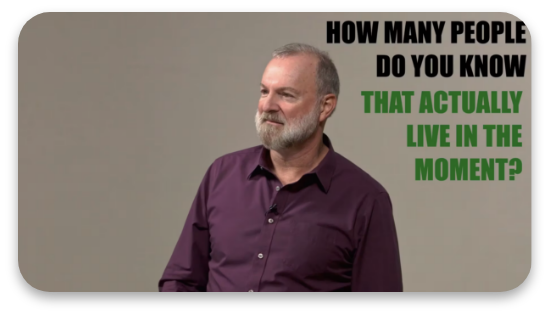
Take therefore no thought for the morrow, for the morrow shall take thought for the things of itself. Sufficient unto the day is the evil thereof. In other words, live in the moment. Nature certainly teaches us that. One day at a time in its cycles and its patterns. All you can handle is one day, that’s all I can handle. When we get anxious, when we take thought over much care for things, go back to square one. And sometimes just taking a walk will get you back to square one. He is God.
This Is His Calling Card: Declare Him and Make Him Known
This is his calling card. This is his home. He’s invited us into his home. Don’t ignore him. Go to him, talk to him, ask him. Pour your heart out to him. If those trees are gone tomorrow and the sun’s not, then everything I’m saying doesn’t mean anything. But it’ll be here. And there may be many, many people on this earth that pay no attention to what we’ve just done this weekend.
Don’t let that be you. Don’t let them influence you. Don’t let them intimidate you. Don’t let them put you into a corner. You are sons and daughters of the living God. This is his handiwork. You should be proud of him. Declare him, make him known, just like our Lord and Savior Jesus Christ did. Tell people about him.
Share about his goodness, his grace, and his mercy. Share that he sets the foundation and he gives all things life. He is your God. He is your Elohim. He is your Father. And he loves you with everything that he is.
Woo, he is. He loves you. He loves you. And the more the word lives within us, the more we will recognize that. And then you know what? We’re gonna help each other when we’re challenged to recognize the God of all nature that has never, will ever leave you or forsake you. Ever.
Closing Prayer: You Have Declared Through Your Creation, I Am Here
Heavenly Father, thank you for your love and your grace and your mercy and the setting here that we’ve enjoyed of the manifestation of your spoken word, the wisdom that is intrinsically involved in the molecular to the celestial, the interdependent systems that you’ve set up. We know, Father, it’s just impossible to not recognize your hand. And even deeper, Father, not only the classroom, but you have given us a body of Christ to place us within a household of faith. And then you’ve created within us eternal life and the potential to walk like your son, Jesus Christ. These are not just words unto us. This is truth. Father, open the eyes of our understanding. If there’s anyone here that needs understanding, pour it on. Open, illuminate brilliantly into the deepest recesses of each person’s soul what they need to know and understand about you.
And I know it can’t all happen all at once, Father. We know that. You feed us incrementally like children that what we can handle at the time. But Father, our hearts are open to you. We are because we’re here. We’ve made this journey, this trek, and all these involved preparations in order to have our souls, our bodies, our spirits here. And most importantly, Heavenly Father, our hearts, because you’re the searcher of hearts. You are the only one that can pierce through the darkness that has at times enveloped our lives. You’re the one that has reached out and pulled us out of confusion and error and chaos.
You’re the one, Father, that’s been there all along. And you have declared with a mighty shout through your creation, I am here. And he will never leave us. And we understand this, Father. We are grateful for the blessings that we enjoy this day forward. In the name of Jesus Christ, amen.
Key Takeaways
- Nature is a witness of God’s commitment and a witness of his direction, and man needs both in his life. From the soil to the heavens it is both man’s home for living and man’s classroom for learning.
- Romans 1:20 makes nature a witness without excuse: you and I never need to make an excuse for God, and we should never be bullied into a corner and think that we need to make an excuse for the almighty.
- Nature isn’t about nature itself. It’s about the author, the originator, the source, and if someone invites you into their house you don’t go in and ignore them, so don’t come into God’s cathedral and ignore him.
- Elohim and Jehovah are the same God but emphasise different characteristics: Elohim represents the creator’s omnipotence in action, while Jehovah is God in covenant relationship with that which he has created.
- Design shows up as order at every scale: about 40 moving parts in a bacterial flagellum that must all work together, and roughly 20 components that have to be in place before a planet can hold life.
- The book of Job runs from respecting Elohim to knowing Jehovah, and that is what God wants out of our understanding of nature: don’t stop at nature, him, God.
Frequently Asked Questions
What does nature teach us about God?
That he is here. Nature isn’t about nature itself, it’s about the author, the originator, the source, and it provides an illustration every single day that he is committed to what he said. Rev. Rico Magnelli calls it both man’s home for living and man’s classroom for learning, a witness of God’s commitment and of his direction, and its eternal message reverberating back from the canopy of infinite wisdom is I am here, I am here.
What is the difference between Elohim and Jehovah?
They are two names for the same God and the same being, but they emphasise different characteristics. Elohim is an intensive plural in the Hebrew representing the magnitude of God himself, the word used in Genesis 1:1, and it represents the creator’s omnipotence in action. Jehovah is God in covenant relationship to that which he has created, a contractual relationship that is not conditional but definitional, and even when we don’t do our part he still does his, which is called mercy.
What is irreducible complexity, and what does the bacterial flagellum show?
Irreducible complexity means you can’t reduce something to a point where the interrelated parts don’t function together as a system. The example given is the bacterial flagellum, the tail on a single-celled creature, which has about 40 different moving parts independent of each other that all have to work in sync together to move it. It can reach 100,000 RPM, stop on a dime and go the other way, and no engine in existence can do that. That’s the God of order.
Scripture References
Romans 1:20; Romans 11:36; Jeremiah 33:20; 1 Chronicles 29:9; Genesis 1:1; 1 Chronicles 29:12; 1 Chronicles 29:15; Acts 14:15; Acts 17:22; Job 1:1; Job 1:7; Job 12:7; Job 38:1; Job 42:1; Job 42:5; James 5:11; Matthew 6:25
This text was prepared from the teaching audio. Please verify scripture references against your own Bible.