Overview
I am what I am means your identity is settled by the grace of God and the finished work of Christ, not by your past, your credentials or your fears about the future. Opening the Your God-Given Identity conference, Rico Magnelli teaches Colossians 2, where Paul tells believers who have received Christ to walk in Him, rooted and established in the faith, and to beware of being spoiled, taken captive, by philosophy, vain deceit, the traditions of men and the rudiments of the world. Colossians 3 holds past, present and future in four verses. Paul, who had persecuted the church, said the same in 1 Corinthians 15:10: by the grace of God I am what I am.
Transcript
Your Identity in Christ Defines Your Past, Present and Future
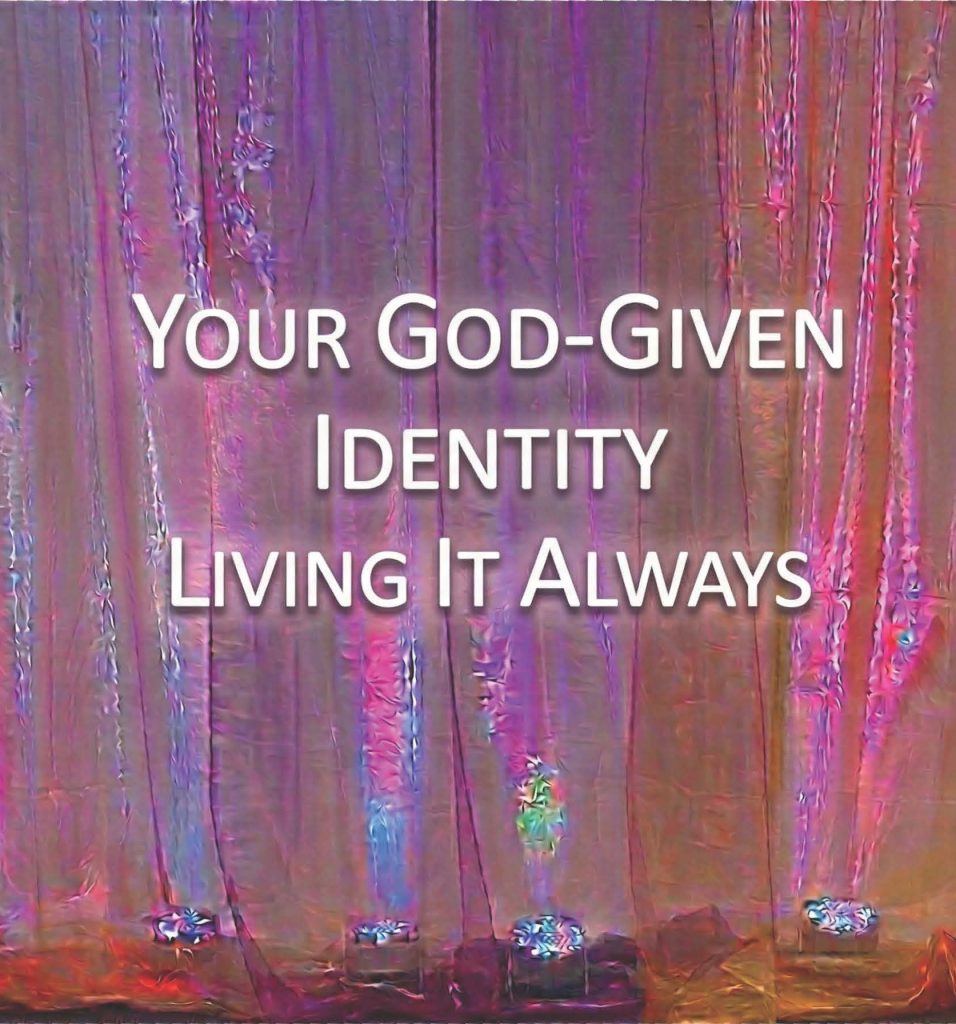
Please turn to Colossians chapter 2. Our identity in Christ, I am what I am. Allowing only God through Christ to define our past, our present and our future is how we understand grace and live it. Behind me is an illustration that our wonderful team put together. These three panels represent past, present, and future. And what ties them together is the shimmer, the light. That represents Christ. And it’s a beautiful illustration of where we’re going. See, your identity as a person is how you allow yourself to be defined or characterized. Far too many Christians, their past has been allowed to characterize them and who they are.
Either their sin, regret, hurt, loss, negative experiences, disappointing expectations, unfulfilled dreams, and unhealthy relationships. What about their future? Many are fearful or anxious and stressed out about what they perceive is in their future. They spend time contemplating the worst scenarios as they feed on a negative mental diet that has come at us with an unrelenting repetition. You know, I’m not standing here to blame any of our brothers and sisters because we all can be tempted with these things. But I am here to warn and to say we do not need to live this way anymore.
As a Christian, discovering and maintaining your identity in Christ as a citizen in heaven right now, seated with Christ in the present moment is the answer. Your life and mind are inextricably linked to that of Christ’s. So our past does not need to haunt us. And our future does not need to be feared. The Christian will face opposition to the truth that I just spoke, guaranteed you will. The church at Colossae faced with similar challenges to their Christian dignity received a letter from the Apostle Paul. And this is what he told them in chapter two of the book of Colossians in verse six.
Colossians 2:6-7: Walk in Him, Rooted and Established in the Faith
As you have therefore received Christ Jesus the Lord, so walk ye in him. See, there’s two different things here. As you have received Christ Jesus the Lord, walk ye in him. Walk is a Hebrewism comes from the Hebrew culture. It represents lifestyle. We received Christ Jesus the Lord when we got born again, but then his encouragement is to walk in him, live in Christ Jesus the Lord. Make it your lifestyle. Make it what comes out of your mouth, how you approach problems, how you reach out to people. Make it part of your life.
Make it the fabric of your soul. This walk is a continuous command in the Greek grammatical construction. So it tells you this is something that we absolutely can do. Now, how do we do this? You live as if your past is resolved. You move in a new life in the present while waiting for a glorious future at the return of Jesus Christ. All can be done simultaneously. All can be done and incorporated into your lifestyle and mind. But it’s going to take a decision on a day-by-day basis. Then it says in verse seven, rooted and built up in him, Jesus Christ.
Watch this, and established in the faith. The faith represents the accomplished work of Christ that we trust in and rely on. I don’t rely on my ability, my personality or my knowledge of the Word. I don’t rely on my attire, my bank account. I don’t rely on my education or my pedigree. I rely on the accomplished work of Christ. That’s what faith is. Faith is to believe in something you cannot see. The accomplished work of Christ is revealed in Scripture, but it lives within God’s people. He says, establish in the faith as you have been taught.
So it tells you that it’s going to take some teaching to get to this point. Sometimes people don’t necessarily want to subscribe to that. That’s okay. The Bible says it takes teaching. I didn’t write the book. It takes teaching. And it doesn’t have to be in a formal setting like this. No, no, no, no. It could be one-on-one. It could be in the park. It could be on the beach. It could be on a plane. It could be in the airport. It could be anywhere. But somebody, please open your mouth on behalf of Jesus Christ.
Beware Lest Any Man Spoil You: Spoil Means Taken Captive
The squirrels are not going to teach us. I always take on the squirrels. I enjoy the squirrels. But they’re not going to teach you as they have been taught. What’s this? Abounding therein with thanksgiving. That’s the result when someone continues in the faith. Now here it is. Beware lest any man spoil you through philosophy and vain deceit after the traditions of men, after the rudiments of the world, and not after Christ. Beware lest any man spoil you. You know what spoil means? From the Greek it means to be taken captive.
You lose your freedom. You lose who you really are. As soon as you lose who you are, you’ve lost your freedom. As soon as you are required to define yourself by your peers, as soon as you succumb to being defined by Facebook or Instagram or whatever. I’m not saying those things are bad. But if you draw your identity from them, that’s problem. You draw it from Christ. What God wants for you is freedom. Freedom doesn’t come outside of Christ. Christ was resurrected from the dead so we could be free. Not get back into the world systems and be defined by them.
Philosophy and Vain Deceit: Worldly Wisdom and Endless Argument
And you’re in an endless treadmill looking for validation, looking for self-worth, looking for somehow someone to tell you you’re worthy. Because you did the right thing. No, we rely on Christ. Now what are some of the tools that are used? Philosophy says here, philosophy is the love of wisdom. It’s the love of wisdom. It’s talking about worldly wisdom, by the way, not God’s wisdom. There are people that just pursue the love of knowledge and wisdom, and that’s their life. There’s nothing wrong with knowledge and wisdom as long as it becomes subservient to God.
Then it says vain deceit. Vain deceit is the empty deception. It’s like we get lured in and when you finally get into their narrative, it’s empty. There’s nothing of value in it. You can see this in endless arguments of human logic. Has anybody ever experienced that? Endless arguments of human logic that lead nowhere. Truth about Christ ends all argument. Actually the truth ends every argument. And Jesus Christ is the truth. He ends all arguments because He leads you to God. He is the way, the truth, and the life. And no man comes unto the Father but by Him.
Traditions of Men and the Rudiments of the World
Everything else keeps you on a treadmill and you never get anywhere. A lot of activity to keep you preoccupied but you never end up anywhere. Then it says after the traditions of men. Tradition of men are rote traditions. You know people just do things mindlessly. Oh it’s this time in the calendar. Oh I should be loving because today is… I need to send a gift because today is… Or it’s coming. Now I’m not saying that there’s anything wrong with loving people. There’s everything right with it. And there’s nothing wrong with giving gifts.
But why are you telling me I have to do that? Why am I submitting to that? And we say oh no, it’s okay. If you’re doing it deliberately because it’s something you want to do, then it’s okay. But if you’re doing it because you’re just being swept away with the tsunami of culture, that isn’t good. Show some backbone. Make your own decisions. That’s right. This is the kind of stuff that puts you in bondage. I have to do this by this date because the calendar says this date. Now just take a step back.
Be honest. Why are we submitting to that? Then it says rudiments. The rudiments is an interesting word. The rudiments are the first characters in a series. It’d be like ABC. And then if you continue on that logic of sequence you end with what? XYZ, right? The alphabet. Well the way that your freedom gets taken away of who you are is you buy into A. You buy into the first lie. And it’s usually a small one. And then it takes you to the next lie. And all of a sudden you’re down at XYZ and you don’t even know who you are anymore.
Colossians 3: Risen With Christ, Hidden With Christ, Appearing in Glory
Right? That’s what’s going to steal your freedom. Beware, lest any man spoil you. And then he tells you what’s going to happen. You don’t need to guess. It tells you what’s going to happen. Look at Colossians chapter 3. If you then be risen with Christ, seek those things which are above where Christ sitteth on the right hand of God. Set your affections on things above, not on things on the earth. For ye are dead and your life is hidden with Christ in God. When Christ who is our life shall appear, then shall ye also appear with Him in what?
That’s your past, your present, your future right there in four verses. Right there. You are risen with Him. Your life is hidden with Him right now. You’re actually a citizen of heaven. Now I know people say those words. And sometimes they understand them. But actually spiritually you have a position in heaven that was given to you by God through the work of Jesus Christ. That’s right. Ye are dead. Now I’m not literally dead. What’s dead? My old man nature is dead. That which was passed down from Adam is dead. It was crucified with Christ.
Our identity is rooted in that you and I were crucified with Christ. You and I were buried with Christ. You and I were risen with Christ. You and I ascended with Christ. That is what the Christian needs to understand. That’s our identity, our affinity, our association, our full sharing with Christ is in those things. And that will change someone’s life. Because we will appear with Him in glory in the future. There’s your past, your present and future. Ye are dead is your past, your life being hidden in the present. Right now with Christ in heaven, seated in heaven.
What the Work of Christ Says About Who You Are
And then you will appear with Him in glory. And that’s your past, your present and your future. And that helps to define who you are in Christ. Our identity in Christ, as I mentioned, the work of Christ defines you. It refines you. It aligns you. It typifies you, characterizes you, elevates you. It personifies and personalizes you. It delineates you. It explains you. It exemplifies you. It illustrates you. It represents you. It interprets you. It designates you, determines you, describes you, entitles you, assigns you, denotes you, construes you, details you and allows you and guides you to be who you really are.
All of that. All of those words describe it. Not what you do or what you don’t do, what Jesus Christ did. And the closer that becomes and the more intimate it becomes part of your soul, you will be so dynamic. You will be so full of life. You won’t know yourself. You won’t. It doesn’t mean you put on a new personality. It doesn’t mean that, you know, you’ve got to change your hairstyle or whatever. It just means from the inside you draw a strength that cannot be found on this earth.
1 Corinthians 15:9: Paul, the Least of the Apostles
It’s what God put in you in Christ. Look at 1 Corinthians chapter 15, please. 1 Corinthians chapter 15. Our identity in Christ, I am what I am through the grace of God. Now, overcoming one’s negative past is the first step. That’s the first step. The apostle Paul addresses the Corinthian church about many errors in their thinking and practices as Christians. And thankfully to God, we have it recorded here that we’re reading 2,000 years later. 2,000 years later. And it’s still relevant. It’s still alive. It’s still vibrant. It’s still invigorated. It jumps off the page because it has meaning and significance to each and every one of us.
So the apostle Paul addresses these issues and Paul does not rely on his credentials as an apostle or his accomplishments, but he credits the grace of God to overcome his past. That’s right. 1 Corinthians 15 in verse 9. For I am the least of the apostles. Now, there is no gradation. There is no levels of being an apostle. Like, you know, apostle in training, pre-apostle, journeyman apostle. That’s not what he’s talking about. For I am the least of the apostles. He’s talking about his very difficult past with Christianity. And I am not me.
It’s not right for me to be called an apostle. Why? Because I persecuted the church of God. As was mentioned by Ken, persecuted the church of God. He put Christians in prison viciously. He wasn’t nice. He was vicious and ruthless. How do you overcome that by the grace of God? He says, but by the grace of God, I am what? I am what I am. By the grace of God, I am what I am. Not what I did in the past. Not what I’m going to do in the future. Not what my toga looks like.
I Am What I Am by the Grace of God
Not the way I cut my hair. Not the color of my skin. Not what’s in my bank account. I am what I am by what? The grace of God. Unmerited favor cannot be worked for. It must be received. He’s defining himself and allowing himself to be defined by grace. Grace provides a lifeline to any challenge. It’s the way to pull up from a mental downward spiral. It’s the way out of any death threatening attack on our lives. It allows us to move forward. I am what I am in the Greek grammatical construction.
It’s in the present tense. That means right now in the moment when Paul spoke that, when he wrote that, it was in the moment he was being defined by grace. How do you define yourself? How do you characterize yourself? How do you respond to what people say to you? Do you accept it or reject it? It depends on your viewpoint. It goes on to say, And his grace which was bestowed upon me was not in vain. It was not empty. But I labored more abundantly than they all. It doesn’t mean that he did more apostle stuff.
You know what it means? It means he had more to overcome than they did. Peter was with Jesus for a year. What do you think that would be like? To talk to him, touch him, laugh with him, eat with him, maybe go swimming in the sea of Galilee together. Paul didn’t have that. He had a lot more to overcome. He was persecuting them. It says more than they all. Yet not I, but the grace of God which was with me. That is fantastic. When he said I am what I am, that is what I call a hard stop moment.
What a Hard Stop Is and Why Your Mind Needs One
A hard stop moment. At times challenging thoughts assault our minds, questioning our identity as sons of God. When our identity is in question, then all the benefits that accompany being a citizen of heaven, seated with Christ in heaven, becomes less real, more distant, and can become very blurry, but never in God’s eyes. We must have a hard stop mechanism over any negative thoughts about our past or future. This interrupts any stampede of negativity running through your mind that can be set off by a text, can be set off by something in the news, can be set off by information coming to you from professional people, friends.
It can set a stampede through your mind of thoughts and we need a hard stop. Now what’s a hard stop? Well, it’s used in business. It’s a non-negotiable end. Like somebody will say in a meeting, hey man, I got to be off by 10. I got a hard stop. That means they can’t go past that point, right? So we’re all familiar with this. Sometimes in mechanics, a part or a mechanism that causes a machine or a part to stop, that’s a hard stop, right? When a computer, the plug is pulled on a computer, sometimes they call that a hard stop.
The power was off. If I ask you your name, no, it’s not. No, it’s not. See, you know it’s your name. That’s a hard stop. That’s my point. Maybe not a good one, but that was my point. What’s your name? No, it’s not. No, it’s not. Now I know Courtney. She will not back off. That’s a hard stop. You do it all the time. I can go into a lot of other illustrations, but I won’t. That’s a hard stop. We need a mechanism to stop these stampede of negative thoughts going through our minds.
Some people call it a red line. Some people call it a line in the sand. A boundary is a word that can be used. That you will not cross mentally or you will not allow to confess. I couldn’t talk you out of your name, but why can I talk you out of who you are in Christ Jesus? If I’m really skillful, I might be able to do that. Oh, good. She’s a good one to pick on. Look at Psalms 94, please. Paul had a hard stop. He was being accused of being lesser apostle.
You read Corinthians, but he said, I am what I am by the grace of God, not by what you say. I am what I am by the grace of God, Psalm 94. We need a hard stop. And the hard stop in your past is the crucifixion. And the hard stop in your future is the resurrection and the return of Christ. Those are the hard stops. The more you get convinced about the crucifixion, the negatives about your past will fade. The more you get convinced about the resurrection and the return of Christ, the more the future will not impact you as much.
Psalm 94: Thy Comforts Delight My Soul
They won’t. Psalm 94. Look at verse 17. Unless the Lord had been my help, my soul had almost dwelt in silence. The Septuagint, which is the Greek Old Testament, reads this way. My soul almost sojourned in Hades. Hades is hell, the realm of the dead. Sometimes you ever feel that way? Like, wow, this is hell. I know I have. We all have. The Psalmist is saying this, that my soul almost was hanging out in hell. Verse 18. When I said, my foot slipeth, thy mercy, O Lord, held me up. You ever lose your grip on life?
The rubber’s not meat in the road. The wheels are just spinning. Mentally. That’s what the Psalmists is saying. They have no traction. You need a hard stop to have a traction. Stop that stampede of thoughts running through my brain. Verse 19. And in the multitude of my thoughts within me, that means that your mind can think a lot of thoughts. Your mind is a thinking machine. Your will determines what you think. Your heart physically just pumps blood. That’s what it does. Well, your mind thinks thoughts. And sometimes in the multitude of my thoughts within me, thy comforts delight my soul.
That is what we want. That’s a hard stop. The Septuagint reads, O Lord, according to the multitude of my griefs, within my heart, thy consolations have soothed my soul, and the Greek actually is loved my soul. God’s encouragements, God’s heart, will show you how to love yourself to a degree you’ve never experienced. To love your soul. I know that that is an issue, especially with young people these days. They have a tough time right now learning how to love themselves because people aren’t showing them what love is. They just throw a lot of information at them.
But they don’t love them. Genuinely. Well, God’s comforts delight my soul. They love my soul. You find a promise. You find a verse. You find a biblical character that speaks to you, and then you start building that hard stop. You slow this thing down and don’t allow the stampede to run through your mind. The word delight here in verse 19, see that? It’s the word loved in the Greek. And grammatically, it’s a hard stop. That means that there’s no further action. Once you’ve got that encouragement from God, once you’ve got that verse or character in the Bible or that inspiration from the Scripture, whatever you need, you hold on to that or whatever He’s told you.
Noah Found Grace When the Whole World Stood Against God
God will tell you stuff. That’s your hard stop. That’s what stops the stampede running through your mind. That’s challenging who you are. That’s right. Look at Genesis. Now, what happens when the whole world is telling you you’re a stinker? What’s happening when the whole world is on one side and you’re on the other side? And you’re on the right side. God’s telling you you’re His son. You’re His daughter. He’s telling you that your past, your present, and your future are guaranteed. But the whole world’s telling you differently. What are you going to do then?
Well, that’s when you’ve got to go to the grace of God. That’s when you’ve got to do the Paul. By the grace of God, I am what I am. I’ll show you one man here, Noah. What he was standing against. And you’re not standing against this. But he did. In Genesis chapter 6, verse 5. And God saw, Genesis 6, verse 5. And God saw that the wickedness of man was great on the earth. Watch this. And that every imagination of the thoughts of his heart was only what? Continually. There was not one positive thought in the whole world except what Noah was producing.
You try that. He would not be moved. All that evil thought, by the way, was against God. That’s what they thought of God. They’re not just thinking evil thoughts. Oh, I want to steal my neighbor’s cow. No, it was all against God when you read the context. That’s right. There’s many lessons in the record of Noah, but one great one is the whole world cannot convince him to disregard what he knew about God. And that’s why he found grace in the eyes of the Lord. Look at verse 8. But Noah found what?
In the eyes of the Lord. Why? Because he did not succumb to the entire tsunami, stampede, avalanche of negativity that was against God. He wouldn’t do it. You have that strength in you. You know why? Because you have Christ in you. Christ stood against the whole world, the whole world. And he still said, Father, forgive them for they know not what they do. That’s some power. Your identity is precious. Back to 1 Corinthians 15. Your identity is precious. Guard it. Steward it. Share it. Speak about it. Paul says, But by the grace of God, I am what I am in the moment.
The Labor Paul Speaks Of Is Remembering Who He Was
And his grace, which was bestowed upon me, was not in vain. But I labored more abundantly than they all. Yet not I, but the grace of God, which was with me. The grace of God can become empty in the Christian. It just becomes a word. It becomes fruitless without purpose. When one’s past is not resolved, you can’t move on. Until your past is resolved in your heart, it’s already resolved according to God. But until it’s resolved in your heart, you can’t move on. You’re just dragging it with you. You’re dragging it with you.
Do you know people like that? When they open their mouth, all that comes through is the past. The past is for fond memories. Nothing wrong with fond memories. And lessons learned. That’s good stuff. But not where it begins to define you. See, Paul was not comparing here. He labored more abundantly than they all. He just had more to overcome than the other apostles. Like I mentioned, what was the labor that Paul is speaking about here? We just read it and we just kind of pass over it. What is the labor he was talking about?
I’ll tell you what it is. The labor is remembering who he was. The labor is in his identity. I am what I am by the grace of God. That was the labor. The labor is based in the faith of Jesus Christ. It’s putting off the old and putting on the new. That’s the labor. Whatever it takes for you to claim who you are through grace, despite failures, challenges, future concerns and anxieties, that’s the labor. That’s the labor. Because no one could get in your brain and take out the negatives. That’s something that God has reserved for you and for me.
I’ll do my brain, you do yours. How about that? Make sense? That’s the labor he’s talking about. Because the context is the accusations that were being levied against him. And he said, hey, listen man, you guys don’t understand. I was a bad dude. But I am what I am through the grace of God. In the moment, right now, that’s power. Do you want power in your life? Find out who you are in Christ Jesus and walk out on it. And then you really want to see power and start sharing it with people.
Gaining Christ Connects You to the Body of Christ
Wow. You will see things you’ve never even dreamed of. Gaining Christ does not mean you lose your individuality. In truth, what it does is it connects you to the larger purpose of your life which is to be part of the body of Christ. The larger purpose for you and I is to be part of the body of Christ. To give and take within that body. That’s the larger purpose that some are missing. They’re doing their lone walk thing. That’s right. What’s holding you back? I don’t know. That’s up to you.
That’s being you and God. But part of your purpose and mine is to accept Jesus Christ as my Lord. Accept that I have eternal life and then begin to interact and contribute back and forth within the framework of the body of Christ. That’s the purpose. Because Christians are connected to Jesus Christ through His work, not His person. Not the person of Jesus, the work of Jesus. There’s a difference in the sense of what we connect with. Paul says, I labored, yet not I, but the grace of God which was with me.
The labor was to apply grace to His life and move from the past. The labor is to let go and to put off the old and put on the new. That is the labor. Then from there, you can do your evangelism. You can do your ministering and all that. Well, what about you? You first. You first. You first. God’s not going to use you to win people. That’s religion. God doesn’t use anybody. He sets it before us and then we approach Him with love and He responds always in kind. Really, He’s the first one who initiated the love.
Living in the Moment With Past and Future Resolved
To gain this advantage, we must incorporate a resolved past and in the moment, heavenly dignity right now, right now as citizens of heaven and a guaranteed glorious future all at once. And you can do this because Christ has made it possible. All three working together is what true faith, meaning the faith of Jesus Christ we each have been given is all about. It’s all three, not just one, all three, because then you’ll live in the moment. You won’t be spending half your day thinking about your past or worrying about your future.
You’ll live in the moment. Like, where are you right now? Are you here or are you somewhere else? Well, I don’t know. I trust. But don’t you see every time you drift away for hours and hours in your past, in your future, you know, you can enjoy those things, but the point is, if it starts to define you, live in the moment. All three working simultaneously, synchronized, energized, revitalized each day is in the essence of demonstrating your identity and mine in Christ Jesus. And where does it end? Chapter 15. Look at the end of chapter 15.
1 Corinthians 15:57: The Victory Is Already Given in One Name
All three are at work and the Christian remains a mystery to most Christians. It does. We still are in condemnation. We still regret unfulfilled expectations when God is right here. He’s right in front of you. What do you think God is? He’s not some in some distant kind of tower. He’s here. Paul ends his chapter by saying this. Chapter 15, verse 57. But thanks be to God, which have given us the victory. So you have the victory. It’s already been given to you. You don’t need to fight for it. You got it.
Through our Lord Jesus Christ. Jesus represents the crucifixion and resolves your past. Christ represents as the title, the resurrection. And the Lord is his exalted position that was given to him by God. As he ascended him into heaven. When you put the three of them together, you have the complete package of the Christian curriculum. Simple. In one name. In one name. In one name, we are entirely bound in one name. Jesus Christ our Lord. Fantastic. It says, therefore, practical application now. Listen, my beloved brethren, be ye what? Steadfast. Unmovable. Always abounding in the work of the Lord for as much as you know that your labor is not in vain in the Lord.
And he’s not talking about evangelism. He’s talking about claiming who you are in Christ Jesus. We just read it in verse 10. I am what I am by the grace of God. I am what I am. So be steadfast on that. Be unmovable on that. Be always abounding on that truth for as much as you know that the work that you put in which is to remember what he’s done and to build those hard stops into your head so those stampede don’t go through your brain that your labor is not in vain in the Lord.
You will profit. You will benefit. And in so doing you’re going to benefit all those people that love you and that are part of your life. Is that sound appealing? I think it does. This is where we’re going in the conference. Our identity is in Christ. There’s no question about it. And to break it down, we’ve resolved the past through Christ. We’ve got a future that’s resolved in glory and that only leaves the moment to live fully engaged with our Heavenly Father through our Lord Jesus Christ.
Key Takeaways
- Walk in Colossians 2:6 is a Hebrewism for lifestyle, and in the Greek it is a continuous command, so living in Christ is a decision made on a day-by-day basis.
- Spoil in Colossians 2:8 means to be taken captive. Philosophy is the love of worldly wisdom, vain deceit is empty deception, and the rudiments are the first small lie that carries you all the way to XYZ.
- Colossians 3 sets out past, present and future in four verses: ye are dead, your life is hid with Christ in God, and you shall appear with Him in glory.
- Paul answered accusation with grace rather than credentials. I am what I am is present tense in the Greek: in that moment he was being defined by grace.
- A hard stop is a non-negotiable end for a stampede of negative thought. The hard stop for your past is the crucifixion; the hard stop for your future is the resurrection and the return of Christ.
- Noah shows where the strength comes from: the whole world could not convince him to disregard what he knew about God, and he found grace in the eyes of the Lord.
Frequently Asked Questions
What does I am what I am mean in 1 Corinthians 15:10?
It means Paul let the grace of God define him instead of his past. He had persecuted the church of God and put Christians in prison, so he called himself the least of the apostles. Rather than answer his accusers with his credentials as an apostle, he said that by the grace of God I am what I am. In the Greek the phrase is present tense, so in that very moment he was being defined by grace.
What is a hard stop and how does it stop negative thoughts?
A hard stop is a non-negotiable end, the way a meeting stops at ten or a mechanism stops a machine. Rico Magnelli applies it to the mind as a boundary you will not cross when a stampede of negative thoughts is set off by a text, by the news or by information from other people. The hard stop for your past is the crucifixion, and the hard stop for your future is the resurrection and the return of Christ.
What does Colossians 2:8 mean by spoil you through philosophy and vain deceit?
Spoil comes from a Greek word meaning to be taken captive, so the warning is about losing your freedom and losing who you really are. Philosophy here is the love of worldly wisdom rather than God’s wisdom. Vain deceit is empty deception, the endless arguments of human logic that lead nowhere. The traditions of men are rote and mindless, and the rudiments are the first small lie in a sequence that ends at XYZ.
Scripture References
Colossians 2:6; Colossians 2:7; Colossians 2:8; John 14:6; Colossians 3:1-4; 1 Corinthians 15:9; 1 Corinthians 15:10; Psalm 94:17; Psalm 94:18; Psalm 94:19; Genesis 6:5; Genesis 6:8; Luke 23:34; 1 Corinthians 15:57; 1 Corinthians 15:58
This text was prepared from the teaching audio. Please verify scripture references against your own Bible.