Overview
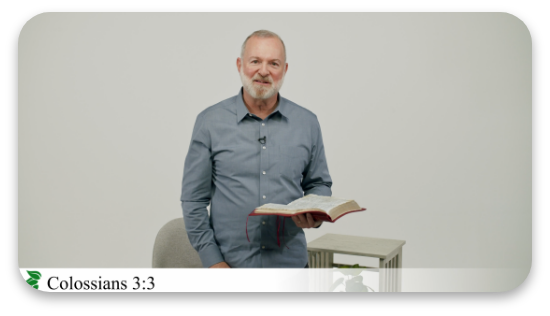
To go out and come in is a Hebrew idiom that means to live life, and in its second, more specific biblical sense it means to exercise leadership. In this teaching Rev. Tom Knupp traces that idiom through the ESV, from Psalm 121, where the Lord keeps your going out and your coming in, to Jesus Christ as the door in John 10:9, to Moses handing over to Joshua, David and Solomon going out and coming in before the people, the qualification laid down for Judas’s replacement in Acts 1, and Barnabas ushering Saul of Tarsus in among the apostles. It closes in Deuteronomy 28: blessed shall you be when you come in, and blessed shall you be when you go out.
Transcript
Way In and Way Out: Everyday Idioms Around the World
A way in and out for God’s people. All scripture references in this teaching will be read from the English Standard Version or ESV. When traveling in Britain or the Commonwealth countries, you might be astonished the first time you see directional signs worded this way. Way in instead of entrance. Way out instead of exit. That’s way out.
Or if you happen to be traveling in South India, you might be surprised when instead of goodbye, your host bids you farewell by saying go and come. What he’s telling you is his expectation is not simply that you’re leaving, but that you’re coming back. These are examples of local ways of speaking, or idioms.
What Is a Hebraism? Hebrew Idioms in English
The ancient Hebrews also had idioms that reflected their method of thought. In English, these unique language conventions are known as Hebraisms. Some Hebrew idioms have made their way into common English usage, such as stiff-necked and flowing with milk and honey.
Others are less familiar, like the one we will be studying in depth today. Not unlike the British way in and way out and the Indian go and come, the Hebrew people had a saying, to go out and come in, which was basically a way of saying to live life. When you think about it a little bit, this all starts to make sense, because all of life can be summed up by our comings and goings.
For instance, when you get up in the morning, where are you going? To work, to school, to the grocery store. And then when you’re done, where do you go? Back home again. Or thinking on a longer time frame, there are beginnings and endings to different phases of our lives. For instance, starting and finishing college, or starting a family and children leaving home.
The Second Meaning: To Go Out and Come In as Leadership
A second, more specific Biblical sense of the Hebrew term to go out and come in has to do with the exercise of leadership, what E.W. Bullinger calls official functions. Here again, it helps to think of it in terms of examples.
For instance, when you get home in the evening, where are you going? To teach at a fellowship, to attend a course, to run a leadership meeting. Or on a longer time frame, think about taking on and relinquishing responsibility for a fellowship, or working full-time in ministerial work and then retiring from that function. So to review, the idiom to go out and come in had two meanings, referring to life in general and referring to official functions or the exercise of leadership.
Synecdoche: Why Going and Coming Stand for All of Life
E.W. Bullinger identifies the first usage of this phrase as an example of the figure of speech, synecdoche. He further points out that in its specific application, it’s a matter of putting particulars for universals. In other words, life in general does not just boil down to going out or coming in.
But by counterposing these two contrasting actions, we have in a microcosm a way of speaking about everything in between. Going and coming thus become bookends to describe all that we do in life.
The second usage of this phrase deals with leaders exercising particular functions within the congregation. A leader is not forever at the helm. There’s a point a leader comes into their official function and a point they go out. But while they’re in that position, they must deal with the goings on of their office, just as anyone else living life must deal with the matters at hand from day to day.
As we walk through the Bible today, we will see instances of both usages of go and come, referring to life in general and referring to official functions or the exercise of leadership. We’ll start with an occurrence of the term relating to God.
Psalm 121: The Lord Will Keep Your Going Out and Your Coming In
God has always kept the way in and out for his people. Psalm 121 verse 1. A Song of Ascents. I lift up my eyes to the hills. Literally, shall I lift up my eyes to the hills? From where does my help come? My help comes from the Lord, who made heaven and earth.
He will not let your foot be moved. He who keeps you will not slumber. Behold, he who keeps Israel will neither slumber nor sleep. The Lord is your keeper. The Lord is your shade on your right hand. The sun shall not strike you by day, nor the moon by night.
The Lord will keep you from all evil. He will keep your life. The Lord will keep your going out and your coming in, in other words, your entire life, from this time forth and forevermore.
Jesus Christ Is Both the Way In and the Way Out (John 14:6, John 10:9)
The way, he was both way in and way out for God’s people. John 14:6. Jesus said to him, I am the way and the truth and the life. E.W. Bullinger on the figure of speech hendiatris, or three for one. I am the way. Yes, the true and living way. No one comes to the father except through me.
John 10:9. I am the door. If anyone enters by me, he will be saved and will go in and out and find pasture.
As our way in and out of the fold, Jesus Christ is both our gateway to eternal life and the gatekeeper of our more abundant life. What a wonderful way for us to go in and out and find pasture. However, Jesus Christ has not always been physically present upon earth, but God has in every age provided contemporaries in each generation to shepherd his called out ones both in and out.
Moses Could No Longer Go Out and Come In (Deuteronomy 31:2)
Just look at how God worked with Moses to appoint Joshua when it was time for him to hand over the reins to a new leader. Deuteronomy 31:2. And he said to them, I am 120 years old today. I am no longer able to go out and come in. The Lord has said to me, you shall not go over this Jordan.
Moses was no longer able to go out and come in. He could no longer physically fulfill all the duties of his office. But God was at work within him to appoint Joshua in that leadership role, to lead God’s people out and bring them in.
Numbers 27: Joshua Commissioned to Lead Them Out and Bring Them In
Numbers 27:16. Let the Lord, the God of the spirits of all flesh, appoint a man over the congregation who shall go out before them and come in before them, who shall lead them out and bring them in, that the congregation of the Lord may not be as sheep that have no shepherd. That would be a shame.
So the Lord said to Moses, take Joshua, the son of Nun, a man in whom is the Spirit, and lay your hand on him. Make him stand before Eleazar, the priest, and all the congregation, and you shall commission him in their sight. You shall invest him with some of your authority, that all the congregation of the people of Israel may obey.
And he shall stand before Eleazar, the priest, who shall inquire for him by the judgment of the Urim before the Lord. At his word, they shall go out, and at his word, they shall come in. Both he and all the people of Israel with him, the whole congregation.
Joshua could lead them out by his word, not because he was a better man than anyone else, but because he had made God’s word his word. In like manner today, those who exercise ministries in the church are simply doing what God has called them to do with his word, going out before and coming in before the congregation. What a joy, privilege, and honor it is to serve at such a level in our day.
David Went Out and Came In Before the People (1 Samuel 18)
Not just any man or woman is prepared to lead God’s people when following a great predecessor. Solomon, however, was such a man. His father David had fearlessly led God’s people when, as a young man, he was appointed by Saul to go out and come in before the people.
1 Samuel 18, verse 12. Saul was afraid of David because the Lord was with him, but had departed from Saul. So Saul removed him from his presence and made him a commander of a thousand, and he went out and came in before the people. And David had success in all his undertakings, for the Lord was with him. And when Saul saw that he had great success, he stood in fearful awe of him. But all Israel and Judah loved David, for he went out and came in before them.
Solomon’s Prayer for Wisdom to Go Out and Come In (2 Chronicles 1:9-10)
Later, it was Solomon’s turn to step up and stand forth. Listen to Solomon’s prayer to God when he realized he would need to be the one who carried on after the passing of his father David. And he was meek before God in this humbling circumstance.
2 Chronicles 1:9-10. O Lord God, let your word to David my father be now fulfilled, for you have made me king over a people as numerous as the dust of the earth. Give me now wisdom and knowledge to go out and come in before this people. For who can govern this people of yours which is so great?
No man can take such an honor to himself. But having received such commission, a man or woman had best fulfill it. God would expect no less of us.
Acts 1: The Qualification for Judas’s Replacement
Up to this point, we’ve been looking at occurrences of to go out and come in in the Hebrew Old Testament. But this colorful form of expression did not disappear with the advent of the Hellenistic or Greek-speaking world of the New Testament. We see a vivid illustration of this in the run-up to Pentecost in Acts chapter 1. The disciples were gathered together to select a replacement for Judas, who had fallen and hanged himself on a sword. That replacement would have to fulfill specific criteria. Watch.
Acts 1 verse 21. So one of the men who have accompanied us during all the time that the Lord Jesus went in and out among us, beginning from the baptism of John until the day when he was taken up from us, one of these men must become with us a witness to his resurrection.
As Jesus himself had gone in and out among the disciples during his earthly ministry, so would this man need to exercise leadership as a witness of Jesus Christ’s resurrection. To qualify to be counted among the twelve, he would need to have experienced the entire gamut of Jesus’s earthly ministry, from the day of his baptism right through to his ascension. What amazing and particular qualifications.
There were at least two men who actually met those criteria, and both of them were amazing in their own right. Matthias, and Joseph called Barsabbas. Whichever one was chosen would, like Jesus Christ, need to go in and out among the leadership, walking, talking, and fellowshipping with them.
Barnabas Ushers Saul of Tarsus In (Acts 9:26)
Sometimes the leader that God has in mind for his people at a particular place in time is not the one that everyone else has already picked out in their own minds. Saul of Tarsus was such a leader. Not only was Saul the unlikeliest of candidates, he also inspired tremendous fear rather than trust. In fact, when first confronted with the knowledge of his conversion, the people didn’t even want to believe that he was a disciple. But Barnabas ushered him in.
Acts 9:26. And when he had come to Jerusalem, he attempted to join the disciples. And they were all afraid of him, for they did not believe that he was a disciple. But Barnabas took him and brought him to the apostles and declared to them how on the road he had seen the Lord who spoke to him, and how at Damascus he had preached boldly in the name of Jesus. So he went in and out among them, and this is the figure of speech, homeoptoton, like inflections in the Greek, at Jerusalem preaching boldly in the name of the Lord. And he spoke and disputed against the Hellenists, but they were seeking to kill him.
It was Barnabas who gave Saul entrée into the hearts and minds of God’s people by boldly introducing him and his credentials to the very apostles themselves. Here’s what he told them, that he had seen the Lord, that he had spoken to him, and that he had preached boldly at Damascus in the name of Jesus.
And once the apostles did accept him, look at what happened. He went in and out among them at Jerusalem, continuing to preach boldly in the name of the Lord. And not only that, but he spoke and disputed against the Hellenists. What a fearless witness he had become for the Lord Jesus Christ.
Deuteronomy 28: Blessed When You Come In and When You Go Out
We have seen how God provides leaders for his people at various times and in various ways. When we walk in God’s ways and in fellowship with our brethren, God will see to it that every aspect of our individual lives is blessed as well.
And if you faithfully obey the voice of the Lord your God, being careful to do all his commandments that I command you today, the Lord your God will set you high above all the nations of the earth, and all these blessings shall come upon you and overtake you if you obey the voice of the Lord your God. Blessed shall you be in the city, and blessed shall you be in the field.
Blessed shall be the fruit of your womb, and the fruit of your ground, and the fruit of your cattle, the increase of your herds, and the young of your flock. Blessed shall be your basket and your kneading bowl. Blessed shall you be when you come in, and blessed shall you be when you go out.
Let’s uplift and help one another so that as a church body we can know where we’re coming from, where we’re going to, and all the good things he has in store for us along the way. Let’s let God provide the way in and out so that we can surely follow.
Key Takeaways
- To go out and come in is a Hebrew idiom, a Hebraism, that means simply to live life, because all of life can be summed up by our comings and goings.
- E.W. Bullinger classes the idiom as synecdoche, putting particulars for universals: going and coming become bookends that describe all that we do in life.
- The idiom has a second, more specific biblical sense, the exercise of leadership, what Bullinger calls official functions, because a leader is not forever at the helm.
- Psalm 121:8 applies the idiom to God himself: the Lord will keep your going out and your coming in, in other words, your entire life, from this time forth and forevermore.
- Moses said he was no longer able to go out and come in, so God appointed Joshua to lead the people out and bring them in, that the congregation may not be as sheep that have no shepherd.
- Judas’s replacement in Acts 1 had to be a man among whom the Lord Jesus went in and out, from the baptism of John to the ascension, and Barnabas later gave Saul of Tarsus that same entrée among the apostles.
Frequently Asked Questions
What does the Hebrew idiom “to go out and come in” mean?
It had two meanings. First, it was basically a way of saying to live life, because all of life can be summed up by our comings and goings, from getting up and going to work to the beginnings and endings of whole phases of life. Second, in a more specific biblical sense, it referred to the exercise of leadership, what E.W. Bullinger calls official functions, such as coming into and going out of responsibility for a fellowship.
What does Psalm 121 mean by “your going out and your coming in”?
Psalm 121 verse 8 says the Lord will keep your going out and your coming in from this time forth and forevermore. Because going out and coming in is an idiom for life itself, the promise covers your entire life, not just your travel. Rev. Tom Knupp reads the whole psalm to show that the Lord who made heaven and earth is your keeper and your shade, and will keep you from all evil.
Why did Judas’s replacement in Acts 1 have to be someone Jesus went in and out among?
Acts 1 verse 21 required one of the men who have accompanied the apostles during all the time that the Lord Jesus went in and out among us, beginning from the baptism of John until the day he was taken up. To be counted among the twelve he had to have experienced the entire gamut of Jesus’s earthly ministry, from baptism to ascension, and then go in and out among the leadership himself as a witness to the resurrection.
Scripture References
Psalm 121:1-8; John 14:6; John 10:9; Deuteronomy 31:2; Numbers 27:16-21; 1 Samuel 18:12-16; 2 Chronicles 1:9-10; Acts 1:21-22; Acts 9:26-29; Deuteronomy 28:1-6
This text was prepared from the teaching audio. Please verify scripture references against your own Bible.