Overview
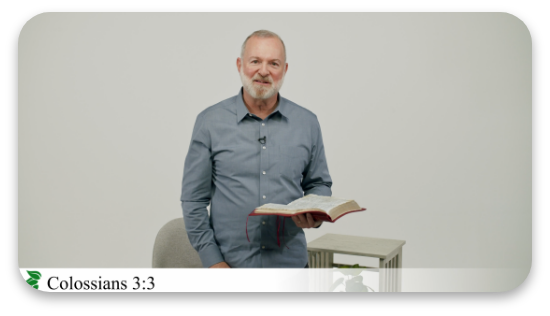
Our reason to hope is the faith of Jesus Christ, the accomplished work of Christ rather than anything we have done. In this eleventh Faith 2020 conference session, Rev. Tom Knupp opens with the year he and his wife spent living in Kinshasa in the Democratic Republic of the Congo, then works through 1 Thessalonians, 1 Peter, Hebrews, Romans, Joshua and Acts to show that hope is about what we cannot see, that the Hebrew word for hope, tikvah, is first translated cord in Rahab’s scarlet line, and that our hope is an anchor of the soul fixed above and not below. He calls it a hope-bound mindset: living with our ultimate destination in mind, and ministering hope in love rather than in fear.
Transcript
Believing God to Be Here and the Hope-Bound Mindset
It has been a privilege for me personally to have been in the presence of all of you, same time, same space, this weekend. Because I know that each and every one of you had to believe God to be here. And I know that you moved through. You did it. And today, in the manifestation of the spirit, we heard, take a step. I will be with you.
You took a step. You are here. And you are already on the path to developing a hope-bound mindset.
A Year in Kinshasa: Living Simply in the Democratic Republic of the Congo
In the early years of our marriage, before our daughters were born, we spent a year, we were moving among and teaching people who were starting home fellowships in the African metropolis of Kinshasa, which is now in the country called the Democratic Republic of the Congo, or the DRC. And most of the expats who lived in the city lived downtown. But we lived in the site, which was like the neighborhoods where 95% of the local population of about 3 million, they all lived there. So we were in the site. And we lived in a large walled estate. But our accommodations were extremely simple.
In the corner of the wall, there was a little whitewashed cinderblock house that we lived in. And it had a tin roof, no ceiling. We did have a ceiling fan. So we had electricity. What we didn’t have was running water, which means we didn’t have hot water either. And so what we had was a rainwater barrel outside the house. And then there was an outhouse. And so the outhouse was cinderblock. And so it had a doorway, but it didn’t have a door.
There were red and blue and green plastic strips. That was our privacy. And so you go through the plastic strips. You get in the first room. First room, there is a toilet. That’s all. But it wasn’t what you would call a toilet, because it was just a china bowl. No seat, no tank. Oh, there was a bucket. And then you could step out, get some rainwater, and chase it. That’s how you’d flush it. And now let’s step into the second room.
So we’re going to step into the second room here. And this one is really glorious. Oh, all that’s in it is a drain in the floor. That’s it. But now it’s time to take a shower. Oh, I need another bucket. Grab a bucket. OK. Oh, and I need the glass. Bring the glass. OK. And so our shower was pouring one glass at a time over us. That was our shower. We were in the tropics, so water might have been a little cool sometimes, but it wasn’t really icy. Anyway, that was our home for a year.
Fulfilled Expectations While Sharing God’s Word in Africa
And so our lifestyle was less than luxurious. But boy, were we fulfilled in our expectations, because, well, basically, we just loved those people so much that we wouldn’t have wanted to be anywhere else in the whole world at that time. That was where we wanted to be, what we wanted to be doing. And sure, to be perfectly honest, every single day that we lived there, we were looking forward to our eventual return to our familiar comforts. You would have too, right? But any physical, temporary deprivation that we experienced was, we were able to look past that for the rejoicing that we had to be able to share God’s word with people who were so genuinely hungry and thirsty, and there were many. In 1 Thessalonians, chapter 2, I think about that time, and this verse means a lot to me in light of that.
1 Thessalonians 2:19. For what is our hope or joy or a crown of rejoicing? Are not even ye in the presence of our Lord Jesus Christ that is coming? For ye are our glory and joy. What, after all, is our hope? Isn’t it not you in Christ’s presence that is coming? Yes, it is. And our hope is not just about us. It’s about everyone that God will bring with Christ at our gathering together, and we can have a hand in bringing them to that glory by speaking God’s word. Another thing, in African cultures, a man is not considered rich simply because he has great possessions.
In order to be truly regarded rich, he has to have progeny, and not just one or two. That’s why, when I read these verses, I’m reminded that the most enriching thing that we can do in life is to win others to the common faith and to bring them on that journey of believing God together with us. That’s what I call a hope-bound mindset, living with our ultimate destination in mind.
How We Know About Our Hope: The Revelation of God’s Word
Well, how do we know about our hope? The revelation of God’s word, surely. But have you thought about the fact that we could not know anything at all about our hope without what the word reveals about it? In 1 Thessalonians 2:13, we read, for this cause also thank we God without ceasing, because when you received the word of God which ye heard of us, you received it not as the word of men, but as it is in truth, the word of God, which effectually worketh also in you that believe. Without the word of God revealed to Paul that was written for the Thessalonians, they could have had no knowledge at all of their gathering together. They couldn’t have known at that time that Christ will gather not just us and our loved ones, but the entire household of faith for all time. Every single person who has believed and been born again since the day of Pentecost. And that’s going to be an incredible reunion.
First Peter, we hope for what we cannot see. Hope is not about what we see. It’s about what we don’t see. Though none of us has seen Jesus Christ, not a one of us, we love him. Looking to the time he will return and we will see him face to face. 1 Peter 1:7, that the trial of your faith being much more precious than of gold that perisheth, though it be tried with fire, might be found unto praise and honor and glory at the appearing of Jesus Christ, whom having not seen you love, right? We do.
In whom though now you see him not, we still don’t see him. Yet believing you rejoice with joy, unspeakable and full of glory, receiving the end, the fulfillment of your faith, of the faith of Jesus Christ that you have. What is it? The salvation of your souls. The fulfillment of the faith of Jesus Christ is the salvation of our souls. And that glorious outcome will be fully realized when we receive our new bodies. What greater salvation could anyone hope to have? Hebrews 11.
Hope Is Not About What We See but About What We Cannot See
In this heavenly journey that we are on, we keep our focus not on the visible, but on the invisible. The things of the earth are seen, and hope is unseen. As believing men and women, our conviction is in the unseen, the invisible God, who made all things visible and invisible by the word of God. As it says in Hebrews 11:3, through faith we understand that the worlds were framed by the word of God so that things which are seen were not made, of things which do appear. Romans 8. Hope is not about what we see. Hope is about what we don’t see.
Verse 24 of Romans 8. For we are saved by hope, and hope that is seen is not hope. For what a man seeth, why doth he yet hope for? But if we hope for that we see not, then do we with patience wait for it. Now turn to 1 Thessalonians, please.
We can wait with patience because we hope for what we cannot see. 1 Thessalonians 1:10. And to wait for his son from heaven, whom he raised from the dead, even Jesus, which delivered us from the wrath to come. And if you’ll flip to 2 Thessalonians 3:5. And the Lord direct your hearts into the love of God and into the patient waiting for Christ. So the love of God is what goes hand in hand with the patient waiting for Christ. I’d like to talk to you a little bit about the scarlet cord of hope.
Tikvah: The Hebrew Word for Hope Means a Cord
The verbal root of the Hebrew word for hope means to wait or to look forward with eager expectation. Now the Hebrew word for hope is tikvah, T-I-Q-V-A-H, tikvah. It’s surprising to learn that the first two times that tikvah is used in the Bible, it’s translated not as hope, but as line or cord. However, this apparent anomaly is really not all that unusual. Hebrew frequently expresses abstract concepts in terms of concrete everyday things. And then it’s left to us to discover how the underlying concrete concept, in this case, cord, informs our understanding of its abstract counterpart, in this case, hope.
Hope then is a cord. The first two occurrences of tikvah, where it is translated line in the KJV and cord in numerous other versions, are both in Joshua 2. You can turn there, Joshua 2. And each has to do with the tremendous believing woman, Rahab, that Robin taught us about yesterday. Joshua 2:18. This is the scarlet cord of hope.
Rahab’s Scarlet Cord of Hope in Joshua 2
Behold, when we come into the land, thou shalt bind this line of scarlet thread in the window, which thou didst let us down by. Okay, she lived on the wall, right? And they needed a way to escape, right? And how did they get out? On the scarlet cord of hope. They let them down on the scarlet cord of hope, and then they got back down to the ground and went out of there, right? So that’s verse 18. Then in verse 21, it continues, and she said, according unto your words, so be it. And she sent them away, and they departed, and she bound the scarlet line in the window. Okay, I’m gonna bind it here.
And anybody looking from the outside, they’re gonna see this thing. Well, it was not only the means of escape then for the spies, was it? Because it became the means of escape for who? Rahab and her family. Wow. And the scarlet cord of hope. For us, it’s also our means of escape from this troubled world. It’s our ticket out of here.
Isn’t that something? That’s really terrific to understand. In every other instance of the 33 times this word occurs in the Hebrew Old Testament, it’s translated either hope, expectation, or something similar. There has to be a reason that in its first usage, God chose to communicate something concrete to us that would lead us to a better understanding of the abstract concept of hope. What does the first occurrence of hope teach us? That hope is our cord. Where is our cord tethered? We are tethered for all time to our Father God and His Son, Jesus Christ.
And the reason it’s a scarlet cord, scarlet in the Bible indicates cleansing by blood. Thanks to our hope, we are tethered not to our earthly identity, but to our heavenly one. Now let’s go back to the New Testament.
Our Reason to Hope Is the Faith of Jesus Christ
We’ll be in 1 Thessalonians 1. The meaning of the word hope is essentially the same in the Old Testament as it is in the New. Here in 1 Thessalonians 1, what is our reason to hope? Our reason to hope is the faith of Jesus Christ. As we saw earlier, when Rico took us here to 1 Thessalonians 1:3, remembering without ceasing your work of faith and labor of love and patience of hope of our Lord Jesus Christ. Remember it’s a genitive, in the sight of God and our Father. And then in verse eight, for from you sounded out the word of the Lord not only in Macedonia and Achaia, but also in every place your faith toward God is spread abroad so that we need not to speak anything. So what does it mean when it says your faith toward God is spread abroad? It means the Thessalonians were demonstrating the faith of Jesus Christ to others.
The Thessalonians put on the faith of Jesus Christ as a finished reality in their hearts and minds. Today, we look back on Christ’s accomplished work, the faith of Jesus Christ and forward to his second coming, our hope. That’s the culmination of his promises. Verse eight of chapter five, but let us who are of the day be sober, putting on the breastplate, protecting our hearts of faith and love and for an helmet, protecting our minds, the hope of salvation. Now let’s go back to Acts 17. I think it’s significant in terms of the reason for our hope and how Paul handled the people he was sharing this with.
So he taught the Athenians about our hope and about what God was offering to man by the faith of Jesus Christ. Acts 17:31, because he has appointed a day in the which he will judge the world in righteousness by that man whom he had ordained, whereof he had offered faith, given assurances, offered faith unto all men in that he hath raised him from the dead. So Paul’s appeals to the Athenians was made in acknowledgement of their existing ideas and beliefs, but he didn’t water down the message. He clearly expounded Jesus’s death and resurrection and that’s the basis of our hope. We’re talking about the reason to hope. Let’s go to 1 Peter.
1 Peter 3:15: Always Ready to Give an Answer for the Hope in You
1 Peter 3:15. This is a very familiar verse to many of us who have memorized it over the years in the KJV. The KJV rendering of this verse begins with the words, but sanctify the Lord God in your hearts. I’m going to read it to you from the Amplified. But in your hearts, set Christ apart as holy and acknowledge him as Lord. Always be ready to give a logical defense to anyone who asks you to account for the hope that is in you, but do it courteously and respectfully.
Well, the reading God in the KJV is actually Christ, as we just heard in the Amplified. It’s Christ, both in the Aramaic and in the majority of the critical Greek texts. So the Amplified is correct. It reflects the original when it reads, but in your hearts, set Christ apart as holy and acknowledge him as Lord. Why is this important? Because the reason we have hope is that we have the faith of Jesus Christ. When we set Christ apart as holy in our hearts, we recognize that our hope could not possibly be because of anything that we’ve done.
It had to be based on his accomplished work. And moreover, as we walk out on the faith of Jesus Christ and our knowledge of him, then we can start that intimate relationship with our heavenly father. The next excerpt of the verse says, always be ready to give a logical defense to anyone who asks you to account for the hope that is in you. The words for logical defense here, it’s apologia, the answer of truth in the face of accusation. So we have to have confidence in the word of God as the basis of our hope, and we have to be ready to explain it for anybody who wants to know courteously and respectfully. Well, let’s say you’re talking to somebody about Jesus Christ’s return, and they wanna know, well, what will happen if man destroys the earth before Jesus Christ gets here? Well, you could point out to them that man can neither destroy nor save the earth, and that you can’t save the planet when God’s already got a plan in place to dissolve it, right? So we simply acknowledge God’s sovereignty and we leave our future in his hands.
Ministering Hope in Love, Not in Fear of the Tribulation
You can do it courteously and respectfully. As we minister to others, we must remember that hope must be ministered in love, not fear. Too often, Christians have had a fearful expectation of the future. Their hope has been overshadowed because they have apprehension that they’re going to be caught up in the tribulation. And the Thessalonians knew that that was not what God’s word teaches. They knew that we’ve been saved from wrath through him.
And then, if that’s true, then the tribulation is most assuredly off the table for us, right? We will have already departed with Christ in the gathering together before the wrath or the tribulation ever begins. So sharing the faith of Jesus Christ with our fellow believers, we have a common hope of being reunited when Christ comes back to gather the entire family of God. Hebrews 2. Hebrews 2. If I could find it here, there it is.
Refusing to Be Enslaved by the Fear of Death
In contrast to that hope, we live in a time today when many are enslaved by the fear of death. Sound familiar? Hebrews 2, verse 14. For as much then as the children are partakers of flesh and blood, he also himself likewise took part of the same that through death he might destroy him that had the power of death, that is the devil, and deliver them who through fear of death were all their lifetime subject to slavery. Boy, don’t we see that today. Another life lesson that we learned during our time in Africa was to not dwell on risks, but on God. We lived in a country and a place where death was a constant daily reality that everyone had to deal with.
Anyone of any age, of any means, in any situation, could die at any time. And we too faced those risks. Causes of mortality were rife, sickness, disease, water contamination, accidents, crime, crocodiles, snakes, lightning strikes, silver, you name it, people were dealing with it. In this kind of environment as a Christian, you look all around you and you finally decide to just live and refuse to be enslaved by the fear of death. You make up your mind to focus not on one or more hazards, but on the living God on whom we set our hope. And you realize that first and foremost and always, he’s the one who protects you.
Hope as an Anchor of the Soul, Both Sure and Steadfast
He’s the one who takes care of you day after day and time after time. Don’t forget it. Hebrews 6, verse 18, that by two immutable things in which it was impossible for God to lie, we might have a strong consolation who have fled for refuge to lay hold upon the hope set before us, which hope we have as an anchor of the soul both sure and steadfast. Well, where is our anchor anchored? Not in the deep blue sea. In the wide blue yonder. It’s above.
The anchor is above. It’s not below. We are anchored to our heavenly, not our earthly identity. Wow, isn’t that something? Our hope is a sure and steadfast anchor of the soul. It’s weightier than gravity. When Jesus Christ comes back to get us, it will be impossible for us to remain earthbound any longer due to the sheer spiritual gravitational force of his presence nearby in the heavens with the dead in Christ, we who believe will be drawn to him away from the earth to meet the Lord in the air as it is said in 1 Thessalonians 4:17.
Looking Away from This Troubled World unto Jesus in Hebrews 12
Oh, what a day that will be. Turn to Hebrews 12. In the meantime, we look with joy and eager expectation to the founder and perfecter of faith who is seated at God’s right hand. Wherefore, Hebrews 12:1, seeing we also are compassed about with so great a cloud of witnesses, let us lay aside every weight. Our hope is weightier. And the sin which doth so easily beset us, and let us run with patience the race that is set before us looking unto Jesus.
The word look in this verse means to look away from one thing so as to see another. Remember that, Don? That was great. We look away from this troubled world so we can fix our gaze instead on the untarnished one to come. And this is what gives us joy in our hearts. Our expectation in God is faith-based and hope-bound. Romans 15 is where I’d like to close today.
The God of Hope Fill You with All Joy and Peace in Believing
Romans 15, verse 13. Now the God of hope fill you with all joy and peace in believing that you may abound in hope through the power of the Holy Spirit. Our tether is strong, our anchor sure and steadfast, and his promises everlasting.
We have every reason to hope knowing we will surely reach our final destination. See ya!
Key Takeaways
- A hope-bound mindset means living with our ultimate destination in mind. The most enriching thing we can do in life is to win others to the common faith and bring them on that journey of believing God together with us.
- We could know nothing at all about our hope without what the word of God reveals about it. Without the word revealed to Paul and written for the Thessalonians, they could have had no knowledge of their gathering together.
- Hope is not about what we see. It is about what we don’t see, and we can wait with patience precisely because we hope for what we cannot see.
- The Hebrew word for hope is tikvah, and its first two occurrences in Joshua 2 are translated line or cord, Rahab’s scarlet cord. Hope is our cord, and we are tethered for all time to our Father God and His Son, Jesus Christ.
- 1 Peter 3:15 reads Christ, not God, in the Aramaic and in the majority of the critical Greek texts. When we set Christ apart as holy in our hearts, we recognize that our hope is based on his accomplished work, not on anything we have done.
- Our hope is an anchor of the soul both sure and steadfast, anchored above and not below, so we are anchored to our heavenly and not our earthly identity.
Frequently Asked Questions
What is the reason for our hope?
Our reason to hope is the faith of Jesus Christ. Rev. Tom Knupp teaches that when we set Christ apart as holy in our hearts, as 1 Peter 3:15 says, we recognize that our hope could not possibly be because of anything that we’ve done. It had to be based on his accomplished work. Today we look back on Christ’s accomplished work and forward to his second coming, our hope, which is the culmination of his promises.
What does the Hebrew word tikvah mean, and why is hope called a cord?
The verbal root of the Hebrew word for hope, tikvah, means to wait or to look forward with eager expectation. Its first two occurrences in the Bible, both in Joshua 2, are translated line in the King James Version and cord in numerous other versions, describing Rahab’s scarlet cord. Hebrew frequently expresses abstract concepts in terms of concrete everyday things, so hope is our cord, and we are tethered for all time to our Father God and His Son, Jesus Christ.
Will Christians go through the tribulation?
No. Rev. Tom Knupp teaches that hope must be ministered in love, not fear, and that too often Christians have had a fearful expectation of the future because they have apprehension that they’re going to be caught up in the tribulation. The Thessalonians knew that that was not what God’s word teaches. They knew that we’ve been saved from wrath through him, so we will have already departed with Christ in the gathering together before the wrath or the tribulation ever begins.
Scripture References
1 Thessalonians 2:19; 1 Thessalonians 2:13; 1 Peter 1:7; Hebrews 11:3; Romans 8:24; 1 Thessalonians 1:10; 2 Thessalonians 3:5; Joshua 2:18; Joshua 2:21; 1 Thessalonians 1:3; 1 Thessalonians 1:8; 1 Thessalonians 5:8; Acts 17:31; 1 Peter 3:15; Hebrews 2:14; Hebrews 6:18; 1 Thessalonians 4:17; Hebrews 12:1; Romans 15:13