Overview
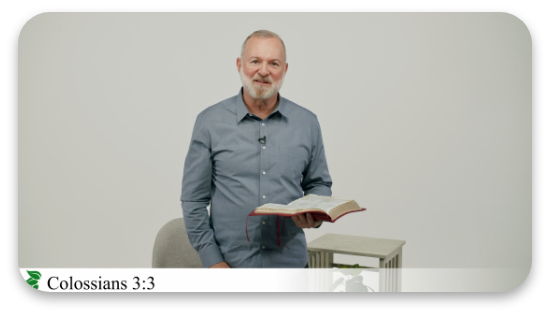
This teaching examines “Forgiveness vs. Judgment Part 2” through 1 Corinthians 4, Psalm 19, Isaiah 58, showing how don’t, judgment, love shape a believer’s relationship with God, daily choices, and service to others.
Transcript
Understanding Forgiveness vs. Judgment Part 2
Let’s turn to 1 Corinthians chapter 4. We’re going to turn to 1 Corinthians chapter 4 to answer a question. And the question is, how is a Christian to handle judgment? How is a Christian to handle judgment? Well Paul, the apostle Paul who wrote 1 Corinthians answers this question. We’re in 1 Corinthians chapter 4 verse 3. He says, but with me it is a very small thing that I should be judged of you.
He’s talking to the Corinthian church. And the Corinthian church was a sense knowledge church. They were born again, saved, they had eternal life, converted, whatever you want to call it.
But they had sense knowledge standards within their approach to Christianity. They were carnal Christians. And as carnal Christians, they were judging people.
They would substitute God’s heart, God’s nature, and judge people according to perhaps you’d say their preferences. Maybe you’ve met people like that. Where they try to force their own preferences on you so that you can get approval.
Or you can get approval from them or you can receive approval from God according to their preferential standard. It’s called sometimes legalism. But it’s forced.
Because if you don’t do it, then you don’t have it. It’s called judgment. So the apostle Paul is teaching us.
He says, but with me, it is a very small thing that I should be judged of you or of man’s judgment. It is talking about man’s day. We live in man’s day where man does the judging.
Man judges everything, everything. They judge how you look. They judge how your economic status.
They judge your clothes, your makeup, your shoes, where you live, where you don’t live, what political party you’re affiliated, what ones you’re not affiliated with, current trends, what you eat, what you don’t eat, judgment all the time. And the apostle Paul is saying, I don’t even subscribe. For me, it’s a small thing to endure man’s judgment.
The Biblical Foundation
Man’s judgment, it’s like at epidemic proportions. I just got to tell you, when that stuff starts creeping up on me, I have to tell people, look, I already graduated high school. I don’t want to be in your clique.
People think they’re an authority on everything in another’s life, according to an earthly standard, a political standard, something that moves and changes. But with me, it is a very small thing that I should be judged of you or of man’s judgment. Yea, I judge not mine own self.
Can you imagine not judging your own self? Can you imagine an hour, a day, imagine an entire day where you don’t judge yourself? And if you did that seven times, that would be a week. And you did it four more weeks. That’s a, and 12 months is a, and you add a bunch of those, it’s called a lifetime.
Imagine from this point on the rest of your life that you don’t judge yourself according to an earthly standard. And you can do it. Jesus Christ did it.
He proved that the word works in every situation. The word says, he said that I go on to my father and the works that I do, ye shall do also. You can do it.
You actually can do this. You can forgive the unforgivable based on that spirit inside of you. God enabled you so that there is nothing that you cannot overcome.
Verse three, again, but with me, it is a very small thing that I should be judged of you or of man’s judgment. Yea, I judge not mine own self for I know nothing by myself, yet am I not hereby justified. In other words, he’s saying, I don’t even, I can’t even think of something that I did wrong, but he that judges me is the Lord.
He said, even, even if I can’t even think of anything that I’ve done wrong, if I’m doing everything right, that’s not the standard that I’m going to be using. I’m going to be using the standard of Jesus Christ in my life. I am not right with God.
I am not righteous. I’m not a good Christian. If my, if I mow my lawn and I do my laundry and clean out my, well, clean out his closet.
It’s, it’s not a works based judgment. It’s a spiritual judgment. They’re entirely different.
Examples and Spiritual Lessons
How does a Christian to handle judgment, to bring it back to God’s perspective, to value much more God’s opinion, God’s perspective, which is rock solid and never changes versus man’s perspective, which vacillates all the time. It changes all the time. That approval from man, you get it and it’s taken away.
It’s you get it and it’s taken away. Look at first Corinthians chapter 10, verse 13, just a few pages over. Think about this verse in light of forgiveness and judgment, that there has no temptation taken you, but such as is common to man.
But God is faithful who will not suffer you or allow you to be tempted above that which you are able, but will with the temptation also make a way to escape that you may be able to bear it. That spirit inside of you enables you to forgive, to get over it, to keep the past after it’s kind in the past and to live in the present. God’s way to escape in so many situations is just to forgive.
Forgiveness and mercy are not rationed. They’re not rationed with God. They may be with people, but with him, there’s an endless supply.
There’s enough for every situation. He knows our frame. He knows what we’re going to do.
He knows what we’re not going to do that we should do. And yet he’s still there with us. And that forgiveness and mercy, there’s more of that where it came from, because he’s a fountain.
He’s a source of endless supply. And people at times, they focus on what has hurt them over much, and they allow that hurt to define them and take authority and reign superior over to how God defines us. The past hurts can’t define you unless you give consent.
I kind of think of it like imperfections are like shadows. They’re always there, but they’re behind you when you start walking to the light. God doesn’t condemn his children.
We know that. Man’s judgment looks at others through a magnifying glass, and they blame other people for their own unhappiness. And that helps people at time avoid handling their own issues, their own problems, their own conflicts, which can be resolved so easily.
Faith in Action
But have you ever noticed when you have that mindset of love, walking in love, you’ve got it yourself, you can give it away, you received your forgiveness, you can give it away, that you don’t become more callous. You become more tender. Do you want to be callous, or do you want to be a slayer of insensitivity? To be tender.
Let’s go to Psalm 19. Psalm 19. Oh, shoot.
What’s that scripture where it says, the law of the Lord is perfect, converting the soul? Why is it, oh, I’m in Proverbs. That’s right. Psalm 19.
I’m getting there. The law of the Lord is perfect, converting the soul. But the testimony of the Lord is sure, making wise the simple.
You know what that word converting means? It means to restore. It restores the soul. It returns it to its original position.
To its original position. So like our camp mascot, this is like what the word does to you. It brings you back.
Does he have anger? Does he have bitterness or resentment? He’s so pure. This is what the word does in your soul. You’re God’s child.
You’re cute. You don’t smell as good. Oh.
Oh. There’s something, but it’s not coming. The smell’s coming on the bottom.
Walking in Love and Confidence
Yay, Jaden. Thank you. See, the word will bring you back to the life that God intended.
Just like that. The purity, the beauty, the simplicity. But people don’t believe it.
They don’t believe it. They believe that if they were abused as a child or they went through a rotten divorce or they had a physical situation come up, that that’s going to define them for the rest of their lives, and it’s not true. It’s easy to jump on the bandwagon and agree and talk, you know, have your own story of hardships that you’ve been through, but that’s really not God’s way.
Look at Isaiah, please. Isaiah 58. God’s heart is for healing and restoration and beauty.
That’s his manner. That’s his character. That’s who he is.
He’s your father. You’ve got his spiritual genetic DNA. That’s who you are.
And when you understand it, you don’t have to work to show it. You just be yourself. Just be who you are.
Look at Isaiah 58, verse 6. It says, is not this the fast that I have chosen? To loose the bands of wickedness, to undo the heavy burdens, to let the oppressed go free, that ye break every yoke. A yoke is something that chains you to something else. It shackles you.
All of these things, wickedness, heavy burdens, people that are oppressed, it shackles you to an earthly identity instead of a heavenly one. This is God’s heart for us. Verse 9, then shalt thou call on the Lord.
Applying the Teaching in Daily Life
Then shalt thou call and the Lord shall answer. Thou shalt cry and he shall say, here am I. If thou take away from the midst of thee the yoke and the putting forth of the finger, that’s the accusing, and speaking vanity, if thou draw out the soul to the hungry and satisfy the afflicted soul, then shall thy light rise in obscurity and thy darkness as the noonday. There’s no shadows in a noonday.
And the Lord shall guide thee continually and satisfy thy soul in drought and make fat thy bones and thou shalt be like a watered garden and a spring of water whose waters fail not. In this last verse, in verse 11, it says the Lord shall guide you continually and satisfy thy soul in drought. If you’ve ever been on a fishing trip, a hiking trip, a skiing trip where you had a guide, you trust them that they know the way.
They know the way there and they know the way back. And you rely on that. And there’s many perils.
There’s many things, many what ifs that could happen, but you trust the guide. God knows what you and I are going to face in the days and years and months ahead, but he’s going to be right there with us. And the Lord shall guide thee continually and satisfy thy soul in drought.
He’ll satisfy your soul. That’s who you are, your personality, your heart, that tender part of you. And it says in drought, and you know what that means? In the scorched regions of the soul, he’ll satisfy you in the scorched regions of the souls, in those innermost parts of your heart where you’ve felt injustice, either it was injustice or you felt like it was, it makes no difference on the impact to your own heart.
And God will take those scorched regions where you feel like you’ve been burned and he’ll turn it into a watered garden. He’ll turn it into a watered garden, lush and green and beautiful and vibrant and full of life so that no one ever even is aware that there was a past hurt and injustice. And you may be able to remember it, but it won’t impact.
It’s not something you’ve hid in your heart because he’s healed it and turned it around. And the way that happens is if you cry out unto the Lord, if you talk to him, you have to be honest with him. You can’t schmooze God.
You can’t be a hypocrite and have formal prayers and much speaking where it sounds really good because he’s not after those things. He’s not after the performance. He’s after the heart.
You can call him Mr. Creator. He doesn’t care, but he’s your dad and he will take care of you. I don’t need a couch.
I got enough couches. I need healing. I’m in the world every day.
A Life Shaped by God’s Word
I feel like I need healing every day. I need him. I don’t need to believe big enough.
I need to believe God. Turn to First Peter. We’ll close here.
First Peter chapter four again. Have you ever been in a mountainous area where you can hear an echo? I live in Florida. It’s very flat.
There’s no echoes. When you’re there, you can project your voice and you can hear it and it comes back. If I say something and you’re the echo, say, I say, I love you.
That’s the echo. I love you. It’s an echo.
Here in First Peter chapter four is where we started. Verse eight and it says, above all things have fervent charity among yourselves. Man let it fly.
Just love, love, love, love people. Be someone known for forgiveness, acceptance among yourselves. For charity or love shall cover the multitude of sins.
The passion translation of First Peter four eight says, above all, constantly echo God’s intense love for one another. For love will be a canopy over a multitude of sins as if they never existed. The word echo in Greek also means to maintain, to possess, to keep, or to be so closely joined to something that you became, you become its echo.
So in this case, we join ourselves so closely with God’s love that we echo his forgiving fervent love for one another. So when I say, I love you, God bless you.
Key Takeaways
- What’s that scripture where it says, the law of the Lord is perfect, converting the soul?
- In this last verse, in verse 11, it says the Lord shall guide you continually and satisfy thy soul in drought.
- The passion translation of First Peter four eight says, above all, constantly echo God’s intense love for one another.
- In other words, he’s saying, I don’t even, I can’t even think of something that I did wrong, but he that judges me is the Lord.
- The law of the Lord is perfect, converting the soul.
Frequently Asked Questions
What is the main message of “Forgiveness vs. Judgment Part 2”?
This teaching examines “Forgiveness vs. Judgment Part 2” through 1 Corinthians 4, Psalm 19, Isaiah 58, showing how don’t, judgment, love shape a believer’s relationship with God, daily choices, and service to others.
Which scriptures are central to this teaching?
The teaching draws especially from 1 Corinthians 4, Psalm 19, Isaiah 58.
How can believers apply this teaching?
The passion translation of First Peter four eight says, above all, constantly echo God’s intense love for one another.
Scripture References
1 Corinthians 4; Psalm 19; Isaiah 58
This text was prepared from the teaching audio or source document. Please verify scripture references against your own Bible.