Overview
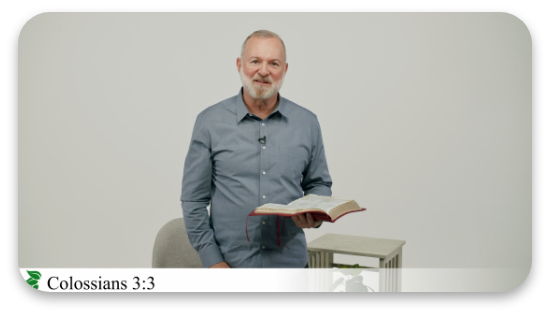
God’s choice looks like you. Rev. Jon Ryan opens in Ephesians 1, where God hath chosen us in him before the foundation of the world, and then works through 1 Corinthians 1, 1 Samuel 16, Genesis 37 and 49, Psalm 78, John 1, Acts 2 and Acts 4 to show that God does not choose by the criteria the world uses. The world esteems physical stature, lineage, education and location. God hath chosen the foolish things of the world to confound the wise, he looketh on the heart rather than the outward appearance, he passed over Eliab for a shepherd boy and Ephraim for Judah, and he took a Galilean fisherman the Sanhedrin called unlearned and ignorant and stood him up before thousands at Pentecost.
Transcript
God Chose Us Before the Foundation of the World
What does God’s choice look like? Let’s turn to Ephesians chapter 1. The simple answer to that question is it looks like you. Sometimes it’s great to just consider that the creator of the heavens and the earth chose you. We heard it in manifestation. Before the foundation of the world, He chose you and He chose me. He knew that we would believe. He knew that we would desire to want to know Him and to understand what He’s called us to be and how it’s all about what His grace will provide for us.
In Ephesians 1 verse 3, we read, Blessed be the God and Father of our Lord Jesus Christ, who hath blessed us with all spiritual blessings in heavenly places in Christ, according as He hath chosen us in Him before the foundation of the world, that we should be holy and without blame before Him in love. That’s quite incredible that God’s chosen us before He even laid the foundations of this world. See, God knows the end from the beginning.
He knew us before we were born. He knew that we’d rise up to be where we are today. Go to 1 Corinthians, please.
How the World Chooses Greatness
1 Corinthians chapter 1. The world has many different criteria in how they choose greatness, how they choose who’s good, who’s not so good in this world that we live in. But God doesn’t have the same criteria. The world will choose according to physical stature or beauty.
The world will choose to follow. I remember when I was, I think it was in the 80s and the 90s, the big saying was, I want to be like Mike, referring to a basketball player, Michael Jordan, that had come upon the scene and done some great things physically. But that’s not what it’s all about.
There’s parts of the world where your lineage plays a big part. In the United Kingdom, the queen has served, I think, since World War II. And her offspring will take the throne when she falls asleep.
Lineage, Education and Where You Are From
So lineage and family line is a big deal in this world that we live in. Intelligence comes into play many times. Your education, where did you go to school? What degrees do you have? How many letters are there after your name? PhD, doctor, all these.
That’s another criteria that the world esteems greatness. And even location, where you’re from. I moved up here to New Hampshire. And even being up here, I’ve been here before. I grew up in this area. And you hear about a place like Podunk, Maine.
It’s not even a real place, but it indicates that nobody good can come from an area like that. It’s this section along the northeastern coast of Maine. But that’s the world’s assessment.
God Hath Chosen the Foolish Things to Confound the Wise
Look what God says here in Corinthians 1. And we’ll pick it up in verse 26. For ye see your calling, brethren, how that not many wise men after the flesh, not many mighty, not many noble are called. But God hath chosen the foolish things of the world to confound the wise. He’s chosen the foolish. He’s chosen not what the world would choose. He’s chosen those that the world would discard many times. The world wouldn’t look twice at. But this is what God has chosen. Now, it doesn’t mean that we’re all foolish. But it’s just God’s choice and his view, his perspective is so much different than man’s perspective. God hath chosen the foolish things of the world to confound the wise. And God hath chosen the weak things of the world to confound the things which are mighty.
And the base things of the world and the things which are despised hath God chosen, yea, and things which are not to bring to nought things that are, that no flesh should glory in his presence. But of him are ye in Christ Jesus, who of God is made unto us wisdom and righteousness and sanctification and redemption, that according as it is written, he that glorieth let him glory in the Lord. That’s God’s perspective.
He wants us to see that he chose us and he made no mistake when he chose you and chose me. Let’s go back to 1 Samuel. 1 Samuel, we’ll look a little bit at the choices that God has made.
Samuel Sent to the House of Jesse to Anoint a New King
And I’m not going to go through in much depth because I’m sure you’re familiar with this. Go to 1 Samuel 16. This is where God has sent the prophet Samuel to choose a new king. The first king, Saul, was actually a very large man. He was head and shoulders above everyone else in the kingdom. But now God has sent Samuel to choose a new king.
And he sent him to the house of Jesse. And Samuel arrives here at Jesse’s home. And let’s read in verse 6. And it came to pass when they were come that he looked on Eliab and said, surely the Lord’s anointed is before him.
But the Lord said unto Samuel, look not on his countenance or on the height of his stature, because I have refused him. For the Lord seeth not as man seeth. For man looketh on the outward appearance, but the Lord looketh on the heart.
The Lord Looketh on the Heart: David Called In from the Sheep
And then Jesse called the rest of his sons to parade before Samuel and see who it is that will be the Lord’s anointed. Look down at verse 10. Again, Jesse made seven of his sons to pass before Samuel. And Samuel said unto Jesse, the Lord hath not chosen these. And Samuel said unto Jesse, are here all thy children? And he said, there remaineth yet the youngest. And behold, he keepeth the sheep.
And Samuel said unto Jesse, send and fetch him, for we will not sit down till he come hither. And he sent and brought him in. Now he was ruddy, and withal of a beautiful countenance, and goodly to look to. And the Lord said, arise, anoint him, for this is he. Then Samuel took the horn of oil and anointed him in the midst of his brethren. And the spirit of the Lord came upon David from that day forward. So Samuel rose up and went to Ramah. So right there we see that God’s perspective is not our perspective. In Isaiah it says, God’s ways are higher than our ways.
God doesn’t look at the outward appearance. God is looking on the heart. It’s not until Acts 13 that we read, as Paul was preaching, that he states that David was a man after God’s own heart. This is who God saw. Look at Genesis, please, Genesis 37. So it’s not stature or outward appearance.
Joseph, His Father’s Love and His Brothers’ Hatred
And we’re going to see if we look at Genesis 37 that it’s really not lineage. Because sometimes even well-meaning people can come to conclusions that are not necessarily correct. In Genesis 37 in verse 2, these are the generations of Jacob. Joseph, being seventeen years old, was feeding the flock with his brethren. And the lad was with the sons of Bilhah and with the sons of Zilpah, his father’s wives. And Joseph brought unto his father their evil report.
Now Israel, that’s Jacob, Israel loved Joseph more than all his children, because he was the son of his old age. And he made him a coat of many colors. And when his brethren saw that their father loved him more than all the brethren, they hated him and could not speak peaceably unto him. Now we’re going to see, again, I’m not going to take the time to look at Joseph’s life in detail, but Joseph had a tremendous knowledge and understanding of the word and great confidence in God and in God’s ability to protect and to lead and to direct him. He had learned this from his father, Jacob, Israel. As Jacob had come there almost 20 years earlier and to the place where his mother, Rebekah, had come from to find a wife.
And he came to Laban’s household, his uncle Laban’s household, and he was deceived. And Laban changed his wages 10 times. And he wanted to marry Rachel. And Laban gave him Leah and on and on. And Joseph, after his 10 brothers were born, Joseph was born of Rachel. And then Joseph’s brother, Benjamin, was born after that.
Joseph Dreamed a Dream
But Joseph dreamed a dream in verse 5. Joseph dreamed a dream, and he told it his brethren, and they hated him yet more. And he said unto them, Hear, I pray you, this dream which I have dreamed. For behold, we were binding sheaves in the field, and lo, my sheaf arose, and also stood upright, and behold, your sheaves stood round about and made obeisance to my sheaf.
And his brethren said unto him, Shalt thou indeed reign over us? Or shalt thou indeed have dominion over us? And they hated him yet the more for his dreams and for his words. And he dreamed yet another dream, and told his brethren and said, Behold, I have dreamed a dream more. And behold, the sun and the moon and the eleven stars made obeisance to me.
And so he’s telling his father and his brothers about these dreams that he’s had, that they’re going to bow down to him. Well, as we know the record, his brothers are so envious, they plot to kill him at one point. And a couple of the brothers intervene, Judah and Reuben, and they save his life.
Sold into Egypt: God Sent Me Here to Save Your Lives
And they said, Let’s not kill him. Let’s sell him to these Midianites that are passing by. And Joseph is sold as a slave into Egypt.
And they come back and tell Israel, tell Jacob that their brother had been killed. And it’s 22 years later, during a famine, that they come to Egypt. And they learned that Joseph, their brother, is indeed the right hand man for Pharaoh, the king of Egypt.
And Joseph, when he sees them, and discloses to them who he is, they are very fearful because they know how they treat him. But he tells them to not be afraid. For God sent me here to save your lives. See, he had gained God’s perspective. Go to Genesis 49. So Israel came with all of his children and their wives, came to Egypt.
The Double Portion Given to Joseph’s Two Sons
And towards the end of Jacob’s life, Israel’s life, he gives a prophecy over each of his sons. Now, a father would leave an inheritance and he’d always give a double portion, typically to the eldest son. But in this case, the double portion was given to Joseph.
So Joseph had two sons, Ephraim and Manasseh. And so among the tribes, the 12 tribes of Israel, Joseph has two. He has Ephraim and Manasseh. Levi takes care of the temple. So he’s not one of the 12 tribes. And as they would move through the desert with Moses during those 40 years, they would camp in alignment with the constellations.
Each of the 12 tribes, Reuben and Simeon and Levi and Judah and Gad and Naphtali and all of them, were connected with the constellation. We know that Leo, the constellation of Leo, was associated with Judah. And so there was the four directions, the prominent tribes of each of the four directions were Dan and two of the tribes to the north. And then to the west was Ephraim and two tribes. To the east was Judah and two tribes. And to the south was Reuben and two tribes.
The Prophecy Over Joseph in Genesis 49
And this is how they would set up camp as they moved through the wilderness. So here, at the end of Israel’s life, he is giving a word of prophecy over each of his sons. And we’re familiar, if we look at Genesis 49 verse 8. We’ve heard this verse many times.
But I want you to look at verse 22. This is the prophecy over Joseph. And the arms of his hands were made strong by the hands of the mighty God of Jacob. From thence is the shepherd the stone of Israel. Wow. Looks like Joseph could have had the Christ come through his loins.
See, so these prophecies, we know that Jesus came from Judah. But it could have been from one of Joseph’s sons because Ephraim and Manasseh were represented in this blessing that Joseph got. Go to Psalm 78, please.
God Refused Ephraim and Chose the Tribe of Judah
Psalm 78. As they moved through the wilderness, and from this day of this blessing that Jacob had over his sons, they held Ephraim in high regard. Matter of fact, when you read about Gideon in Judges 7, Gideon was from the tribe of Manasseh. And at one point, the men of Ephraim came up to him, and Gideon says, who am I compared to you? You’re from Ephraim. So they had in their thinking that Joseph’s sons, Ephraim, were the prominent tribe. But look what it says here in Psalm 78, towards the very end. It’s a long Psalm. Go to chapter 78 verse 67. Moreover, he refused the tabernacle of Joseph and chose not the tribe of Ephraim, but chose the tribe of Judah, the Mount Zion, which he loved.
And he built his sanctuary like high palaces, like the earth which he hath established forever. He chose David also his servant, and took him from the sheepfolds, from following the ewes great with young. And he brought him to feed Jacob his people, and Israel his inheritance. So he fed them according to the integrity of his heart, and guided them by the skillfulness of his hands.
So even lineage wasn’t as man might see it, choosing perhaps Ephraim, and think that’s where the Christ is going to come from. But God chose Judah. See, God so often has to go with Plan B, starting with Adam. He’s had to move to Plan B many, many times. But see, God sees what’s going on.
Can There Any Good Thing Come Out of Nazareth?
Let’s go to the Gospel of John. Gospel of John chapter 1. John 1. See, even location comes into play. Where are you from? And that could have a big determination, or it can have a great sense of valuation in people’s lives, where they come from.
And here in John chapter 1, as Jesus Christ is just beginning to open his ministry, Philip comes in verse 45. Philip findeth Nathanael, and saith unto him, We have found him, of whom Moses in the law and the prophets did write, Jesus of Nazareth, the son of Joseph. And Nathanael, his immediate response, Nathanael said unto him, Can there any good thing come out of Nazareth? Philip said unto him, Come and see.
See, nobody thought there could be anything good come out of Nazareth. Well, how about the greatest man that ever walked the earth comes out of Nazareth. See, so all these criteria that the world propounds are just, they mean nothing to God.
Jesus Christ Calls Fishermen Out of Galilee
That’s not what God’s looking at. Look, if you will, at Acts chapter 2. So Jesus Christ, as we know, assembles these Galileans. And again, this is not a popular place.
This is not a place where anyone would think that there could be men of value that would come from a place like Galilee. He is led by God to this fishing village, where he finds Peter and James and John and Andrew. And he calls these men.
And he sees their lives bigger than certainly they see their own lives. It says, John and James are with their father Zebedee. Perhaps they saw that their lives, they were going to be fishermen. And that’s wonderful. That’s a great profession. But it’s not like fishermen are held in high esteem. They’re blue collar workers. And yet this is who God has sent Jesus Christ to. And he comes there, and he sees more than just fishermen.
What the World Saw in Blue Collar Fishermen
Now, I live here on the coast. And I’ve seen some of these fishermen that have been fishing for most of their lives. And they are, their skin is leathery because they’ve been out in the sun for hours and hours, day after day. Their hands are like baseball mitts. They’re so well worn. And they’re just seen as blue collar workers.
Like I said, just men of skill that are going to work hard for their lifetime. And no doubt Peter and James and John were of that ilk. And I wonder what their conversation would have been as they’re out in the sometimes all night long fishing.
You know, they’re going to talk to one another here. People throw a case of beer on the boat, and they’re going to go out and just have a good time and talk about the ball game or whatever the current news is. But these men were different.
Jesus Shows Peter Who He Really Is
Now, they didn’t see themselves to be the men that God’s called them to be. But when I read the Gospel of John, and I see the language that he used to communicate God’s word, he was an educated man. He knew the word. Peter, in Acts chapter 10, we’re told, had never eaten anything common or unclean. They had great respect for God and for the law. And yet, here, Jesus Christ pulls them out, and he’s going to show them the greatness of who they are.
And he teaches them, and he pours his life into them, so that they can begin to see themselves differently. And even when he’s given his life and been raised from the dead, and is in his resurrected body, we read in John 21 that Peter, once again, is going back to the fishing business.
And he spends another night, all night long, fishing with six or seven others of his friends, until Jesus appears on the shore, and he confronts him and says, Peter, you love me more than these fish. And Peter breaks down as Jesus Christ three times asks him. He’s trying to help him to see who his life really is, who he is for God.
Peter Stands Up Before Thousands on the Day of Pentecost
And in Acts chapter 2, on the day of Pentecost, we’re going to see this fisherman, this man that’s perhaps never stood up and talked to a crowd of more than five or six people at the marketplace. And here, he’s going to stand up in front of thousands. Just after they’ve spoken in tongues, in Acts chapter 2, verse 7, it says, and they were all amazed and marveled, saying one to another, behold, are not all these which speak Galileans? Again, location, man’s assessment. And how hear we every man in our own tongue wherein we were born, Parthians and Medes and Elamites and dwellers in Mesopotamia and in Judea and Cappadocia and Pontus and Asia and Phrygia and Pamphylia and Egypt and the parts of Libya about Cyrene and strangers of Rome and Jews and proselytes, Cretes and Arabians? We do hear them speak in our tongues the wonderful works of God.
And they were all amazed. This covered the breadth from India over to Italy down into parts of Africa. People have come in by the thousands to be at this feast of Pentecost. Perhaps many of them had heard some of what had transpired during this past year. And so they have come from all around. And here it says in verse 14, but Peter, standing up with the eleven, lifted up his voice and said unto them, Ye men of Judea and all ye that dwell in Jerusalem, be this known unto you and hearken unto my words.
And he presents the word, boldly, articulately presents the word to this throng. To the end that when he’s finished sharing these great truths with them, they say in verse 37, now when they heard this, they were pricked in their heart and said unto Peter and to the rest of the apostles, men and brethren, what shall we do? And he goes on with many other words to teach them. And it says about 3000 that day were born again.
Amazing. This fisherman has risen up to be the man that God chose. He’s beginning to see who his life is with God and with God’s grace.
Unlearned and Ignorant Men Before the Sanhedrin
As chapter 3 opens up, we find Peter and John going into the temple and boldly healing this man that had never walked in over 40 years. He had never walked. And they walk in believing who they are. They have the faith of Jesus Christ and they are walking and doing the works of Jesus Christ. And what is their reward for this? Look at Acts chapter 4. Acts chapter 4, verse 13. Peter and John are brought before the Sanhedrin, the religious body.
Verse 13, now when they saw the boldness of Peter and John and perceived that they were unlearned and ignorant men, they marveled and they took knowledge of them that they had been with Jesus. Beholding the man which was healed, standing with them, they could say nothing against it. See man’s assessment, these two fellows, Peter and John, were unlearned and ignorant. They didn’t have the proper training. They didn’t have what it takes to be able to stand up in front of people and declare God’s word, let alone to do the works that they had seen Jesus Christ do. And they couldn’t say anything about it.
But see God didn’t look at them as unlearned and ignorant. God was giving these men that Peter and John were standing in front of an opportunity once again to hear, to see, to have the opportunity to grasp that they can get out from underneath their religious veils and see the light of God that is being presented to them.
You Are God’s Choice: Grow in Grace
Let’s close in 1 Corinthians chapter 15. How do you see yourself? You are God’s choice. I am God’s choice. God called us before the foundation of the world. He called us to be the men and women that we can be. Just like he called Peter, like he called David, like he called Joseph, like he called Judah. These men that we can read about, that we can walk like they walked.
Peter lived this amazing life because Jesus Christ taught him and showed him who he was in God’s eyes. And at the end of his life, he got to write 1 and 2 Peter. And the last verse in 2 Peter chapter 3 verse 18, Peter says, grow in grace. That’s what it’s all about. It’s not who you are by the world standards or who you are in your own eyes. It’s who you are in God’s eyes and the grace that we can walk with.
And in 1 Corinthians 15 and in verse 9, the Apostle Paul, who did have great education, he was brought up at the feet of Gamaliel. But in Philippians 3, he says, I count all that I have gained from the world as just dung compared to the excellency of the knowledge of Christ Jesus my Lord. And in 1 Corinthians 15:9, for I am the least of the apostles that am not meet to be called an apostle because I persecuted the church of God. But by the grace of God, I am what I am. And his grace, which was bestowed upon me, was not in vain. But I labored more abundantly than they all, yet not I, but the grace of God which was with me.
We get the privilege to recognize day after day that it’s all about God’s grace. Not that we’re so great, but that he is so great and we can show people this grace that he has called us to. And we can grow in grace. Thank you very much.
Key Takeaways
- God’s choice looks like you: he chose us in Christ before the foundation of the world, that we should be holy and without blame before him in love.
- The world chooses by physical stature, lineage, education and location, but God hath chosen the foolish things of the world to confound the wise, and the base things and the things which are despised.
- When Samuel looked at Eliab, the Lord said look not on his countenance or on the height of his stature, for man looketh on the outward appearance, but the Lord looketh on the heart.
- Lineage is not the measure either: Ephraim was held in high regard after Jacob’s blessing on Joseph, yet Psalm 78 says God refused the tabernacle of Joseph and chose the tribe of Judah.
- Nathanael asked whether any good thing could come out of Nazareth, and the greatest man that ever walked the earth came out of Nazareth.
- Peter and John were assessed by the Sanhedrin as unlearned and ignorant men, but they took knowledge of them that they had been with Jesus, and about 3000 were born again the day Peter stood up at Pentecost.
Frequently Asked Questions
What does God’s choice look like?
It looks like you. Rev. Jon Ryan opens in Ephesians 1, where God hath blessed us with all spiritual blessings in heavenly places in Christ, according as he hath chosen us in him before the foundation of the world, that we should be holy and without blame before him in love. God knew us before we were born, he knew that we would believe, and he made no mistake when he chose you and chose me.
Why did God choose David rather than Eliab in 1 Samuel 16?
Because God was not judging by appearance. Saul, the first king, was head and shoulders above everyone else in the kingdom, and when Samuel looked on Eliab the Lord said look not on his countenance or on the height of his stature, because I have refused him, for man looketh on the outward appearance, but the Lord looketh on the heart. Seven sons passed before Samuel before the youngest was fetched in from keeping the sheep, and Acts 13 later calls David a man after God’s own heart.
Why were Peter and John called unlearned and ignorant men in Acts 4:13?
That was man’s assessment of them. They were Galilean fishermen, blue collar workers with no formal training to stand up and declare God’s word, and the Sanhedrin judged them by that. But the same verse says the council marveled and took knowledge of them that they had been with Jesus, and beholding the man which was healed standing with them, they could say nothing against it. God never looked at them as unlearned and ignorant.
Scripture References
Ephesians 1; Ephesians 1:3; Ephesians 1:4; 1 Corinthians 1:26; 1 Corinthians 1:27; 1 Corinthians 1:28; 1 Corinthians 1:29; 1 Corinthians 1:30; 1 Corinthians 1:31; 1 Samuel 16:6; 1 Samuel 16:7; 1 Samuel 16:10; 1 Samuel 16:11; 1 Samuel 16:12; 1 Samuel 16:13; Isaiah 55:9; Acts 13:22; Genesis 37:2; Genesis 37:3; Genesis 37:4; Genesis 37:5; Genesis 37:6; Genesis 37:7; Genesis 37:8; Genesis 37:9; Genesis 49:8; Genesis 49:22; Genesis 49:24; Judges 7; Psalm 78:67; Psalm 78:68; Psalm 78:69; Psalm 78:70; Psalm 78:71; Psalm 78:72; John 1:45; John 1:46; Acts 2:7; Acts 2:8; Acts 2:9; Acts 2:10; Acts 2:11; Acts 2:14; Acts 2:37; Acts 2:41; Acts 10:14; John 21; Acts 3; Acts 4:13; Acts 4:14; 1 Corinthians 15; 2 Peter 3:18; 1 Corinthians 15:9; Philippians 3:8; 1 Corinthians 15:10
This text was prepared from the teaching audio. Please verify scripture references against your own Bible.