Overview
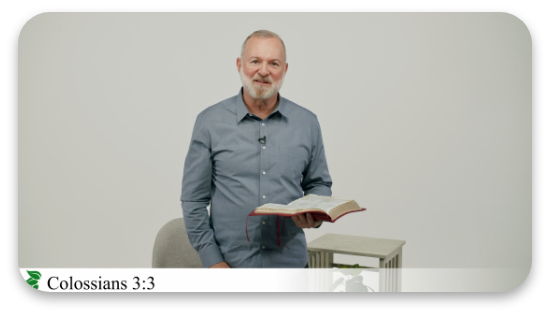
Rev. Tom Knupp examines “One Accord Conference #6: One Accord and Building Mutual Respect” through 1 Peter 1, 1 Peter 3, Acts 2, Acts 9, showing how respect, honor, lord shape a believer’s relationship with God, daily choices, and service to others.
Transcript
Understanding One Accord Conference #6: One Accord and Building Mutual Respect
Wow, look at you. You’re looking at me. I get to look at you for a minute.
You know, it’s life to know him, but it’s an honor to know you. When I was training for the Christian ministry, I had a fellow classmate that I had a problem with. I found it challenging to get along with him because I felt like he always was seeking to be in the spotlight.
And I found that really annoying to the point that it was keeping us from having any sort of relationship. And then I recognized, you know, that can’t be a right attitude on my part. So I went to the Father and just opened my heart.
And the thought occurred to me, you should make him your friend. And with that whisper of divine guidance, it started a dramatic change in my life. You know, Abraham Lincoln once said, I don’t like that man.
I must get to know him better. And when I made the decision to become this man’s friend, then those judgmental thoughts just fell to the wayside. And all of a sudden, those perceived affronts just dropped away.
And then we really started spending time together and enjoying one another’s company. And, you know, recently, after many years, and he’d been serving in different ministries, we hadn’t been in contact for the longest time. But just within the past year, he reached out to me and we got in touch again and found out that he and his wife have been loving God and ministering to people, serving.
And we’ve enjoyed fellowship together after all these years. And I thought, isn’t that a wonderful thing? You know, mutual respect among believers is at the very heart of the Christian experience. And mutual respect can change a heart and it can change a life.
It’s like a breath of fresh air. And then you just take it all in and it brings out the sweetness in our living and in our relationships. As believers, we can take action to build mutual respect in the body of Christ.
The Church of Pistols explains what to do and the Book of Acts shows us how. So what we’re going to be talking about today, I’ll show you in a minute, but my text is going to be the ESV Bible. If you’ve got another Bible, you might enjoy just listening.
The Biblical Foundation
But there are four actions we’re going to examine here for building mutual respect. Reverence your Lord, honor your fellow man, refuse to focus on offenses and yield. Show deference.
I’ll explain what all that’s about. First, referencing your Lord. The Genesis of all mutual respect among us is a heartfelt reverence for our Father, the Lord God, and for his Son, the Lord Jesus Christ.
In 1 Peter 1 17, this is the amplified version. And then in 1 Peter 3 15, but in your hearts, honor Christ, the Lord is holy, always being prepared to make a defense to anyone who asks you for a reason for the hope that is within you. Yet do it with gentleness and respect.
We revere our Father God and we live with profound respect for our Lord and Savior Jesus Christ. And then when we reverence God, we don’t have cause for trepidation. Fear of men drops away and then we can look at men, see them as God sees them with love.
I’d like you to turn to Acts 2 43, where it says, Our God is an awesome God, meaning he inspires overwhelming awe. When awe of God comes on every believer, awesome things start to happen. And that’s the essence of the New Testament phrase, walking in the fear of the Lord.
We focus on the greatness of the work that he’s wrought in Christ in us and among us. In Acts 9 31 is that phrase, fear of the Lord. It says, Now, isn’t that interesting? Because it’s not just one person walking in awe of the Lord.
It’s the whole church walking in awe of the Lord. So when the various members of the body of Christ all walk together in awe of the Lord, they have God in reverence, but they also look on each other with the newfound respect. So I, when I look at you now, I’m not looking at the outer man.
I’m looking at the inner man, your very heart. And you do the same for me. And then the entire church is transformed.
The entire church is built up. Mutual respect begins to take hold both within and outside of the church community. We develop this environment.
It’s God that is behind it where the Lord adds to the church daily, such as should be saved, like it says in Acts 2 47. And that’s really an environment we want to strive towards. Well, how does our reverence for the Lord cause us to respect a brother? Let’s look at Saul and Ananias.
Examples and Spiritual Lessons
You know, sometimes in life, the only reason we can identify why we ever met somebody is because of God. And had the Lord Jesus Christ not appeared to both Saul and to Ananias, it’s doubtful they ever would have known one another or decided to become friends for sure. Their lasting mutual admiration was a direct result of each one of them referencing and obeying God.
And it’s amazing when you see what God orchestrated here because Ananias was well aware of Saul’s hatred for the church. And he told in the vision, he said no uncertain times that that’s the way he felt. And then Saul didn’t make any secret of what he felt about a Jew like Ananias who had converted to Christianity.
So at the time that they met, they were traveling on opposite trajectories. Then the Lord appeared to each of them and the instructions given were perfectly in sync. They were both told where to go and what to do.
They were both told by name the man whose site would be restored and the man who would restore his site. And they were both told by God that Saul, the persecutor of the church, was going to be sent by God to minister to the Gentiles. Well, what else are they going to do? Just follow the instruction, right? And they got the benefit of a mutual respect between them.
In Acts 22, 12, this is many years later when Paul’s making his defense before the people, he’s still talking about Ananias. He says, And one Ananias, a devout man, according to the law, well spoken of by all the Jews who lived there, came to me and standing by me, said to me, Brother Saul, receive your site, and at that very hour I received my sight and saw him. Previously, Paul had seen the Lord Jesus Christ.
Now he’s seeing the man who, because he listened to the Lord Jesus Christ, had boldly come to bring in his deliverance. Do you think Paul ever forgot that? I don’t think so. The mutual respect between the two of them couldn’t be broken because it was forged in reverence for the Lord.
Another way that we build mutual respect is to honor our fellow man, and to honor is to value, esteem, or hold worthy. Jesus Christ, of course, showed us what true honor is by the way that he honored his father. He states in John 849, I honor my father.
So we follow his example to honor the father and the father’s children. You know, when you give somebody honor, it shows them that you believe that they deserve your respect and your attention, maybe even your obedience. When you honor me, I sense that you value me and that you judge me worthy of respect.
Honor is such a valuable thing. God encourages us to have it in our relationships. He talks about honoring parents, husbands, wives, widows, elders, church elders, rulers, and, in case we forgot, all men.
Faith in Action
So 1 Peter 2, 17 in the Amplified says, show respect for all people, treat them honorably, love the brotherhood of believers, fear God, honor the King. When we honor God and then honor our fellow man, it leads to an environment of mutual respect. Let’s go to Acts 2 47.
In Acts 2 47, it says, praising God and having favor, which is sharing grace with all the people. When we share grace, we show honor to our brothers and sisters in Christ. And the word grace is charis, and it literally means an action of inclining towards one another.
I incline towards you, you incline towards me. And that’s a reciprocal action going on. Slide 2 is about sharing grace produces mutual respect.
So here we’ve got a triangle. If you can imagine the two sides of the triangle, here’s me, here’s you. I’m leaning your way, you’re leaning my way.
I give you honor, you receive it as respect. And it’s two-way street. Sometimes I’m going to be giving the honor, sometimes I’ll be receiving your respect.
But the basis is sharing grace. When we share grace with one another, we give honor and we receive respect. And the benefit is a mutual respect going back and forth.
Isn’t that an interesting and beautiful dynamic? We give honor to God for what he brought in the heart and soul for a brother or sister when he placed his spirit in them. And I love Romans 12-10 in the ESV. It’s very short.
It says, outdo one another in showing honor. Doesn’t that just say it all? Outdo one another in showing honor. So honoring our fellow man can really change our viewpoint, especially when it’s somebody that we normally wouldn’t honor.
So if we think about Paul and Titus, that’s a good example. You know, it’s not really a coincidence at all that the name Titus means honorable. And Paul was honoring Titus from the day of his conversion.
Walking in Love and Confidence
He said, Titus, my true child from a common faith. And when you think about who Paul was, he was the great defender of Judaism. It’s really astonishing that he should accept a full-blooded Greek like Titus the way that he did.
But it showed the great transformation in Paul’s heart and life. Paul had decided to change what he valued. Think about what it would have been like for Titus going to the Jerusalem Council.
The Judaizers had been hot on their tail. And they had essentially been saying, you know, Titus, you’re sorely mistaken if you think that you were born again. And this Paul who says that you are, he doesn’t know what he’s talking about.
And so here he’s going to the Jerusalem Council in this situation where there’s some genuine hostility. Well, what gave Titus the courage to be able to go there and to have his head up high knowing that he was going to be the living example of a Gentile Christian before this group? Well, I’m sure one great encouragement to him was the genuine respect he enjoyed from Paul. Let’s read about this in Galatians 3. We’ll be in Galatians 3, verse 1. Then after 14 years, I went up again to Jerusalem with Barnabas, taking Titus along with me.
I went up because of revelation and set before them, though privately before those who seemed influential, the gospel that I proclaim among the Gentiles in order to make sure I was not running or had not run in vain. But even Titus, who was with me, was not forced to be circumcised, though he was agreed. Yet because of false brothers secretly brought in who slipped in to spy out our freedom that we have in Christ, Jesus, so that they might bring us into slavery, to them we did not yield in submission even for a moment.
Well, Paul held Titus in esteem, and he wouldn’t allow them to force him to be circumcised because Titus was standing not for slavery but for the truth of the gospel. So, like Paul and Titus, when we honor our brothers and sisters in Christ, because God honored them, when he put his spirit in each and every one of them, then we have a lasting mutual respect. Another thing that we need to learn to do to build an environment of mutual respect is to refuse to focus on offenses.
Offenses will come and wrongs will happen, but we can choose to look beyond them to him who knows and sees it all. And offense is a dishonorable act. As believers, we repudiate the offense, but not the person committing it.
Jesus on the cross is our primary example of this, as it says in Hebrews 12, and I love this passage, what it teaches us. Hebrews 12, verse 2, looking to Jesus, the founder and perfecter of our faith, who for the joy that was set before him, endured the cross, despising the human perpetrators of his shame. No.
What did he despise? He despised the shame and is seated at the right hand of the throne of God. Consider him who endured from sinners such hostility against himself, so that you may not grow weary or faint hearted. Jesus on the cross simply didn’t focus on the man who were inflicting his sufferings, but instead he directed his righteous anger to the adversaries’ attacks that were inciting the hostility and attempting to cause shame.
Applying the Teaching in Daily Life
So we can do the same if we are slighted personally or collectively. We can choose to take no account of the suffered wrongs and instead count them as insignificant looking away to the Father and the Lord Jesus Christ. Now, two individuals who had to overcome offense, great example in the book of Acts, are Barnabas and Saul.
So how was it that Barnabas ended up being the first acknowledged leader in the Church of Jerusalem to advocate for the inclusion and acceptance of Saul as a genuine Christian? How did he become so convinced? Barnabas is actually the earliest named Christian in the book of Acts other than the Twelve, and he would have undoubtedly known fellow believers that Saul had persecuted to the death. Look at what Paul says himself about it many years later in Acts 26. I myself was convinced that I had to do many things in opposing the name of Jesus of Nazareth, and I did so in Jerusalem.
I not only locked up many of the saints in prison after receiving authority from the chief priests, but when they were put to death, I cast my vote against them. And I punished them often in all the synagogues and tried to make them blaspheme, and in raging fury against them, I persecuted them even to foreign cities. Well, how could Barnabas have overlooked that? I believe there has to be just one factor that would have caused Barnabas to be the one who realized he really needed to forgive Paul, and that would have been God’s direct prompting, and that that would have opened the door to their marvelous, harmonious relationship.
And that’s why he was able to then go and present Saul to the leadership in Jerusalem, and they accepted him. What a turning point for the entire church because of refusing to focus on offenses. When it comes to showing deference, this is our fourth and final point, yielding or showing deference.
When it comes to showing deference, I think about my brother Jim, who used to live at a marina in South Carolina. And Jim had acquired an old pontoon boat for cruising up and down the inner coastal waterway. Well, our cousin Charlie lives in South Florida, and he’s got a sailing charter.
So Charlie was up visiting Jim, and Jim’s walking him out to the dock. He said, you know, Charlie, I decided to name this boat after you. And Charlie was clearly impressed, and he said, really? And my brother said, yeah, I really did.
So they get out there to the boat, and he looks on the side of the boat, and there, in boldface letter, was the boat’s name after you. Well, I’m not sure that that teaches a lot about respect, but maybe showing deference, I don’t know. The opposite of showing deference is taking precedence.
Taking precedence is me first. Showing deference is you first, right? And that’s what it is to yield, you first. One of the most challenging life lessons that we have is to learn to yield.
When we’re little kids, what’s the first thing we learn to love to say? No, right? It’s my way or the highway. Well, yielding teaches us that that’s not so, that we all have the same measure, the faith of Jesus Christ. So we should remember, as we strive to build mutual respect, that our neighbor is more important than our opinion or preference.
And we get in the habit of assigning greater value to the other person than to ourselves. We show deference to the other person, freely relinquishing our own prerogatives. Nobody’s higher than another in God’s plan, and then if anyone’s going to exalt you, let it be God.
A Life Shaped by God’s Word
Humble yourself, like Kurt was sharing with us before him, and you won’t feel the need to advocate for yourself. So instead of insisting on a strongly held opinion or preference, be willing to yield to one another. Christ showed us how to put our neighbor ahead of ourselves in Luke 22, 26.
But not so with you, rather let the greatest among you become as the youngest and the leader as one who serves. And then Ephesians 5, 21, submitting to one another out of reverence for Christ. So out of reverence, we show deference.
The example of this is Peter and Paul, and Peter was the great apostle to the circumcised and Paul to the uncircumcised. And at the Jerusalem Council, they showed deference, one for another. Paul didn’t have to go to Jerusalem and speak to the apostles and elders to find out what to do about the conversion of the Gentiles.
But he showed deference to Peter and the apostles by going there. Peter, in turn, was like the de facto leader. He had been with Jesus from the earliest days, and he was actually the first one to take the ministry to the Gentiles, which was later Paul’s ministry, so Peter could claim all the seniority rights.
But in this situation, they worked with one another, and they got to God’s solution in the final analysis. And this is in Acts 15, verse 6. The apostles and elders were gathered together to consider this matter. And after there had been much debate, Peter stood up and said to them, Brothers, you know that in the early days, God made a choice among you that by my mouth the Gentiles should hear the word of the gospel and believe.
And God, who knows the heart, bore witness to them by giving them the Holy Spirit just as he did to us, and he made no distinction between us and them, having cleansed their hearts by faith. Now, therefore, why are you putting God to the test by placing a yoke on the neck of the disciples that neither are fathers, nor we have been able to bear, but we believe that we will be saved through the grace of the Lord Jesus just as they will? All right, so let’s look again at that first slide, if we can, about the benefit of mutual respect. The benefit of giving honor and receiving respect is mutual respect.
And we’ve seen examples of four practical actions we can take to build respect. Reverence your Lord, honor your fellow man, refuse to focus on offenses, and yield or show deference. And then the next slide, what we’re after ultimately is an environment of mutual respect.
Acts 9.31, so the church throughout all Judea and Galilee and Samaria had peace and was being built up and walking in the fear or awe of the Lord and in the comfort of the Holy Spirit, it multiplied. It’s a comfort to know not only that I have God’s Spirit living within me, but that you do too, and that we can walk together, standing in awe of our Heavenly Father and the Lord Jesus Christ. That kind of mutual respect is truly unshakable.
Love you.
Key Takeaways
- The Genesis of all mutual respect among us is a heartfelt reverence for our Father, the Lord God, and for his Son, the Lord Jesus Christ.
- Slide 2 is about sharing grace produces mutual respect.
- All right, so let’s look again at that first slide, if we can, about the benefit of mutual respect.
- You know, mutual respect among believers is at the very heart of the Christian experience.
- As believers, we can take action to build mutual respect in the body of Christ.
Frequently Asked Questions
What is the main message of “One Accord Conference #6: One Accord and Building Mutual Respect”?
Rev. Tom Knupp examines “One Accord Conference #6: One Accord and Building Mutual Respect” through 1 Peter 1, 1 Peter 3, Acts 2, Acts 9, showing how respect, honor, lord shape a believer’s relationship with God, daily choices, and service to others.
Which scriptures are central to this teaching?
The teaching draws especially from 1 Peter 1, 1 Peter 3, Acts 2, Acts 9, Acts 22.
How can believers apply this teaching?
As believers, we can take action to build mutual respect in the body of Christ.
Scripture References
1 Peter 1; 1 Peter 3; Acts 2; Acts 9; Acts 22; John 849
This text was prepared from the teaching audio or source document. Please verify scripture references against your own Bible.