Overview
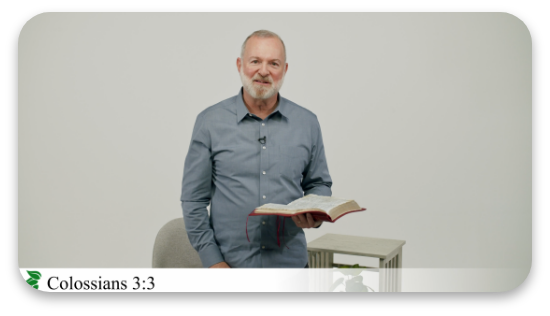
Rev. Tom Knupp examines “Living and Sharing God’s Grace 2024 #2: Learning and Embracing Grace” through Acts 2, Acts 1, John 13, John 1, showing how christ, lord, grace shape a believer’s relationship with God, daily choices, and service to others.
Transcript
Understanding Living and Sharing God’s Grace 2024 #2: Learning and Embracing Grace
This weekend I’ve been looking forward to learning how to experience God’s grace with others — specifically you, my brothers and sisters. So let’s make time to talk if we haven’t met yet, OK?
CONTINUING STEDFASTLY IN THE APOSTLES’ DOCTRINE Today we’ll be looking at how the disciples who were born again on Pentecost lived and shared grace with one another. Our keynote passage for this morning’s session is Acts 2:42-43: Acts 2:42,43: And they continued stedfastly in the apostles’ doctrine and fellowship, and in breaking of bread, and in prayers. And fear [respect] came upon every soul: … Our speakers this morning will be looking at the things listed here, in which the believers continued steadfastly: the apostles’ doctrine, fellowship, breaking of bread, prayers, and finally, mutual respect. This first teaching is about the first thing the disciples did: they continued steadfastly in the apostles’ doctrine.
LEARNING AND EMBRACING GRACE My objective for this teaching is to answer two questions: • What was the apostles’ doctrine? and • What does it mean to continue steadfastly in that doctrine? Let me tell you at the outset that the answers I propose are these: • The apostles’ doctrine was learning grace. • Continuing steadfastly in the doctrine was embracing grace. For that reason, I have entitled this presentation “Learning and Embracing Grace.”
TEACHING, THE BASIS OF LIVING AND SHARING GRACE The word “doctrine” in Acts 2:42 is the word “teaching.” Teaching is the basis for living and sharing God’s grace. The Greek word “to teach” is διδάσκω didaskō, which literally means “to cause to learn.” If to teach is to cause to learn, the only way a teacher can reach his students is if he has a willing audience, because only a learner can decide to learn. Like a gardener watering his garden, a teacher can’t make the plants grow; he can only help to make the conditions favorable for growth. It’s like the old adage, “You can lead a horse to water, but you can’t make him drink.” A teacher leads his students to the truth, but only they can decide to adopt it as a lifestyle. As an instructor, I can’t force my students to learn, because learning is an action they must take up within their own minds. But I can promote an environment that is favorable to learning, and then it’s up to them where they want to take it.
JESUS CHRIST THE MASTER TEACHER Jesus Christ was the Master, which means Teacher. Truly, he was the Master Teacher of all time. How did he teach? By demonstrating, and also by explaining. Acts 1:1: The former treatise have I made, O Theophilus, of all that Jesus began both to do and teach, “Do and teach.” I find it intriguing that “to do” is listed first. Often, we think in terms of learning and then doing. In contrast, Christ’s paradigm was to first show and then tell. “Show and tell” was how Christ communicated to his disciples what grace is. It was up to him to display it, but it was up to them to embrace it. John 13:15: For I have given you an example, that ye should do as I have done to you. How long do you think these words echoed in their ears?
The Biblical Foundation
THE FOCUS OF THE APOSTLES’ TEACHING: GRACE Getting back to our theme passage for the morning, what, may we ask ourselves, was the focus of the apostles’ teaching? Grace — not works. As it says in Acts 2:47: Praising God, and having favour [Greek χάρις charis, grace] with all the people. Grace was not just something they were to keep to themselves. All the people were to share grace! This indeed was Good News as had never been heard before. The Age of Grace had begun for one and all! Were the apostles the first ones to teach about grace? No. But they had all experienced it, and they were qualified by their apprenticeship with the Master to demonstrate what it means to live it. This is why their teaching involved more than just learning about grace; it involved embracing it as a lifestyle. Their aim was to help their students learn to embrace grace. To do this took preparation. You see, Grace 101 didn’t start on Day 1. God the Father and Christ the Son had been laying the groundwork for teaching God’s people about grace in all its glorious goodness long before the first day of the Age of Grace. Take a moment to consider all that God did to prepare His people to make the switch to grace after centuries of being steeped in the law with all of its works. This was no small task — but none too formidable for our great, big, magnanimous God. There was so much to take in in the days following Christ’s crucifixion and resurrection. Forty days isn’t much more than a month, and it was a daily stretch for the apostles and disciples just to try to begin to understand the significance of what had taken place up to that point. Imagine how much more they could have been challenged when it began to sink in after Christ’s ascension that his time on earth was now over and his first coming had actually come to a close. It would have been easy for the apostles, as the leaders left behind, to feel unprepared. But in truth they had had the greatest preparation possible. Why was this the case?
THE APOSTLES’ EXPERIENCE OF GRACE The apostles had a once-in-creation opportunity to live with the embodiment of grace, the Lord Jesus Christ, for one very full year. Can you imagine what that would have been like? John 1:14 and following captures their experience of grace beautifully. Just listen while I read it to you from the Weymouth New Testament. John 1:14,16-18 [WNT]: And the Word came in the flesh, and lived for a time in our midst, so that we saw His glory — the glory as of the Father’s only Son, sent from His presence. He was full of grace and truth. For He it is from whose fulness we have all received, and grace upon grace. For the Law was given through Moses; grace and truth came through Jesus Christ. No human eye has ever seen God: the only Son, who is in the Father’s bosom—He has made Him known. The Master was the fullness of grace and truth in the flesh, living with them, in their very midst. Always in the Father’s bosom, as His only Son he made the Father known on a daily basis. What greater teaching, what greater example, could the apostles have had? When will such a firsthand mentoring experience ever be surpassed? Just think for a moment about all the times the apostles were eyewitnesses of God’s grace during their earthly sojourn with the Master, starting with his baptism and continuing all the way up until his ascension. They saw him feeding the thousands, calming the sea, healing the sick, cleansing the lepers, raising the dead, and casting out devils. On top of all this, when he was raised from the dead he appeared to them in his resurrected body, time and again.
What’s astonishing to realize is that almost all of Christ’s signs, miracles and wonders occurred in the presence of all twelve and not just a select few. Surely the Lord had a purpose in including the entire group. He wanted them to be able to experience grace collectively. This all became even more meaningful in light of the individual apostles’ personal experience of forgiveness. The Gospels state that at the time of Jesus’ arrest in the garden, they all fled. We all know of Judas’s second thoughts and Peter’s repeated denials, but all twelve had ignominious actions to regret in the wake of the crucifixion. Peter wept bitterly when the rooster crowed, but none of the rest could take comfort in having done any better than he did in supporting their Master in his hour of greatest need. Yet what did Jesus do when he was raised from the dead? He appeared to them in his glorious new body, not to condemn but to strengthen and confirm. What love, what mercy, what forgiveness beyond measure!
THE APOSTLES’ FIRSTHAND EDUCATION IN GRACE Turn, if you will, to Luke 4. Truly Jesus gave the apostles a flawless demonstration of grace from start to finish.
Start: Announcement of the Year of Grace At the start of his ministry, the Master Teacher began to expound grace to them from the Scriptures referencing Isaiah 61:1 and 2. Luke 4:18,19: The Spirit of the Lord is upon me, because he hath anointed me to preach the gospel to the poor; he hath sent me to heal the brokenhearted, to preach deliverance to the captives, and recovering of sight to the blind, to set at liberty them that are bruised [are not all these things illustrations of God’s grace?], To preach the acceptable year of the Lord [Louis Segond’s French Bible renders this: “To publish the Lord’s year of grace.”] Jesus Christ’s mission was to publish the Lord’s year of grace! Watching and living with the Master, day in and day out, the apostles saw grace showcased in all of its facets, both doctrinal and practical. Their preparation to teach was perfect.
Examples and Spiritual Lessons
Finish: Prophetic Confirmation of All Christ Accomplished At the close of his ministry, the Master Teacher again confirmed to them from the Scriptures all the things prophesied that he had accomplished in his life on earth by God’s grace. They heard from his own mouth just what his accomplished works were! Luke 24:44-48: And he said unto them, These are the words which I spake unto you, while I was yet with you, that all things must be fulfilled, which were written in the law of Moses, and in the prophets, and in the psalms, concerning me. Then opened he their understanding, that they might understand the scriptures, And said unto them, Thus it is written, and thus it behoved Christ to suffer, and to rise from the dead the third day: And that repentance and remission of sins should be preached in his name among all nations, beginning at Jerusalem. And ye are witnesses of these things. To put it plainly, “You’re a witness of God’s grace; so go, show and tell.”
THE APOSTLES’ CONTINUING EDUCATION IN GRACE Please turn to John 16. Great as his example was, Jesus knew a day was coming when he would no longer be present with them to teach them the truth. Nevertheless, the Teacher had a plan that would enable his disciples to continue learning the truth after his departure. The Comforter, the spirit of truth would teach them everything they needed to know during the coming Age of Grace. John 16:7: Nevertheless I tell you the truth; It is expedient for you that I go away: for if I go not away, the Comforter will not come unto you; but if I depart, I will send him [it] unto you.
John 16:13: Howbeit when he [it], the Spirit of truth, is come, he [it] will guide you into all truth: for he [it] shall not speak of himself [itself]; but whatsoever he [it] shall hear, that shall he [it] speak: and he [it] will shew you things to come. John 14:26: But the Comforter, which is the Holy Ghost [spirit], whom the Father will send in my name, he [it] shall teach you all things, and bring all things to your remembrance, whatsoever I have said unto you. After Christ ascended, the role of the Comforter as teacher was crucial in establishing exactly what Jesus accomplished, and who Jesus was. Just think of the Gospels as an example. If the Gospels were man’s idea, you’d think Jesus would have made sure to assign disciples as stenographers, and that, in the days before shorthand even existed! “Could you repeat that, Jesus? I couldn’t get that down in time.” But the Gospels were never conceived as an exhaustive, real-time history, as John confesses at the end of his. The scholarly consensus is that all four Gospels were written somewhere between three and five decades after the ascension. For you seniors out there, can you offer a verbatim, blow-by-blow account of everything that was said to you half a century ago? Some things, maybe; but not all. What if you hadn’t even been there, as in the case of Luke? Only the spirit of truth could have brought back all those incidents and truths from the life of Jesus in all their glorious detail, rendered perfectly to deliver to mankind today the full gospel of the grace of God. What a teacher the evangelists had in the spirit of truth!
REALIZING WHO CHRIST IS IN THE AGE OF GRACE Another great example of the workings of the spirit of truth is what we’re examining today. For the first teaching in the Age of Grace, Peter needed no earthly tutor to learn what he should teach, for the spirit of truth was his teacher. The spirit revealed to Peter that hitherto Jesus should be known as both Lord and Christ. While on earth, Jesus had been known to the disciples by many names: Jesus, Lord, Master, Son of God, Son of Man, and Christ, to name a few. However, never did they address him as “Lord Jesus” or “Jesus Christ” in the Gospels. Evidently, something had changed with the ascension that required a new way to address him. The name Jesus was a common male name in Israel. Now that Jesus of Nazareth was no longer physically present on earth, other titles would be required to mark him out as what Acts repeatedly calls “this Jesus.”
Faith in Action
“THIS JESUS” — BOTH LORD AND CHRIST Let’s take a look at the four occurrences of the signpost “this Jesus” in Acts 1 and 2. Each instance is a stake in the ground advertising that Jesus of Nazareth is the man we’re talking about, and not any other. We’ll elaborate on each of these four significant signposts. “This Jesus” Ascended The moniker “this Jesus” first appears on the day of the ascension. Acts 1:10,11: And while they were gazing into heaven as he went, behold, two men [angels] stood by them in white robes, and said, “Men of Galilee, why do you stand looking into heaven? This Jesus, who was taken up from you into heaven, will come in the same way as you saw him go into heaven.” Signpost #1: The Ascension Our 1st signpost deals with the ascension: • “This Jesus” was taken up from the disciples into heaven, where he will remain until returning to earth the same way.
“This Jesus” Was Crucified and Resurrected On Pentecost, Peter repeatedly referred to “this Jesus” to emphasize the singular nature of what Christ had accomplished. Listen now as I read the following two verses to you from the ESV.
Acts 2:23,32 [ESV]: this Jesus, delivered up according to the definite plan and foreknowledge of God, you crucified and killed by the hands of lawless men. This Jesus God raised up, and of that we all are witnesses. Signposts #2 & #3: The Crucifixion and the Resurrection Our 2nd and 3rd signposts deal with the crucifixion and the resurrection: • “This Jesus” was crucified by men; and • “This Jesus” was resurrected by God.
“This Jesus” is Both Lord and Christ In leading his hearers to a point of decision, Peter again calls him “this Jesus” to make it crystal clear exactly who he’s referring to. Acts 2:33-36: Therefore being by the right hand of God exalted, and having received of the Father the promise of the Holy Ghost, he hath shed forth this, which ye now see and hear. For David is not ascended into the heavens: but he saith himself, The LORD said unto my Lord, Sit thou on my right hand, Until I make thy foes thy footstool. Therefore let all the house of Israel know assuredly, that God hath made that same Jesus [literally, “this Jesus”], whom ye have crucified, both Lord and Christ. Signpost #4: The Name Above All Names Our 4th and final signpost deals with the name above all names. • “This Jesus” is both Lord and Christ. Why is he Christ? Because God gave him the name “Christ” when he was crucified and resurrected in recognition of his selfless sacrifice. “This Jesus” — Jesus Christ — is clearly the “Holy One” that David prophesied of, affirming that “the LORD” — the LORD God — would not let him see corruption [the decay of the grave — because it would have been unjust for an innocent man to suffer that fate]. Why is he Lord? Because God gave him the name “Lord” when he ascended in recognition of his sinless life. “This Jesus” — the Lord Jesus — is clearly the “my Lord” that David prophesied of, having ascended to be seated in the heavens. “The LORD” — the LORD God — has seated him at His right hand, awaiting the day when He will make his enemies his footstool. So, then, Jesus’ title is Lord and Jesus’ title is Christ. His is the name above all names, case closed.
REITERATION OF WHO THE LORD AND CHRIST IS Under the tutelage of the holy spirit, Peter testified to the people who God is, and proved from the Scripture who the Lord and Christ is. What about the rest of the apostles? Surely, they did the same. Have you ever asked yourself what message the other apostles were speaking when they spoke in tongues on Pentecost? It says in Acts 2:11: Cretes and Arabians, we do hear them speak in our tongues the wonderful works of God. What do you think these “wonderful works of God” were? Were the apostles extolling the Creator for His beautiful creation, expounding on the Word written in the stars, singing songs of praise from the Psalms, reciting wise sayings from Proverbs — or something even greater?
Walking in Love and Confidence
Personally, I believe there is no more likely message of their speaking in tongues that day than to reiterate in the exact same words as Peter what he asserted in his closing affirmation: “God hath made ‘this Jesus’ both LORD and CHRIST.” Isn’t that among the most wonderful of the works of God? Whatever the content of their message was, God would have undoubtedly wanted it to lay a foundation for their teaching post- Pentecost. We can be assured that the thrust would have been something akin to Romans 15:6: That ye may with one mind and one mouth glorify God, even the Father of our Lord Jesus Christ. God would have made sure that their blended, harmonious voices rose up to Him as a single, joyous, undeniable chorus, confirming the message of salvation and bringing glory to Him. Perfect prayer, perfect praise. Perfect Father, perfect Son!
TWO LORDS — GOD AND CHRIST Part of the package of grace delivered on Pentecost was to clearly distinguish between the Father and the Son. Though both are called “Lord,” they each have their peculiar and particular, distinct identities. Take a moment to go back now and look again at Acts 2:34, directing your focus to the two words “Lord” in that verse. • In the King James, when the word LORD is written in small caps (as in the first occurrence in the verse), it refers to God. o In other words, when it’s God, it’s spelled out in all caps: capital L – capital O – capital R – capital D. • When the word Lord is simply capitalized (as in the second occurrence in the verse), it refers to His Son, the Christ. o In other words, when it’s Christ, only the “L” is capitalized: capital L – lowercase o – lowercase r – lowercase d. This brings to mind a humorous anecdote. Unlike me, who grew up across from the Canadian border, my oldest brother Jim was a son of the South and loved all things Southern, including jokes that poked fun at a Southern accent. He loved to tell the story of a little old lady from South Carolina who was overheard praying in a local chapel: “Lard, I love thee so much, I’m gonna spell your name, just gonna spell your name. L – A – R – D, how I love thee, LARD.” (Apologies to my fellow Southerners.) Turn back in your Bibles to Psalm 110. The same truth can be seen by looking at the underlying Hebrew words in the Old Testament verse from which Peter was quoting, which is Psalms 110:1: The LORD [note the all caps, representing Hebrew Ӭ ȅῴ Ӭ ɜᾠYahweh, Jehovah] said unto my Lord [note the upper- and lowercase, representing Hebrew ӣợӸӰῲῴadōn, master], Sit thou at my right hand, until I make thine enemies thy footstool. Could the differing identities of the two Lords be made any clearer? The Lord Jehovah (the LORD God) says to my master (the Lord Christ), “Pull up a chair and have a seat next to me.” So what does that mean to us? That now and forevermore, God is the LORD; and Christ is to be my Lord or master.
JESUS IS THE CHRIST AND THE CHRIST IS JESUS Peter’s sermon is proceeding logically, step by step. He has just demonstrated that a correct understanding of the Old Testament is that God is the LORD and the Christ is my Lord. Another question has yet to be resolved: “Who IS ‘this Jesus’?” It didn’t take long for Peter to get to the answer: “God has made him both Lord and Christ, this Jesus.” Now those who are gladly receiving the message are starting to put two and two together. And in the end, it all adds up to salvation! Years later Paul distilled the same truth into this pointed assertion: “’This Jesus’ is the Christ.” Hear his contention: Acts 17:3 [which I will read to you from the ESV]: “This Jesus, whom I proclaim to you, is the Christ.”
Of course, that was not the only question on people’s hearts and minds. Not only were folks asking “Who is ‘this Jesus’?”, but also “Who is the Christ?” The twelve clearly taught that if Jesus is the Christ, then the Christ is Jesus. One statement equals the other. The beauty and symmetry of this equation is that if the Christ is Jesus, then no one else — past, present or future — can be the Christ. Jesus is the ONE AND ONLY Christ! The two messages speak with one voice: Jesus is the CHRIST, and the Christ is JESUS. Listen to what the apostles taught in Acts 5:42 [also from the ESV]: And every day, in the temple and from house to house, they [the twelve apostles] did not cease teaching and preaching that the Christ is Jesus. Implicit in the message that the Christ is Jesus is the realization that the Christ is their contemporary! — the very one promised long ago. How impactful is that? To learn that in your lifetime, the Christ has come, bringing redemption to all mankind, and that that promise is yours and your children’s. Now that’s a gospel of grace that goes straight to the heart! “Thank you, Lord.” No wonder such excitement spilled over into the community of believers, sparking animated conversations across town and causing word to spread far and wide.
THE NAME OF JESUS CHRIST Please turn to Philippians 2. Earlier we saw how that one of the reasons the Lord Jesus sent the Comforter was to fill the learning gap caused by his absence as the Master Teacher. But that was not all. He also empowered the disciples to act on his behalf to bring about deliverance by praying to the Father in the name of the Son.
Applying the Teaching in Daily Life
Greater Than Ever While he was on earth, Christ had already authorized the twelve to help carry out his mission by acting in his name to bring deliverance to the people. However, afterward, when God raised him up and seated him at His right hand, Christ’s name took on an even greater dignity, honor and authority than it had ever had before. Paul describes this investiture in Philippians 2:8-11 [Weymouth NT — just listen as I read]: And being recognized as truly human, He humbled Himself and even stooped to die; yes, to die on a cross. It is in consequence of this [the crucifixion — Christ’s giving up his very life for the redemption of all mankind] that God has also so highly exalted Him, and has conferred on Him the Name which is supreme above every other, in order that in the Name of JESUS every knee should bow, of beings in Heaven, of those on the earth, and of those in the underworld, and that every tongue should confess that JESUS CHRIST is LORD, to the glory of God the Father. For Man’s Spiritual Wholeness We return to Acts 2. No wonder that the conclusion of Peter’s sermon highlighted the name of Jesus Christ as the touchpoint for man’s spiritual wholeness. Acts 2:38: Then Peter said unto them, Repent, and be baptized every one of you in the name of Jesus Christ for the remission of sins, and ye shall receive the gift of the Holy Ghost [spirt]. This delegated authority is the means by which we receive salvation. For Man’s Physical Wholeness The name of Jesus Christ also became the touchpoint for man’s physical wholeness.
Acts 3:6: Then Peter said, Silver and gold have I none; but such as I have give I thee: In the name of Jesus Christ of Nazareth rise up and walk. This delegated authority is the means by which we receive healing. What unmitigated boldness we can have acting as grace-filled agents of Christ’s accomplished work! We can be overcomers in all things because our Lord reigns supreme! And we have every right to use his name, for he entrusted us with it.
LORD JESUS + JESUS CHRIST = THE LORD JESUS CHRIST As we have seen, the apostles faithfully expounded on Jesus’ two central identities: the Lord Jesus, and Jesus Christ. When you put the two together, what do you get?
Lord Jesus + Jesus Christ = LORD JESUS CHRIST When Peter reported the conversion of the Gentiles to the Church at Jerusalem, he used the full, combined title “Lord Jesus Christ” to prove beyond a shadow of a doubt that these uncircumcised were in fact born again. Acts 11:17: Forasmuch then as God gave them the like gift as he did unto us, who believed on the Lord Jesus Christ; what was I, that I could withstand God? They had believed on the Christ, confessing him as Lord. Nothing else could be required of them, not even circumcision. “Who [then] was I that I could stand in God’s way?” Fully understanding the import of these truths, what should we teach when we speak of Jesus to others? The same things that were taught and practiced by all the apostles, including Paul. We find him observing these truths right up to the end of his life. Acts 28:30, 31: And Paul dwelt two whole years in his own hired house, and received all that came in unto him, Preaching the kingdom of God, and teaching those things which concern the Lord Jesus Christ, with all confidence, no man forbidding him. As we learn and embrace grace, we preach and teach Jesus as Lord, and Jesus as Christ; nothing more, nothing less. May our lives be a witness to the one and only Lord Jesus Christ, and may we continue to preach and teach the message of God’s grace, declaring to a dying world who he truly is with all boldness and without hindrance.
Scripture references Acts 2:42-43; Acts 2:42; Acts 1:1; John 13:15; Acts 2:47; John 1:14; Luke 4; Isaiah 61:1; Luke 4:18; Luke 24:44-48; John 16; John 16:7; John 16:13; John 14:26; Acts 1; Acts 1:10; Acts 2:23; Acts 2:33-36; Acts 2:11; Romans 15:6; Acts 2:34; Psalm 110; Psalms 110:1; Acts 17:3; Acts 5:42; Philippians 2; Philippians 2:8-11; Acts 2; Acts 2:38; Acts 3:6; Acts 11:17; Acts 28:30
Key Takeaways
- THE APOSTLES’ EXPERIENCE OF GRACE The apostles had a once-in-creation opportunity to live with the embodiment of grace, the Lord Jesus Christ, for one very full year.
- For the Law was given through Moses; grace and truth came through Jesus Christ.
- The Master was the fullness of grace and truth in the flesh, living with them, in their very midst.
- Watching and living with the Master, day in and day out, the apostles saw grace showcased in all of its facets, both doctrinal and practical.
- REALIZING WHO CHRIST IS IN THE AGE OF GRACE Another great example of the workings of the spirit of truth is what we’re examining today.
Frequently Asked Questions
What is the main message of “Living and Sharing God’s Grace 2024 #2: Learning and Embracing Grace”?
Rev. Tom Knupp examines “Living and Sharing God’s Grace 2024 #2: Learning and Embracing Grace” through Acts 2, Acts 1, John 13, John 1, showing how christ, lord, grace shape a believer’s relationship with God, daily choices, and service to others.
Which scriptures are central to this teaching?
The teaching draws especially from Acts 2, Acts 1, John 13, John 1, Luke 4.
How can believers apply this teaching?
Believers can receive the truth presented, verify it in Scripture, and put it into practice with faith, humility, love, and consistent action.
Scripture References
Acts 2; Acts 1; John 13; John 1; Luke 4; Isaiah 61
This text was prepared from the teaching audio or source document. Please verify scripture references against your own Bible.