Overview
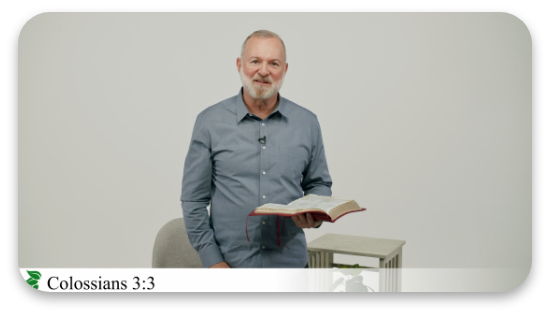
Rev. Tom Knupp examines “The Living One Who Sees Me” through Genesis 15, Genesis 16, Job 42, Genesis 17, showing how abraham, lord, name shape a believer’s relationship with God, daily choices, and service to others.
Transcript
Understanding The Living One Who Sees Me
Open your ESVs and explore with me as we discover The Living One Who Sees Me. The first time I entered Israel by land was at its barren southern tip where it touches the Gulf of Aqaba, the long arm of the Red Sea. Driving northward several hours from those shores, the rocky mountainous expanse we traversed was nothing but desert, an arid region known as the Negev or dry land.
It was difficult to conceive how this parched wilderness could have been part of the promised land or how the children of Israel could have survived there. Where would you live? How would you grow things? How could you feed yourself? When traveling through such places, the ancients wouldn’t set up camp just anywhere. There had to be a source of water where they’d keep on moving.
They knew you could live in if you tap into its underground water sources. They might find a natural spring where water wells up to the surface. They might need to dig a well in order to reach the water, and if they struck into living or flowing waters, that was an occasion for much rejoicing.
Settlements in the wilderness were often named for their water sources. When Abraham sojourned in the Negev, he dug a well that the servants of Abimelech, king of Gerar, later seized. To settle the controversy, Abraham made a covenant with Abimelech to get him to acknowledge Abraham as the one who dug the well and return it to its rightful owner.
For this reason, the spot came to be called Beer Sheba or Well of the Oath. Although Abraham’s wife Sarai had borne him no children, God promised him by the word of the Lord that his heir would come from his own loins. And we’ll be starting today in Genesis chapter 15, and reading through some of these records, will be in verse 3. And Abraham said, behold, you’ve given me no offspring, and a member of my household will be my heir.
And behold, the word of the Lord came to him, this man, his household servant, Eliezer, shall not be your heir, your very own son shall be your heir. God told Abraham that he would bless him with an heir, but his wife Sarai was barren and had borne him no children. When Sarai had the idea that she could obtain children by having Abraham lie with her servant Hagar, he agreed, and Hagar became pregnant.
Hagar then looked with contempt on her barren mistress, and this aggravated Sarai, who treated her harshly. Hagar, whose name means flight, fled into the wilderness. This was a highly vulnerable time in Hagar’s life, and fraught with perils.
For a woman to take off on her own into the wilderness, let alone a pregnant woman, was practically unheard of. With no resources and no protection, she could be easily overtaken and attacked. Quite a harrowing moment, I’m sure.
The Biblical Foundation
Hagar is a well-known biblical figure, but we tend to dismiss her from positive consideration for a number of reasons. After all, as a slave woman, she is first mentioned when she runs away from her mistress, and later we find her expelled from the household with her son Eshmael. What’s more, all these things apparently happened to her with Abraham’s consent and in accordance with God’s will.
Nevertheless, there are numerous indications that despite her Egyptian origins, Hagar was a believing woman in her own right. Let’s follow the history to see how things develop. Genesis 16 now, verse 7. The angel of the Lord found her.
Now stop right there. This phrase should arrest our attention immediately. The angel of the Lord found her.
It may seem curious to us, but this is actually the first occurrence of the word angel in the entire Bible. God was personally concerned about this troubled woman, so much so that he sent an angel to find her and deliver a message to her. She may have been wrong to scorn her mistress and wrong to flee, but evidently there was a lot more to the situation than just some personal misunderstandings between two individuals.
Did she know right away that this was an angel? The record doesn’t tell us. It does say that it was a he. It appeared to be a man.
An angelic spirit may appear in human form and converse as it did here. Verse 7 continues, the angel of the Lord found her by a spring of water in the wilderness, the spring on the way to shore. And he said, Hagar, servant of Sarai, where have you come from and where are you going? She said, I am fleeing from my mistress Sarai.
Look at her honesty. She admitted her improper conduct. The angel of the Lord said to her, return to your mistress and submit to her.
Hagar didn’t argue with this, although surely it wasn’t what she would have chosen on her own to do. The angel of the Lord also said to her, I will surely multiply your offspring so that they cannot be numbered for multitude. If she hadn’t already by this time, she was surely starting to figure out that this was no mere ordinary conversation with some random man.
And the angel of the Lord said to her, behold, you are pregnant and shall bear a son. You shall call his name Ishmael, meaning God hears because the Lord has listened to your affliction. Hearing this message must have hit her like a ton of bricks.
Examples and Spiritual Lessons
The Lord has listened to your affliction. Really? You’ve listened to me, a runaway slave, even after all that I’ve done. And you’re telling me you’re going to give my son a name and multiply my offspring and that he should be named Ishmael, which means God hears.
Surely Hagar’s heart must have skipped a beat when she heard these words. She was beginning to see what God had in store for her. The Hebrew word for see, R-double-A-H, ra-ah, is every bit as varied in its applications as its English counterpart.
For instance, to see can mean to perceive with the eyes, but also with a believing understanding. To see to something is to provide for it, to look after or watch over someone is to take care of them. These are just some of the valid usages of the Hebrew root ra-ah.
The correct translation in a given passage depends upon the context. In this teaching, we will be looking at numerous other instances of ra-ah as we consider this next passage. Genesis 16.13. So she called the name of the Lord who spoke to her.
She recognized that the angel’s message was from God and that it was in truth the Lord who was speaking to her personally. So she called the name of the Lord who spoke to her, you are a God of seeing, ra-ah. What a great realization this must have been to her that the Lord who was speaking to her saw her affliction and for a purpose.
So she called the name of the Lord who spoke to her, you are a God of seeing, ra-ah. For she said, truly here I have seen, ra-ah, him who looks after, ra-ah, me. Hagar understood that God wasn’t looking down on her to accuse her, quite the opposite.
He was looking out for her in order to lift her up. Truly here I have seen him who looks after me. As it says in Job 42.5, you don’t have to turn there, I had heard of you by the hearing of the ear, but now my eye sees, ra-ah, you.
God sees us, but do we see God? Whenever we do, that is a great day for us. This is what was dawning on Hagar. Therefore the well was called Beer-le-Hiroy.
Faith in Action
God even inspired her to name the well to memorialize what he had revealed to her there. The name Beer-le-Hiroy means the well of the living one who sees me. No longer would this just be some well spring on the way to shore.
From henceforth and forever this fountainhead would be known as the well of the living one who sees me. Now that’s an occasion worth remembering. Just think about all the lessons packed into that name.
The well. God is our source of living or flowing waters, our stream in the desert, our never-ending fountain in the midst of desolation. The living one.
Because God is alive, there is no time or place where he can’t see us and hear us. He’s everywhere present, always on call. Our lives on this earth have a beginning and an end, but his has neither.
The eternal one never sleeps or slumbers. Who sees me? Do you think God has a choice on where to focus his gaze? Surely he does, and he has decided to direct it towards you. When the angel of the Lord appeared to her, Hagar must have surely held all these things in her heart.
In due time, her son was born and his father Abraham did indeed name him Ishmael, according to what had been revealed to his mother. Some thirteen years later, the Lord appeared to Abraham and confirmed to him that his original promise of a son would indeed come to pass and that Abraham, age 100, and Sarah, age 90, would be the parents of that son. At first he couldn’t believe it and fell on his face laughing, saying, oh, that Ishmael might live before you.
Sarah had the same reaction when she later overheard the good news. But look at God’s reply in Genesis 17, 19. God said, no, but Sarah, your wife shall bear you a son, and you shall call his name Isaac, which, by the way, means laughter.
Now, isn’t that something? God surely has a sense of humor, doesn’t he? He would turn their mourning into dancing and memorialize his goodness by naming their little boy Laughter. He goes on by saying, I will establish my covenant with him as an everlasting covenant for his offspring after him. As for Ishmael, whose name means God hears, I have heard you.
Walking in Love and Confidence
Behold, I have blessed him and will make him fruitful and multiply him greatly. He shall father twelve princes, and I will make him into a great nation. But I will establish my covenant with Isaac, whom Sarah shall bear to you at this time next year.
Couldn’t be clearer. Both sons would be blessed and their clans would multiply, but God’s covenant would only be established with one of them, Abraham and Sarah’s son, Isaac. Isaac was indeed born and grew up.
The old rivalry between Hagar and Sarah reemerged at the feast when Isaac was weaned. Sarah became incensed when she saw Ishmael laughing and scorn at Isaac. So incensed, in fact, that he told Abraham he should cast out this mother and her son because he would not be heir with her son, Isaac.
Chapter 21, verse 11. And the thing was very displeasing to Abraham on account of his son. But God said to Abraham, be not displeased because of the boy and because of your slave woman.
Whatever Sarah says to you, do as she tells you, for through Isaac shall your offspring be named. And I will make a nation of the son of the slave woman also because he is your offspring. God had made promises concerning each of Abraham’s sons, and both promises would be fulfilled.
But he would make his covenant with only one of the two, Isaac. Nevertheless, that didn’t mean he would forget his sibling, Ishmael. Verse 14.
So Abraham rose early in the morning and took bread and a skin of water and gave it to Hagar, putting it on her shoulder along with the child and sent her away. And she departed and wandered in the wilderness of Beersheba, the well of the oath. When the water in the skin was gone, she put the child under one of the bushes.
Then she went and sat down opposite him a good way off, about the distance of a bowshot. For she said, let me not look on Ra’ah, the death of the child. And as she sat opposite him, she lifted up her voice and wept.
Applying the Teaching in Daily Life
And God heard the voice of the boy. And the angel of God called to Hagar from heaven and said to her, what troubles you, Hagar? Fear not, for God has heard the voice of the boy where he is. Well, this is certainly extraordinary.
Do you remember what name of the boy meant? Ishmael means God hears. God heard the voice of the boy and he heard the voice of his mother because he’s the living one who sees our affliction and hears our voice. Verse 18.
Up, lift up the boy and hold him fast with your hand, for I will make him into a great nation. He reminds her of his promise to her. Then God opened her eyes and she saw Ra’ah.
The living one who sees us is the same one who opens our eyes so that we can see his workings. Then God opened her eyes and she saw a well of water. And she went and filled the skin with water and gave the boy a drink.
And God was with the boy and he grew up. He lived in the wilderness and became an expert with the bow. He lived in the wilderness of Paran, the desert on the way to the Red Sea.
And his mother took a wife for him from the land of Egypt. Ishmael went on to have 12 sons who in turn became the heads of families who were collectively known as the Ishmaelites, thus fulfilling God’s promise. Isaac’s only sons were Jacob and Esau, but Jacob’s 12 sons became the heads of the 12 tribes of Israel in fulfillment of God’s promise.
God taught Abraham another lesson about his nature as a God of seeing when he offered up Isaac. Chapter 22, verse 1. After these things, God tested Abraham and said to him, Abraham. And he said, here I am.
He said, take your son, your only son, Isaac, whom you love, and go to the land of Moriah. The name Moriah is taken from the word Ra’ah and can be translated either seen of Yah or provided by Jehovah. And offer him there as a burnt offering on one of the mountains of which I shall tell you.
Abraham and Isaac lived in Beersheba. Mount Moriah was a long way from there on the site of present-day Jerusalem. Since there were several summits in the vicinity, Abraham had to locate the right one with God’s help.
A Life Shaped by God’s Word
And he cut the wood for the burnt offering and arose and went to the place of which God had told him. On the third day, Abraham lifted up his eyes and saw Ra’ah, the place from afar. He saw where to go because God showed him the place.
When they arrived, Isaac wanted to know where the lamb for a burnt offering was going to come from. Verse 7, he said, behold the fire and the wood, but where’s the lamb for a burnt offering? Abraham said, God will provide Ra’ah, God will see to it for himself, the lamb for a burnt offering, my son. So they went, both of them together.
Amazingly, when his father bound him and laid him on the altar, Isaac didn’t protest, struggle, or fight back. What an incredible young man of conviction, yielding himself wholly to his father based on his absolute trust that he was acting upon God’s will as revealed to him. When the angel of the Lord intervened, Abraham realized that God himself was going to provide the sacrifice.
Verse 13, and Abraham lifted up his eyes and looked Ra’ah and behold behind him was a ram caught in a thicket by his horns. And Abraham went and took the ram and offered it up as a burnt offering instead of his son. To see God’s provision, Abraham had to lift up his eyes and look, and that’s exactly what he did.
So Abraham called the name of that place, the Lord will provide Ra’ah. You may be familiar with the divine title Jehovah Jireh, which appears in this verse in the King James. The ESV translates this Hebrew proper noun into its component parts as the Lord will provide.
What a glorious reflection of God’s providence that is. So Abraham called the name of that place, the Lord will provide, Ra’ah will see to it, as it is said to this day, on the mount of the Lord, it shall be provided, Ra’ah. As it turns out, the mount where Abraham made this sacrifice was the very same site on which Solomon would later build the temple.
Today it is known as the Temple Mount in Jerusalem. God wanted his people to see him, to set their eyes upon him, and to understand that he was at work on their behalf. He was to be their sole source, the fountain of living waters that would continue to meet their daily need in the wilderness of this world.
Not only would he protect and preserve them, he would provide for them in each and every circumstance, and he would do it over and over again. Truly, the Lord is the living one who sees, watches over, looks after, and provides for us.
Key Takeaways
- And the angel of the Lord said to her, behold, you are pregnant and shall bear a son.
- You shall call his name Ishmael, meaning God hears because the Lord has listened to your affliction.
- When the angel of the Lord appeared to her, Hagar must have surely held all these things in her heart.
- God said, no, but Sarah, your wife shall bear you a son, and you shall call his name Isaac, which, by the way, means laughter.
- Whatever Sarah says to you, do as she tells you, for through Isaac shall your offspring be named.
Frequently Asked Questions
What is the main message of “The Living One Who Sees Me”?
Rev. Tom Knupp examines “The Living One Who Sees Me” through Genesis 15, Genesis 16, Job 42, Genesis 17, showing how Abraham, lord, name shape a believer’s relationship with God, daily choices, and service to others.
Which scriptures are central to this teaching?
The teaching draws especially from Genesis 15, Genesis 16, Job 42, Genesis 17.
How can believers apply this teaching?
Believers can receive the truth presented, verify it in Scripture, and put it into practice with faith, humility, love, and consistent action.
Scripture References
Genesis 15; Genesis 16; Job 42; Genesis 17
This text was prepared from the teaching audio or source document. Please verify scripture references against your own Bible.